
WWF asserts market access and incentives are key to Indonesian palm oil sustainability
Jakarta (ANTARA) - The conservation organisation WWF-Indonesia believes that market access and incentives are key to ensuring that sustainable palm oil practices in Indonesia continue to develop while providing economic benefits to producers, especially smallholders.
CEO of WWF-Indonesia, Aditya Bayunanda, stated that achieving sustainability requires investment, meaning producers must receive returns through market access and opportunities to enter new markets. “Achieving sustainability requires effort and investment. Therefore, we want to work with the CPOPC so that sustainability efforts for this commodity are rewarded through market access and opportunities to enter new markets,” Aditya said in Jakarta on Friday.
Aditya also noted that a gap remains between certified production capacity and global market acceptance. According to him, recognition for producers who have implemented sustainable practices is vital so that these efforts can be expanded. “Our goal is always to ensure there is market access and market incentives for sustainability. We hope that through this partnership, producers and smallholders who truly implement sustainable practices will receive such incentives and access,” he added.
He noted that achieving sustainability is more challenging for smallholders, meaning markets need to understand their conditions and recognise the good practices already in place.
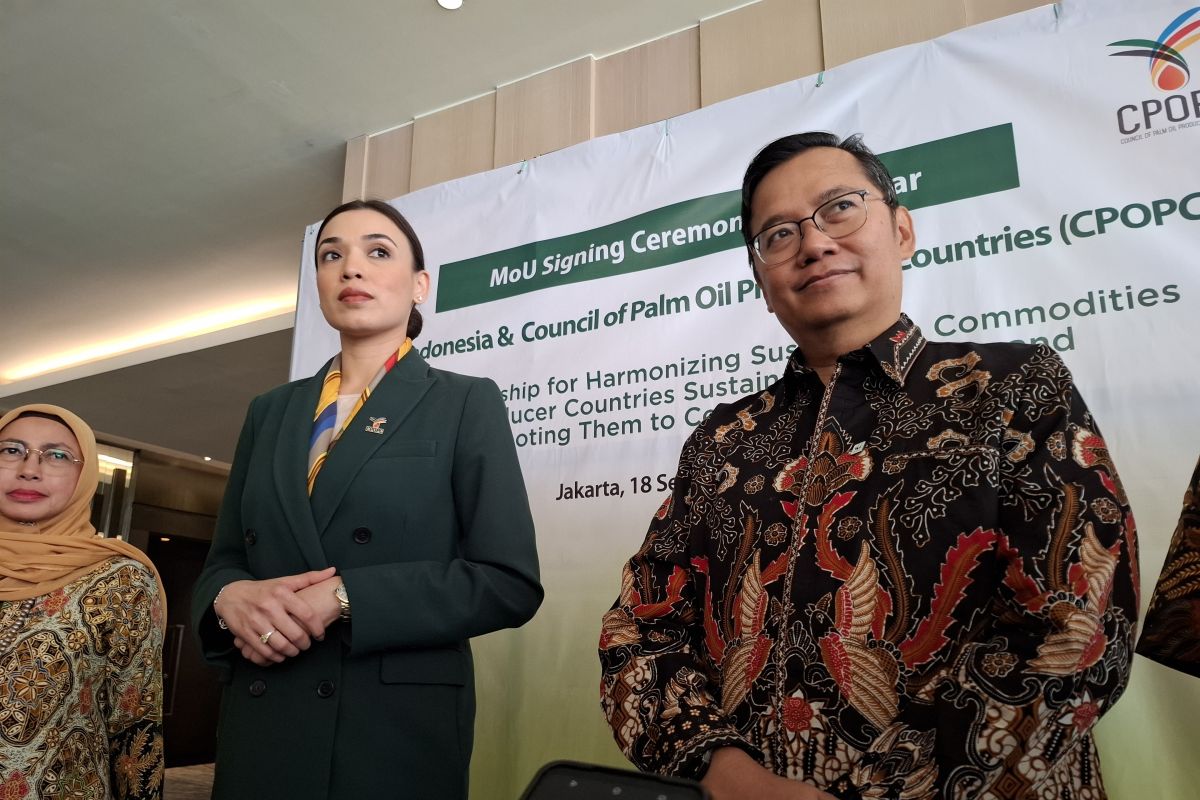
WWF-Indonesia and the Council of Palm Oil Producing Countries (CPOPC) signed a memorandum of understanding titled “Green Partnership” on Friday. The cooperation includes supply chain transparency, responsible production, biodiversity conservation, and the involvement of smallholders.
Regarding market access, the government is currently preparing the implementation of the Indonesia–European Union Comprehensive Economic Partnership Agreement (I-EU CEPA). The Ministry of Trade stated that the agreement will open access to the European Union market, which includes approximately 450 million consumers. The Ministry of Trade also mentioned that palm oil and its derivatives are among Indonesia’s export products that will benefit from zero per cent tariffs once the I-EU CEPA comes into effect.
Meanwhile, the Ministry of Agriculture noted that the export value of crude palm oil (CPO) and its derivatives from January to July 2024 grew by 5.49 per cent compared to the same period the previous year. The Ministry of Agriculture is also working to strengthen the capacity and institutions of farmers and develop partnerships with business actors to expand access to technology, financing, and markets.
CPOPC Secretary-General Izzana Salleh stated that palm oil contributes about one-third of global vegetable oil production, while CPOPC member and observer countries collectively account for almost 90 per cent of the world’s palm oil production. “Sustainability must remain grounded in reality. Sustainability must protect ecosystems and biodiversity, but also ensure that smallholders and communities are not left behind,” said Izzana.
She noted that the palm oil sector also faces the impacts of climate change as well as growing demands for environmental protection, sustainability, and traceability in international markets. “Improving the global perception of palm oil cannot be achieved through communication alone. It must be supported by evidence, transparency, continuous improvement, and credible sustainability practices on the ground,” she said. She added that competitiveness, conservation, and production can go hand in hand in the development of sustainable commodities.
Source: jawawa.id (https://jawawa.id/newsitem/wwf-asserts-market-access-and-incentives-are-key-to-indonesian-palm-oil-sustainability-1789739912)
Originally published by Antara (Indonesian) (https://www.antaranews.com/berita/5747895/wwf-nilai-akses-pasar-dan-insentif-jadi-kunci-keberlanjutan-sawit-ri), translated from Indonesian