
WWB partners with KP2MI to leverage migrant worker remittances for economic resilience
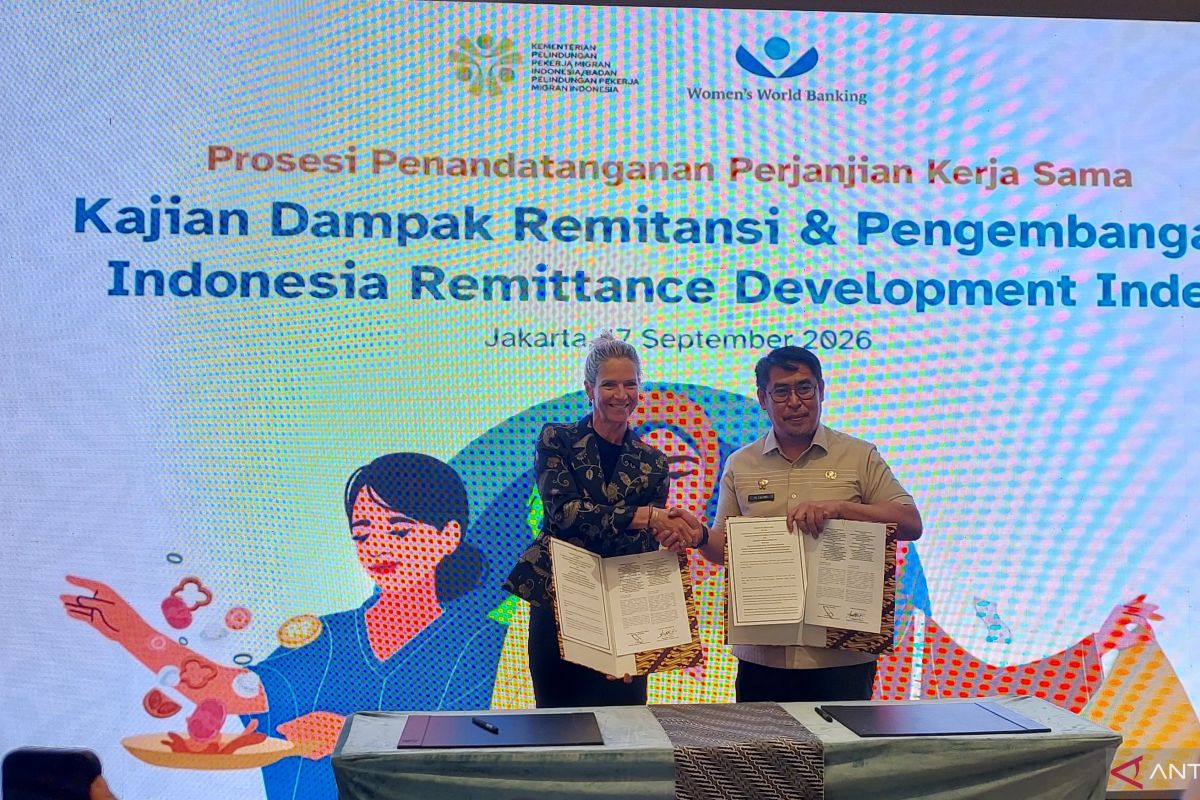
With support from KP2MI, we can create an index that signals how remittances can impact economic resilience and job creation for the families left behind.
Jakarta (ANTARA) - Women’s World Banking is collaborating with the Indonesian Migrant Workers Protection Agency (KP2MI) to ensure that remittances sent by migrant workers contribute to the economic resilience of their home regions.
Angelique Timmer, Regional Director for Southeast Asia at Women’s World Banking, stated that measuring the impact of remittances should not only focus on the economic value entering the country but also examine the effects at the level of families, entrepreneurs, and communities in the migrant workers’ areas of origin.
“With the support of KP2MI, we can create an index that serves as a signal for how remittances can impact economic resilience and employment for the families left behind,” said Angelique during the signing ceremony for the WWB and KP2MI cooperation regarding the study of migrant worker remittance impacts in Jakarta on Thursday.
According to her, this study will eventually provide an overview of the extent to which remittances contribute to improving the lives of migrant workers’ families in their home regions while simultaneously opening opportunities for new economic activities in those areas.
She also noted the need for closer collaboration, not only with the government but also with various stakeholders, particularly the banking sector, to provide financial literacy on how to manage migrant worker remittances for families.
Furthermore, education must be accompanied by access to financial products and services that can help the community apply such knowledge.
Meanwhile, the Director General of Empowerment at KP2MI, Muh. Fachri, stated that according to Bank Indonesia, the contribution of remittances sent by migrant workers to Indonesia is projected to reach Rp288 trillion by 2025, making it the fourth-largest non-oil and gas contribution after tourism.
He stated that this collaboration will serve as a modality to produce a study on the impact of remittances on building purchasing power at the family, village, and even national levels.
“We are all here today in the context of economic protection. We are discussing the impact of remittances on life at the family and village levels, which can drive the national economy,” said Fachri.
The study will be included in policy recommendations for the economic protection of migrant workers, serving as a reference for both central and local governments, as well as relevant stakeholders.
Fachri mentioned that the research and study will be conducted until the end of the year and will be followed by a comparative study between villages that are hubs for migrant workers and those that are not.
The joint study with Women’s World Banking is expected to provide a more comprehensive picture of the relationship between remittances, the welfare of migrant workers’ families, business activities, and the economic development in the migrant workers’ home regions.