
Wudhu Using Rainwater: LDII's Environmental Dakwah Initiative
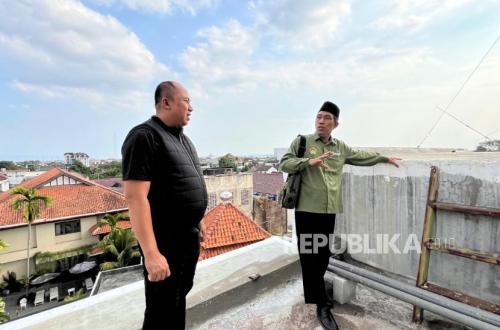
Rainwater falling on the roof of the Mantrijeron Multipurpose Building in Yogyakarta is no longer allowed to flow directly into drainage channels. The water is harvested, filtered, and utilised for various needs, including as water for ablution (wudhu) for worshippers at the mosque located within the same complex. The use of rainwater for religious purposes is part of a water conservation programme developed by the Regional Executive Board (DPW) of the Indonesian Islamic Dakwah Institute (LDII) of the Special Region of Yogyakarta. In addition to ablution, the harvested water is also used for toilets, washbasins, and other daily needs in the building.
Atus Syahbudi, Chairman of DPW LDII DIY, stated that the rainwater harvesting system was built as an effort to maintain water availability while reducing dependence on groundwater. The programme has been running for almost a year since the completion of the Mantrijeron Multipurpose Building in September 2025. He explained that the construction of the rainwater harvesting system was planned alongside the building’s construction. As attention to the concept of sustainable development, or the Sustainable Development Goals (SDGs), grew, LDII DIY added rainwater storage installations to the building’s design.
Atus acknowledged that the programme was born from the view that flooding and drought are not solely caused by a reduction in the amount of water on earth. According to him, the total amount of water remains the same, but its balance and distribution have changed due to urban growth and the reduction of green spaces. Trees that previously captured rainwater through their canopies, trunks, and roots have been largely replaced by buildings. As a result, the soil’s ability to absorb and store water has diminished. Therefore, efforts are needed to maintain water availability even as green spaces become increasingly limited, one of which is through harvesting rainwater from building roofs.
Atus emphasised that humans have a duty to protect the earth, which is shared across generations. He stated that this initiative is part of LDII’s dakwah, both based on the Quran and Hadith as well as on exemplary conduct (bil hal). In addition to trees, LDII is also concerned with water sources, including the utilisation of rainwater.
The rainwater harvesting system at the Mantrijeron Multipurpose Building consists of several collection points both above and below ground. Two storage tanks located above the building each have a capacity of approximately 8,000 litres, while another in the middle can hold 6,000 litres. There is also an underground storage tank with a capacity of 12,000 litres. With this total capacity, the stored rainwater can meet the building’s needs for approximately one to two weeks if used continuously. Atus explained that in the first stage, filtration is carried out to retain large materials carried by rainwater, such as leaves, ash, sand, and other debris. The water then enters the next filtration stage using various media, including sponge and activated charcoal. In the final stage, the water is filtered using dacron, a fabric-like material with dense pores, to retain smaller particles. After this process, the water is stored and distributed to meet the building’s needs.
Atus noted that the capacity can meet the building’s needs for about seven days if water is used continuously. However, since the busiest activities only occur on Saturdays and Sundays, the rainwater reserves can last for more than a month. He expressed hope that the harvested water can be stored and used at any time for religious activities, at minimum without having to use electricity, as it relies on gravity.
Although it has undergone several filtration stages, the rainwater harvested at the Mantrijeron Multipurpose Building is not yet used as drinking water. According to Atus, concerns about air quality and potential pollution in urban areas are among the reasons the rainwater has not been directed for direct consumption. He mentioned that LDII DIY is still studying additional safe filtration technology if rainwater is to be developed as a source of drinking water. Currently, its use remains focused on non-consumptive needs such as ablution, toilets, washbasins, and daily building needs.
Atus stated that in urban areas, the target is not for drinking, but sufficient for ablution and toilets, as they are not yet confident to go that far. The rainwater harvesting programme is also part of LDII DIY’s efforts to maintain water availability and reduce dependence on groundwater. Atus said that continuous groundwater extraction has the potential to cause the groundwater table to decline further. Under certain conditions, this can also affect soil stability. In addition to harvesting rainwater, LDII DIY has also begun to socialise the reuse of used ablution water, as water that has been used for worship is considered still able to be channelled for other purposes.