
WRI Says Freight Electrification Key to Energy Self-Sufficiency
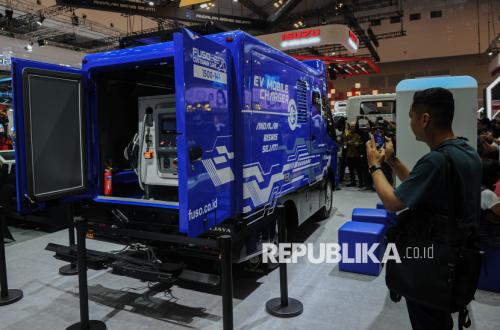
JAKARTA – WRI Indonesia has warned that the government’s energy self-sufficiency target is at risk of being difficult to achieve if it focuses only on increasing oil production without controlling diesel consumption. The institute views the electrification of freight transport as one strategy to curb fuel import needs while strengthening national energy security.
The warning was delivered at the Indonesia Zero Emission Heavy-Duty Vehicle (IZEHDV) Summit 2026 in Jakarta. WRI Indonesia noted that national diesel consumption rose 24.5% over the past five years, while domestic refinery capacity can only meet around 51.6% of demand.
According to WRI Indonesia’s analysis, Indonesia risks resuming diesel imports from 2027 if no effort is made to control demand. Without technological change in the transport sector, national diesel demand is projected to reach 87.5 million kilolitres by 2040, while domestic production capacity is estimated at only around 26.5 million kilolitres.
WRI Indonesia Country Director Nirarta Samadhi said that increasing energy production will not be sufficient to achieve self-sufficiency if fuel consumption continues to rise.
“Our modelling shows that without significant changes in transport technology, Indonesia’s diesel demand could reach around 87.5 million kilolitres by 2040. Meanwhile, domestic production capacity is estimated at only around 26.5 million kilolitres. This means that increasing energy supply alone will not be enough. We must also begin managing energy demand, and the transformation of freight transport is one of the most important strategies for realising Indonesia’s energy self-sufficiency,” Nirarta said on Thursday (23/7/2026).
To drive the transformation of the logistics sector, WRI Indonesia developed the Indonesia Freight Decarbonization Accelerator (IFDA), launched in 2025. The programme has involved 42 companies from the logistics ecosystem in studies, discussion forums, and implementation assistance for zero-emission heavy-duty vehicles through the Corporate Assistance Program (CAP).
WRI Indonesia has also developed Truck Route Assessment & Charging Evaluation (TRACE), a platform used to help the government and industry players evaluate route readiness, charging needs, and priorities for developing charging infrastructure for electric freight vehicles before investment is made.