
Wot Batu Presents Opera Jawa: A Labyrinth
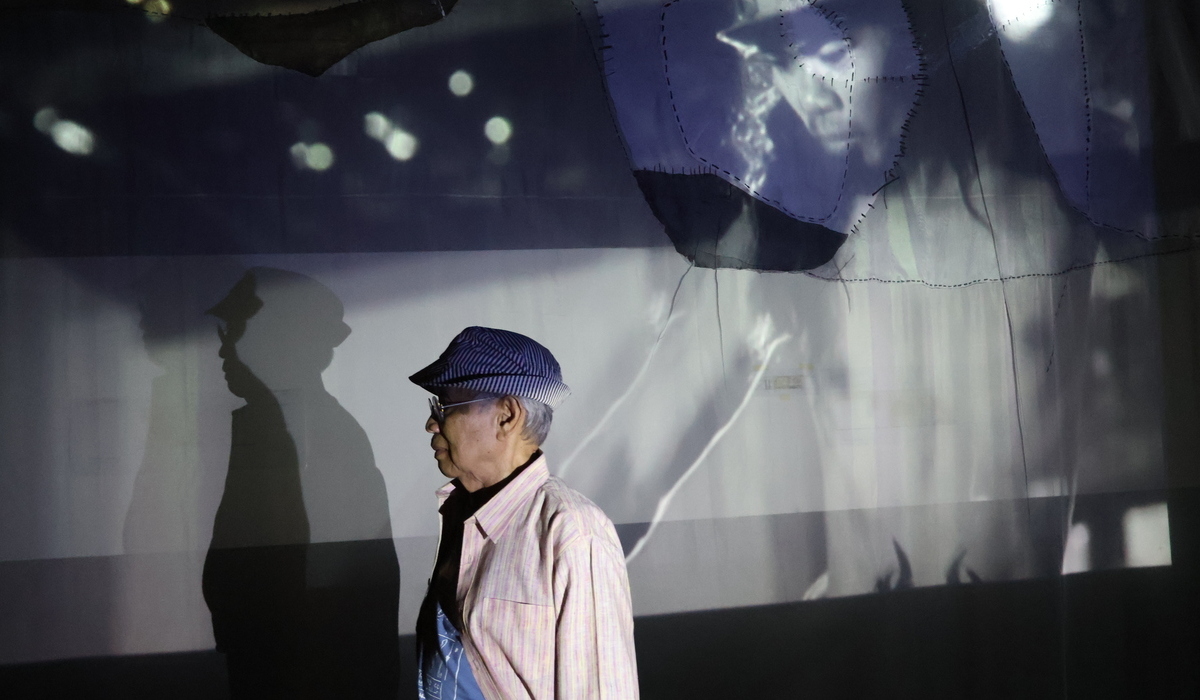
WOT Batu will present Opera Jawa: A Labyrinth (2026), a cine-concert presentation that rearranges Garin Nugroho’s 2006 film Opera Jawa into a form without colour and without dialogue, accompanied by musical compositions performed live by KUNTARI. The performance takes place on 11–13 September 2026 at Wot Batu, Bandung, lasting one hour each day, preceded by discussion sessions beginning at 16.00 WIB.
Two decades after Opera Jawa premiered at the Venice Film Festival, the film returns with an entirely new sound. The Bandung duo presents music that is no longer merely a backdrop: compositions that respond to the images, rhythm, and the silence that opens up once dialogue is removed.
Sunaryo, whose work has been part of Opera Jawa’s visual language from the outset through the installation Semedi ning Jenar (2006), returns in this cine-concert through the spatial landscape, his artworks, and a purpose-built screen.
The performance is an experimental experience that invites the film to leave conventional screening formats: the screen is not the sole centre of attention, while music, space, and light also shape the journey throughout the performance. For those who saw Opera Jawa in 2006, this is an opportunity to encounter it again in an arrangement never seen before. For those new to it, the journey begins from an unexpected point.
Opera Jawa (2006) interprets the tale of ‘The Abduction of Sinta’ from the Ramayana epic into a love triangle story that ends in conflict, violence, and death. Setio and Siti run a pottery business in a village controlled by Ludiro, a butcher. When the business collapses, Ludiro abducts Siti. The entire story is told through song, gamelan, and dance.
Beneath its drama, the film contemplates desire, power, and violence as a critique of Indonesia’s social reality. The film was commissioned by New Crowned Hope, a festival in Vienna marking the 250th anniversary of Mozart’s birth, and premiered at the Venice Film Festival.
Garin Nugroho (b. 1961, Yogyakarta) is one of Indonesia’s most internationally recognised filmmakers. His cinematic language is poetic, his approach cross-disciplinary. Since the early 1990s, his work has explored history, mythology, identity, and socio-political transformation through contemplative visual storytelling.
His films, including Opera Jawa, Kucumbu Tubuh Indahku, Setan Jawa, and Samsara, have been presented at Rotterdam, Cannes, Venice, and Berlin. Cine-concert is not unfamiliar territory for him, but part of a continuously evolving practice: a way of treating cinema as a meeting space between the screen and a living stage.
KUNTARI is a Bandung duo that named their own musical genre: primal-core. They process sounds inspired by the instinctive noises of animals through trumpet playing, then enrich them with various ethnic rhythms of the archipelago. From percussive pounding, dark atmospheres, and the fusion of two solid musical characters, an intense dynamic emerges with a rhythmic pulse that feels primordial: organic, raw, and wild in every live performance.
In the past two years, the duo has performed in 20 countries and 55 cities across Europe and Asia, and appeared at festivals such as CTM, Unsound, and Rewire. They have collaborated with Author & Punisher, Keiji Haino, and Rully Shabara.
Sunaryo (b. 1943, Banyumas) studied sculpture at the Bandung Institute of Technology. He is widely known as one of Indonesia’s leading artists through MONPERA Bandung, the statue of General Sudirman, and Bilah Nusantara (the cauldron for the 2018 Asian Games). His work often explores the relationship between material, space, and contemplation. Semedi ning Jenar is a site-specific installation created by Sunaryo for Opera Jawa (2006) and has been part of the film’s visual language from the beginning. At the Plaosan Temple complex, rows of red-marked bamboo in the installation position silence not as emptiness, but as a space of presence.
Wot Batu is one of Sunaryo’s works that serves as the location for this cine-concert: 135+1 stones from the mountains of Java that he arranged into a complete landscape. In Old Javanese, wot means bridge. Sunaryo built it as a spiritual bridge, a balance between the human soul and the physical form of life.