
World's Oldest Cave Painting, 67,800 Years Old, Reveals Ancestral Migration Routes
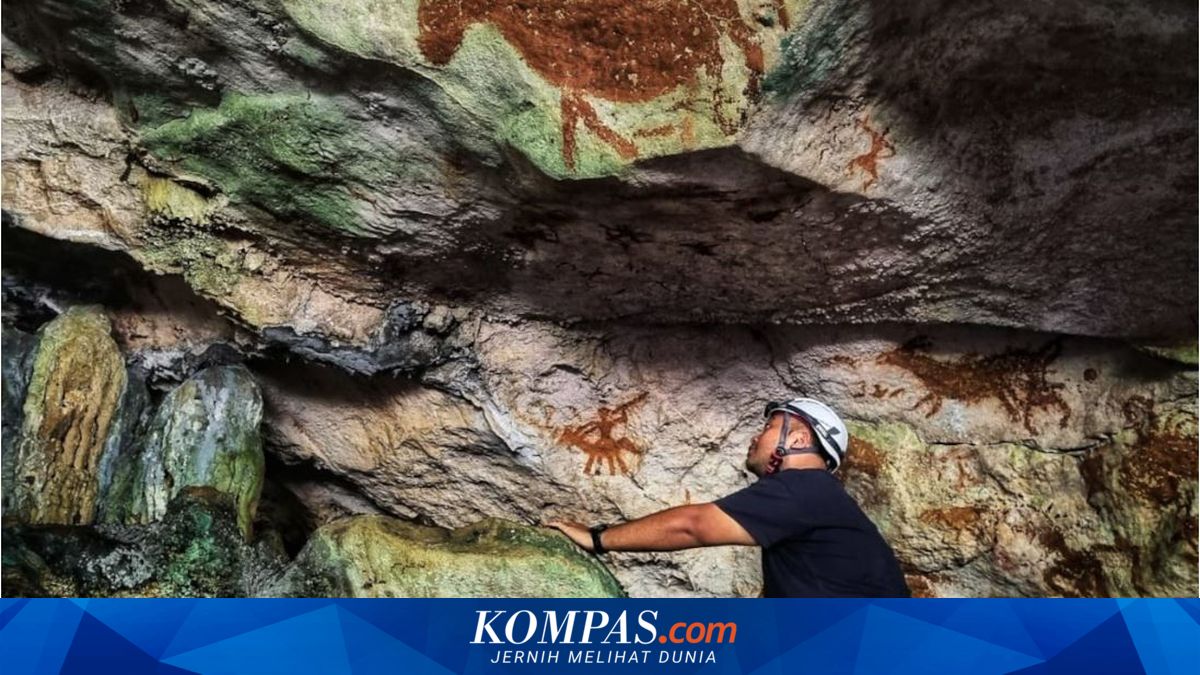
Tens of thousands of years before maps, compasses, or the name ‘Indonesia’ existed, a group of humans crossed the ocean and arrived in Sulawesi. They left no written records. But they left something more enduring: a handprint on a cave wall, dated 67,800 years old, now serving as evidence of humanity’s longest journey. Guinness World Records (GWR) has recently recognised the handprint from Liang Metanduno Cave as the world’s oldest non-figurative cave painting. The discovery not only brings pride to Indonesia on the global scientific stage but also opens a new window to understanding the long migration journey of modern humans across the Nusantara archipelago. ‘Around 60,000 to 70,000 years ago, this was not archaic humans but early modern humans who likely created it — like the ancestors of Papuans or Australian Aboriginals,’ explained Dr. Adhi Agus Oktaviana, a researcher and archeometrist from the National Research and Innovation Agency (BRIN), to Kompas.com on Thursday, 28 May 2026. This means the handprint’s creator was biologically almost identical to modern humans — Homo sapiens with fully developed brains, abstract thinking abilities, and capacity for symbolic creation. The significance of this discovery is further underscored when placed in the context of global prehistoric human migration maps. Researchers now believe that early modern humans who left Africa between 70,000 and 80,000 years ago migrated eastward via two main routes. Sulawesi lies directly on the dominant northern path. ‘The dominant route is indeed the northern one — and it is here that we find these cave painting traces,’ said Adhi. Archaeological data consistently supports this narrative. This pattern forms a coherent migration timeline: modern humans moved from Sundaland (the Sunda Shelf — a vast landmass now part of Sumatra, Java, and Kalimantan) eastward, traversing Wallacea — a biogeographical region encompassing Sulawesi, Maluku, and Nusa Tenggara — before reaching Australia. What makes this achievement remarkable is that Wallacea was never connected to the Asian mainland, even during the drastic sea-level drops of the ice age. To reach Sulawesi, ancient humans had to cross open sea. ‘Before migrating to the Sunda Shelf, they must have passed through Wallacea. That means they already possessed the capability to cross water using marine transport technology, albeit simple — such as bundled logs,’ Adhi explained.
Source: jawawa.id (https://jawawa.id/newsitem/worlds-oldest-cave-painting-67-800-years-old-reveals-ancestral-migration-routes-1780038068)
Originally published by Kompas (https://www.kompas.com/sains/read/2026/05/29/124500623/berusia-67.800-tahun-lukisan-gua-tertua-di-dunia-ungkap-jalur-migrasi?utm_source=ABC&utm_medium=rss), translated from Indonesian