
World's Largest Digital Camera LSST Begins Mapping the Universe
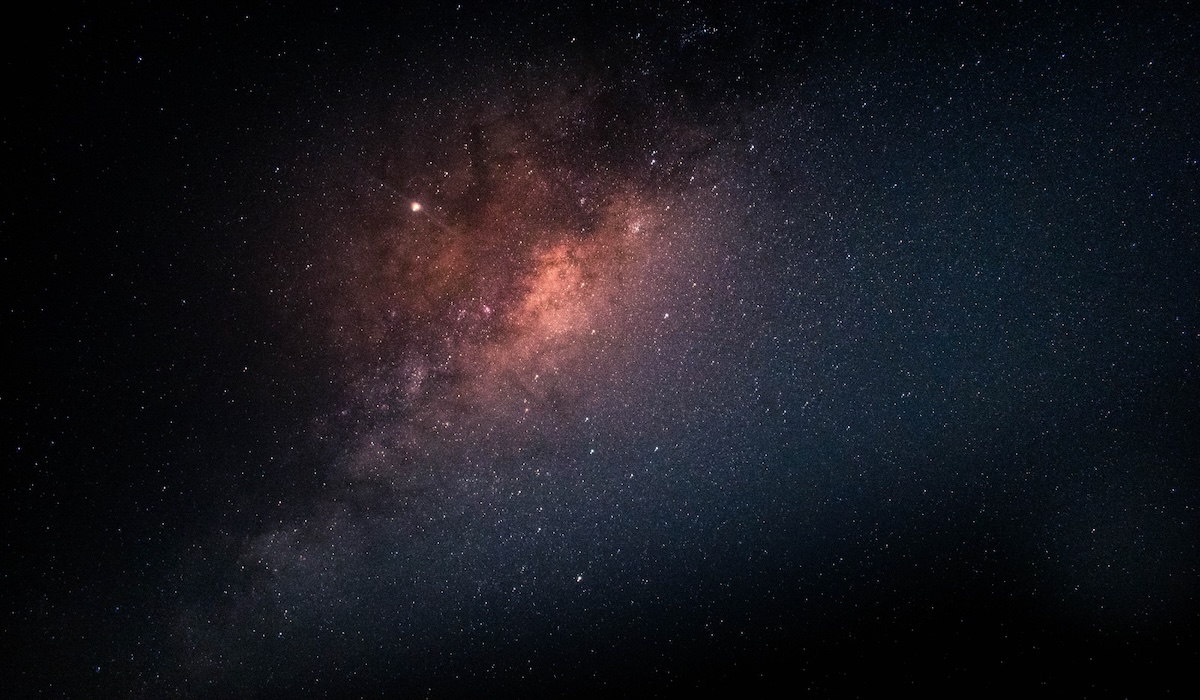
The world of astronomy has entered a new era with the start of operations of the world’s largest digital camera, designed to map the universe. The camera, named LSST (Legacy Survey of Space and Time), has been installed at the Vera C. Rubin Observatory on Cerro Pachon in Chile, and began its ambitious decade-long mission on 10 July 2026.
The giant camera is capable of capturing images of up to 3.2 gigapixels, equivalent to 3,200 megapixels. With this extraordinary resolution, scientists can observe billions of objects in outer space, from distant galaxies and stars to asteroids, at a level of detail never before achieved.
The project forms part of the Legacy Survey of Space and Time (LSST) programme, the largest sky survey ever designed to continuously record changes in the universe. The data collected is expected to help astronomers understand the processes of the universe’s formation and development.
The Vera C. Rubin Observatory stated that the LSST camera can image extremely wide areas of the sky in a short time. All the data is then processed using advanced computing systems to detect new objects as well as changes in already-known cosmic phenomena.
The construction of the observatory is the result of an international collaboration supported by the United States National Science Foundation (NSF) and Department of Energy (DOE). The project involves teams of experts from across countries to create the most ambitious sky observation system in modern history.
The location at the summit of Cerro Pachon in Chile was chosen for its exceptionally clear atmospheric conditions with minimal light interference. In addition to producing high-resolution images, the camera’s main mission is to solve the mysteries of dark matter and dark energy, which have long puzzled cosmology.
The camera also functions as a planetary defence system by detecting asteroids that could potentially approach Earth. Scientists will also use it to study galaxy formation as well as transient phenomena such as stellar explosions or supernovae.
The operation of the world’s largest digital camera marks an important historical milestone. With billions of new data points set to be collected over the next ten years, the secrets of the origin, structure and future of the universe are expected to be revealed.