
World’s Largest Crypto Exchange Binance Hit by Rp111 Trillion Hack: Is Crypto Safe?
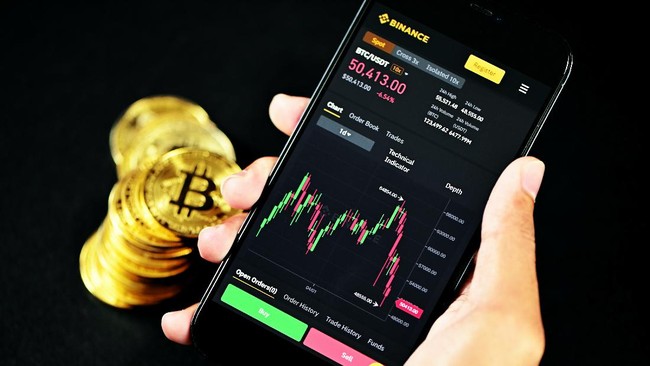
Jakarta – A security incident at Binance, the world’s largest cryptocurrency exchange, has prompted global concern, particularly over the safety of storing digital assets on crypto trading platforms.
The hack, which affected assets worth US$6.3 billion (Rp111.8 trillion), has been described as “the largest crypto theft in history”. The incident took place last Thursday, amid a rise in cyberattacks exploiting advances in artificial intelligence (AI).
CNBC International reported that cybersecurity experts are divided over whether investors should worry about keeping funds on crypto exchanges. Some say holding large amounts of assets on exchanges is highly risky.
Others argue that exchanges have greater financial resources and better security infrastructure than individual investors. But is that really the case?
The incident coincided with a security breach at prediction-market platform Polymarket. On the same day, Polymarket temporarily halted trading on its international exchange after a third-party data provider was hacked. At least US$2.7 million (Rp47.9 billion) was drained from users’ wallets as a result.
Experts say security incidents in the crypto industry are not surprising. They expect similar cyberattacks to become more frequent in the near future, particularly as AI could create new vulnerabilities in cybersecurity systems.
Tyler Moore, a cybersecurity professor at the University of Tulsa who has followed the crypto industry for more than a decade, warned investors to be cautious about storing assets on crypto exchanges. He highlighted a fundamental difference between the banking system and crypto exchanges.
“I think it’s very dangerous. You have to be very careful about keeping significant amounts of money on exchanges. There is no built-in protection when these inevitable hacks happen,” Moore said.
In the United States, for example, bank customers can rely on the Federal Deposit Insurance Corporation (FDIC), which insures deposits of up to US$250,000 per depositor, per insured bank, if a financial institution fails. There is no equivalent protection for funds lost in a crypto-exchange hack.
Ido Ben-Natan, chief executive of blockchain security firm Blockaid, said companies’ commitments are a reason users may continue to trust crypto exchanges. Binance and Polymarket have previously assured users that affected investors would be reimbursed.
“I actually think no users will lose money. Binance has said it will cover everything,” he said.
Ben-Natan said keeping funds on a crypto exchange is not a bad choice as long as the company continues to strengthen its security systems. He also argued that the rise in cyberattacks driven by AI could ultimately make the crypto industry stronger, as companies gain more experience in dealing with attacks.
“In the long run, crypto wallets could even become a safer place to store funds than other alternatives,” he claimed.
Are crypto platforms outside the US more vulnerable?
One point of concern is the location of the platforms affected by the security incidents. Binance’s international platform was hit.
By contrast, the regulated US-based centralised Binance exchange was not affected. The same was true of Polymarket’s domestic platform.
US crypto exchanges such as Coinbase and Robinhood were also not directly affected by the Binance incident. However, shares in both companies fell in trading last Friday.
Commodity Futures Trading Commission (CFTC) chair Michael Selig said the platforms’ status outside the US was an important factor in understanding the incident. He said regulators want to provide a route for crypto exchanges to register formally with the CFTC, bringing them under the cybersecurity protection standards applied in US financial markets.
“They don’t have the same kinds of protections that we have in our financial markets,” Selig said.
Brett Falk, a professor and director of the Crypto and Society Lab at the University of Pennsylvania, said US regulation might not necessarily have prevented an incident such as Binance’s. Binance previously said the hack may have involved a DevOps engineer’s compromised laptop.
“Most regulations don’t touch the specific software stack that you have to use to authenticate users,” Falk said.
In a subsequent social media post, Binance said its investigation had identified additional points that were sources of the security breach. The company did not provide details.
AI increases the threat of hacking
Falk agreed with Ben-Natan that investors were unlikely to suffer direct losses from the incident. In his view, holding funds with an exchange backed by a company may be more advantageous than storing assets in a self-custody wallet, which is controlled entirely by the user.
In the event of a hack, investors using self-custody wallets have no other party to reimburse their losses. Ben-Natan also said many cyberattacks are stopped by security firms before they develop into major incidents that become public.
Even so, experts say the crypto industry is an attractive target for hackers because crypto assets provide access to large pools of liquidity that can be transferred quickly if a hack succeeds.
Ryan Kirkley, chief executive of blockchain infrastructure firm Global Settlement Network, warned investors to be cautious about storing assets in wallets without insurance protection.
He said financial companies need to improve their security infrastructure before investors can feel truly safe.
“I don’t think there is currently any off-the-shelf solution in the market that can truly guarantee the security of your assets,” Kirkley said.
“If you’re not dealing with a reputable broker-dealer that provides asset insurance, you’re putting your assets at risk by placing them in any ecosystem today, simply because there is still so much that is unknown,” he added.
Source: jawawa.id (https://jawawa.id/newsitem/worlds-largest-crypto-exchange-binance-hit-by-rp111-trillion-hack-is-crypto-safe-1793587868)
Originally published by CNBC Indonesia (https://www.cnbcindonesia.com/market/20261102080016-17-781356/bursa-kripto-terbesar-binance-kena-hack-rp111-t-apakah-kripto-aman), translated from Indonesian