
World's Largest Camel Population Turns Out to Be Near Indonesia
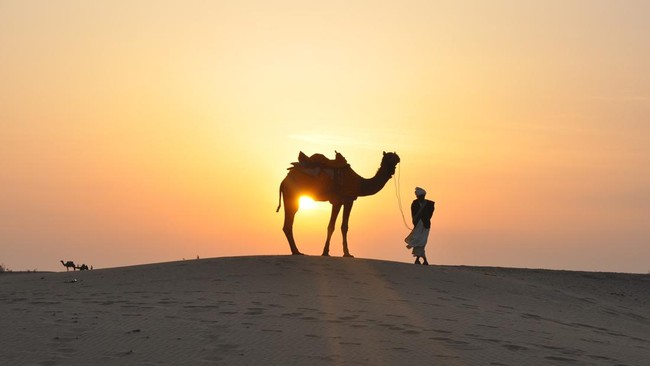
Many people mistakenly believe the world’s largest camel population is in the Middle East. In fact, Australia, known as the Land of the Kangaroo, has the largest wild dromedary, or Arabian camel, population in the world. The exact number is difficult to determine because the animals are spread across vast desert areas.
According to Space Daily, some estimates put the population at around one million in 2010. Population control programmes subsequently reduced that number, but current estimates still range from hundreds of thousands to one million.
The presence of camels in Australia began in the 19th century when colonists brought the mammals to help transport goods across inland areas that were difficult for horses to traverse. Camels were used to carry various supplies, including provisions, telegraph equipment, and materials for railway construction. Handlers from areas that are now Pakistan and Afghanistan also played a role in developing the use of camels in Australia’s interior.
However, the development of motor vehicles eventually made the role of camels as a means of transport increasingly unnecessary. Some animals were then released into the wild because the cost of keeping them was no longer considered worth the benefit.
The environment of central Australia proved highly suitable for camels. The lack of predators, availability of vegetation, and ability to breed quickly allowed the population to grow rapidly.
For land managers, that growth has become a problem. Wild camels can damage fences, disturb water sources, and consume most of the plant species available in their habitat.
Australian camels are marketed in limited numbers for breeding, training, and farming purposes. However, this trade is still far from a large-scale industry.
Cost is one of the main obstacles. Gathering wild camels from the interior, transporting them to processing facilities or ports, health checks, and preparation for export make the cost per animal high.
Some trade is directed to countries such as Malaysia and Indonesia, while other products such as camel meat and milk are also beginning to attract attention.
The camel milk sector even commands a premium selling price. However, camel farming ventures in Australia still face economic challenges and in some cases require additional income from tourism or accommodation to support operations.