
World's Largest and Deepest Whale Graveyard Revealed, More Mysterious Than Outer Space?
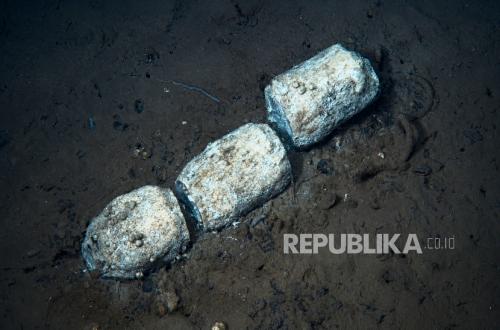
A team of scientists has discovered the deepest and largest accumulation of whale remains ever recorded on the seabed. The find is located in the Diamantina Fracture Zone, in the southeastern Indian Ocean, at depths reaching approximately 7,000 metres. The discovery includes fossils of ancient whales and active whale-fall ecosystems estimated to have formed over at least 5.3 million years. One of the sites found contains three vertebrae of a beaked whale at a depth of 6,789 metres. Researchers have designated this as the deepest active whale-fall ecosystem documented to date. A whale fall is a phenomenon where a whale carcass sinks to the ocean floor, becoming a source of nutrition for various deep-sea organisms. This ecosystem can persist for decades to hundreds of years, serving as a habitat for diverse species living in extreme environments. The research was conducted by the Institute of Deep-Sea Science and Engineering under the Chinese Academy of Sciences, in collaboration with the University of Pisa in Italy and Earth Sciences New Zealand based in Wellington, New Zealand. Scientists believe the findings can provide new insights into the evolution of deep-sea life, the process of organic decomposition on the ocean floor, and the history of the marine environment spanning millions of years. This discovery also enhances understanding of deep-sea ecosystems, which still hold many mysteries and have yet to be fully revealed by modern scientific research. In the dark depths of the ocean, nearly devoid of food sources, whale carcasses play a crucial role for deep-sea life. An adult whale can deliver tens of tonnes of biomass to the ocean floor. When the carcass reaches the seabed, various scavengers such as fish, shrimp, and marine worms utilise it as a food source. After the soft tissue is consumed, the whale bones can still support life for specialist organisms capable of obtaining energy from chemical compounds produced during the decomposition process. Because of this, scientists often refer to whale falls as an ‘oasis of life’ in the deep sea. The ecosystem that forms around a whale carcass can last for decades or even hundreds of years, providing a habitat for various species that struggle to find other food sources at extreme depths.