
World Watches Japan's Manoeuvre, Indonesia Braces for Impact
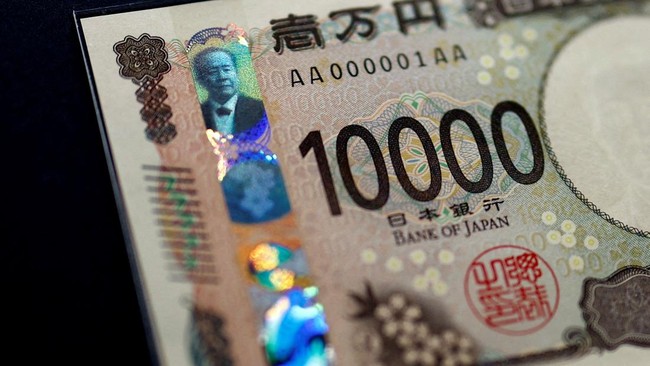
Japan is preparing a major move to shift the funds in its Government Pension Investment Fund (GPIF), the world’s largest pension fund.
According to Reuters, the Japanese government is looking to encourage the GPIF to increase its investments in alternative assets and domestic assets. The GPIF manages approximately US$1.8 trillion, or around Rp32,580 trillion (assuming an exchange rate of Rp18,100 per US dollar). This enormous value means any change in the GPIF’s investment strategy is closely watched by global markets, as even a small shift in its portfolio allocation can be worth tens of billions of US dollars.
The Japanese government reportedly wants to increase the proportion of alternative assets in the GPIF portfolio. These alternative assets include unlisted stocks, real estate, private equity, private credit, infrastructure, and other assets outside of public stocks and bonds. Currently, the GPIF’s alternative investment portion is very small. As of March, alternative assets accounted for only 1.7% of the GPIF’s total assets, even though the permitted maximum limit is 5%. The government’s plan is not to raise this maximum limit, but to push the realisation of alternative investments closer to the 5% boundary. Using the total assets of around US$1.8 trillion, a 1.7% share equates to about US$30.6 billion. If the share rose to 5%, the value could reach around US$90 billion. This rough calculation, assuming the GPIF’s total assets remain unchanged, illustrates the massive potential funds that could be moved if the allocation is truly increased.
This plan emerges as Japan seeks to broaden its pension fund management strategy and reduce overall portfolio risk. Large institutional investors typically use alternative assets for diversification, as the movements of assets like real estate, infrastructure, private equity, or private credit do not always correlate with public stocks and bonds. Therefore, alternative assets are often used to protect long-term portfolios from being overly dependent on conventional stock and bond markets. Nikkei reported that a Japanese government panel will soon compile a report setting the direction for increasing the alternative investment share. This news is also linked to Japan’s efforts to support the yen, which has tended to be weak recently. Japanese Finance Minister Satsuki Katayama previously stated the government wants the GPIF and other state pension funds to substantially increase investment in domestic assets. The comment was immediately met with a market response, with the yen strengthening and Japanese government bond prices rising in Friday trading. The market reaction occurred because investors see the potential for large fund flows to enter or remain within Japan. If a giant pension fund like the GPIF buys more domestic assets, demand for the yen and Japanese assets could increase.
For Indonesia, this news carries more risk. If Japan is more serious about directing its pension funds into domestic assets, the funds available to seek opportunities abroad could become more limited. Japanese investors are likely to be more selective in placing funds in other countries, including Indonesia. This situation could make the global competition for capital more intense. Indonesia must not only compete with other developing nations but also with Japan itself, which is trying to pull large funds back into its domestic market. The impact could be felt through two main channels: financial markets and direct investment.
In financial markets, investors might demand higher yields to enter Indonesian assets. If global fund flows become more selective, assets in developing countries like the rupiah, stocks, and government securities (SBN) could come under pressure. The GPIF held approximately US$931 billion in foreign assets as of the end of March 2026, with around US$232.1 billion placed in US government debt. The sheer size of GPIF’s foreign assets shows the significant role of Japanese pension funds in global markets. If its investment direction shifts more towards domestic assets, the market may perceive a gradual reduction in appetite for foreign assets. Pressure could arise if global investors start reducing their taste for developing country assets. SBN yields could be pushed higher to remain attractive, making government financing more expensive. The rupiah also has the potential to become more volatile if foreign capital flows into the domestic market decrease, especially as the stability of Indonesia’s bond market and exchange rate is still significantly influenced by foreign capital movements.
A further risk comes from direct investment. Japan has historically been a crucial source of foreign direct investment for Indonesia. Data from the Ministry of Investment and Downstreaming (BKPM) shows that Japanese investment realisation in Indonesia for the 2021-2025 period reached US$17.1 billion, with an average growth of 13.2%. Japan has a long track record of direct investment in Indonesia, particularly in the manufacturing, automotive, electronics, infrastructure, energy, industrial estates, and logistics sectors. If Japanese institutional funds are increasingly directed domestically, the financing ecosystem in Japan could lean more towards supporting domestic projects. Outbound funds will still exist, but the selection process may become stricter. Indonesia remains attractive due to its large market, substantial workforce, and extensive infrastructure needs, but this may not be sufficient. Projects in Indonesia will have to compete with domestic projects in Japan that could now receive more favourable financing support.