
World Textile King Becomes 'Victim' of Iran War, Facing Threat of Mass Bankruptcy
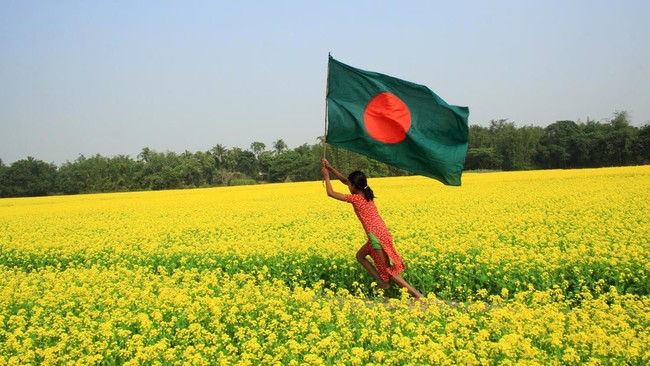
The hope for an immediate end to the war in the Middle East is being voiced loudly by garment industry players in Bangladesh. The conflict, which has triggered a surge in global energy prices, is strangling the economic lifeline of the world’s second-largest exporter of finished clothing after China.
Citing Reuters on Tuesday (22/09/2026), pressure on producers worsened on Monday after fuel prices in Bangladesh skyrocketed by 17.4%. The government has openly linked the surge in energy and maritime shipping costs to the Middle East crisis, triggered by US and Israeli attacks on Iran last February.
Given that most of the country’s electricity supply is generated from natural gas, furnace oil, and diesel, its energy supply has become much more expensive and unreliable.
A recent survey of 1lar 134 knitwear factories reveals the bitter reality that since late August, 55% of businesses have been forced to face cancellations or reductions in orders due to electricity and gas shortages. As many as 78% of factories have even been reported to have partially halted production. Producers must now bear the burden of extra costs by shipping goods via air or providing special discounts to cover delivery delays.
Garment exporter Shahidullah Azim complained about the loss of buyer confidence amidst this instability. One of his clients from Canada even took the drastic step of cutting orders from 25,000 to just 8,000 pieces of clothing.
“Our margins are already very thin, and higher fuel prices will press them even further,” he explained. “It is very difficult to absorb higher production and transportation costs while remaining competitive.”
Threat of Losing Export Throne
The mass suffering of producers is sounding a major alarm, as the ready-made garment industry accounts for more than 80% of Bangladesh’s export earnings, employs approximately 4 million people, and contributes 10% to the Gross Domestic Product (GDP). Last week, the Bangladesh Energy Minister also warned that the rise in imported gas prices is significantly slowing industrial growth, triggering power outages, and cutting funds for infrastructure projects due to swelling gas subsidy expenditures.
The Deputy Managing Director of Denim Expert Ltd, Mohiuddin Rubel, highlighted that their main competitors, such as Vietnam and India, are not facing such a severe energy crisis.
“Whether we will maintain our position among other supplier nations or start falling behind them will depend heavily on how well we manage this situation,” said Rubel.
Amidst the threat of bankruptcy looming over many companies, the 4A Yarn Dyeing factory, which supplies global brands such as Walmart, Gap, and Next, remains an anomaly untouched by the power outage crisis. Since 2019, this factory with 7,500 workers on the outskirts of Dhaka has been supplying 40% of its electricity needs independently through solar panels, while the remainder is supported by gas and diesel generators.
One of the owners of 4A Yarn Dyeing, Abdullah Hil Nakib, admitted that expensive diesel still increased their production costs by 2% to 3%. This surge caused their monthly fuel burden to soar by 5 million taka, or approximately Rp 728.91 million. To avoid the risk of future power failures, the factory is even prepared to build a large-scale industrial battery storage system.
“We have never relied on a single energy source. We need a certain level of stability, but the cost of doing business has increased,” said Nakib.
“First there was the oil shortage, then the gas shortage. We are able to absorb those additional costs, but not every factory is able to do so.”
Source: jawawa.id (https://jawawa.id/newsitem/world-textile-king-becomes-victim-of-iran-war-facing-threat-of-mass-bankruptcy-1790128457)
Originally published by CNBC Indonesia (https://www.cnbcindonesia.com/news/20260923080329-4-770064/raja-tekstil-dunia-jadi-korban-perang-iran-terancam-bangkrut-massal), translated from Indonesian