
World Rocked by Series of Powerful Earthquakes Over 8 Hours: What Does It Signify?
The world was rocked by a series of powerful earthquakes in less than eight hours on Wednesday (24/6). Four strong tremors occurred in quick succession in California, Venezuela, and Japan, raising questions about whether all the events were interconnected.
A magnitude 5.6 earthquake first shook Northern California at 11:10 local time, with its epicentre near the small town of Ukiah. Several hours later, at precisely 18:04 local time, the northeastern coastal region of Venezuela was struck by a magnitude 7.2 foreshock, immediately followed by a magnitude 7.5 mainshock. Minutes later, a magnitude 6.9 earthquake occurred off the coast of Kuji, Japan. The sequence made Wednesday one of the most extraordinary days for seismic activity.
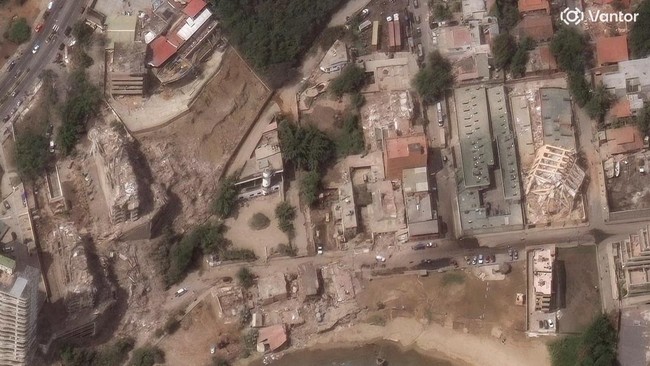
The earthquakes in California and Japan did not cause major damage, although several people were injured. However, the situation in Venezuela was far more severe. The pair of magnitude 7.2 and 7.5 earthquakes, known as a doublet, destroyed many buildings in the northern coastal state of La Guaira and the capital city of Caracas. By Thursday (25/6) at 09:00 local time, at least 164 people were reported dead and nearly 1,000 others injured. “Dozens of buildings collapsed there, and we are currently conducting intensive rescue operations to save lives,” said Venezuela’s Acting President, Delcy Rodríguez.
The occurrence of four large earthquakes in a short space of time has fuelled speculation about whether the events are linked. Scientifically, earthquakes happen when accumulated stress along faults or cracks in the Earth’s crust is suddenly released. Faults are boundaries between tectonic plates that are constantly moving. Friction between plates can lock them together until the pressure builds and eventually triggers an earthquake when the fault slips. Although California, Venezuela, and Japan are all earthquake-prone regions, the seismic activity in these three areas originates from different fault systems, meaning they have no direct connection.
The Northern California earthquake occurred on the Maacama Fault, a strike-slip fault that is part of the San Andreas Fault system. According to earthquake experts Judith Hubbard and Kyle Bradley, Wednesday’s tremor was the largest ever recorded on that fault. Meanwhile, the epicentres of the two Venezuelan earthquakes were only a few kilometres apart. However, seismic wave data from the US Geological Survey (USGS) indicates they likely originated from different faults with different rupture mechanisms. Associate Professor of Earthquake Science at the University of Melbourne, Mark Quigley, explained that the first earthquake likely triggered the second. However, there is no evidence to suggest that either of these quakes was physically connected to the California event.
The earthquake off the coast of Japan is also considered unrelated to the two previous events. Seismic activity on the northeastern coast of Honshu Island is generally driven by the Japan Trench subduction zone, where the Pacific Plate dives beneath northern Japan. This area is known as one of the most seismically active regions in the world. The USGS explains that large earthquakes can indeed trigger quakes in distant locations through a mechanism called dynamic stress transfer. This phenomenon occurs when seismic wave energy triggers another fault that is already in a vulnerable state. However, this mechanism is not believed to be the cause of Wednesday’s sequence. According to USGS geodesist William Barnhart, the two Venezuelan earthquakes were indeed related, whereas the quakes in California and Japan most likely occurred coincidentally. Experts are continuing to gather data to understand the mechanisms of each earthquake. Nevertheless, it is unlikely that further research will find a direct link between the earthquakes in California, Venezuela, and Japan. The series of tremors serves as a reminder that earthquake-prone regions can experience major shaking at any time, making disaster preparedness critically important.