
World Rice Production Forecast to Fall 1.6%, FAO Explains the Causes
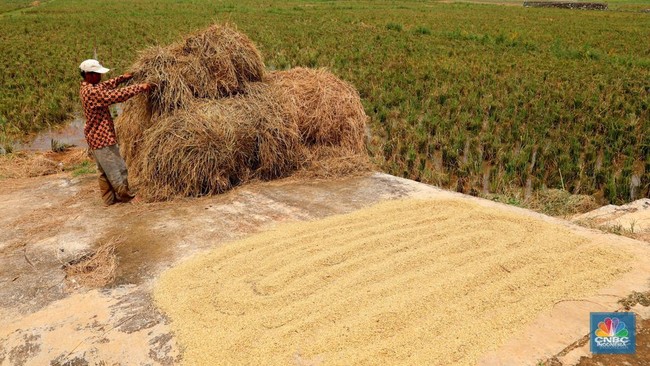
The Food and Agriculture Organization (FAO) estimates world rice production will decline in the 2026/2027 planting season after reaching a high level in the previous season. Weather uncertainty related to the potential emergence of the El Niño phenomenon is one of the main factors clouding the prospects for global rice production next year. In its June 2026 Food Outlook report, the FAO forecasts world rice production in the 2026/2027 season at 552.4 million tonnes. This figure is down 1.6% compared to the 2025/2026 season production, which is estimated at 561.6 million tonnes. “Production prospects for the 2026/27 season are hampered by weather uncertainties linked to predictions of an El Niño phenomenon and profitability constraints in the sector,” the report stated. The FAO noted that almost all regions of the world are expected to harvest less rice compared to the previous season, while Africa is the only region forecast not to experience a production decline. Nevertheless, the agency assesses that global supply conditions remain relatively safe, supported by large rice reserves from previous seasons. In Asia, good irrigation water availability, various assistance programmes, and production input support are expected to mitigate the impact of the production decline. “In Asia, a combination of good water supplies for irrigation, existing assistance schemes, and more intensive input support measures can cushion the decline, so that overall production remains abundant,” it wrote. At the same time, the FAO also forecasts that world rice consumption will continue to increase. Total global rice utilisation in 2026/2027 is projected to reach nearly 558.1 million tonnes, up from the previous year. Although production is expected to decline, world rice stocks remain at a very high level. At the end of 2026/2027, global rice reserves are estimated to reach 213.8 million tonnes. “Despite an expected annual reduction of 2.7 percent, world rice stocks at the end of 2026/2027 could remain at the second highest level in history, at 213.8 million tonnes,” the FAO explained. On the trade side, the FAO forecasts world rice trade volume in 2026 to reach 59.8 million tonnes. Import demand is expected to weaken in several countries due to large harvests and abundant stocks from previous periods. “International rice trade is expected to decline by 2.1 percent in 2026 (January-December) to 59.8 million tonnes, as increased supplies from bumper harvests or from previous large imports may reduce demand from traditional importing countries,” it stated. The FAO also noted that international rice prices are recovering after touching an eight-and-a-half-year low in November 2025. The price increase was driven by reduced harvest pressure, sustained strong demand for aromatic and Japonica rice, and rising production costs in exporting countries. However, the price recovery remains limited due to abundant export supplies and trade disruptions in the Persian Gulf region. The FAO Rice Price Index in May 2026 stood at 104.8 points. Although it rose 6.6% compared to October 2025, this figure was still 1.4% lower than the same period the previous year. Separately, Minister of Agriculture Amran Sulaiman revealed that the government has anticipated the impact of the El Niño Godzilla weather phenomenon. In terms of food availability, current rice stocks are sufficient for up to 11 months. Amran explained that as of June, government rice reserves reached 5.2 million tonnes. The standing crop of rice in paddy fields is estimated at 10 to 11 million tonnes, while stocks held in hotels, homes, and restaurants total approximately 12.5 million tonnes. “This means with these three reserves, we are covered for 10 to 11 months ahead. If we take the lowest estimate of 10 months, that means we are secure until April 2027,” Amran said after a limited meeting at the Presidential Palace. Amran is also not worried about drought, as rice stocks are projected to increase again in March 2027 due to the harvest period. Meanwhile, the FAO Food Price Index stood at 130.8 points in May 2026, a slight 0.2% decrease from April but still 2.9% higher year-on-year. The current position remains 18.4% below the record high reached in March 2022 when global food markets were rocked by the Russia-Ukraine war. The FAO rice price index rose 2.7% in May 2026. Concerns over weather conditions in several Asian exporting countries emerged alongside rising crude oil and derivative product prices, a combination that increased both production and distribution costs, supporting the price increase.