
World Peace Cannot Be Achieved Without Justice for All Nations, Says HNW
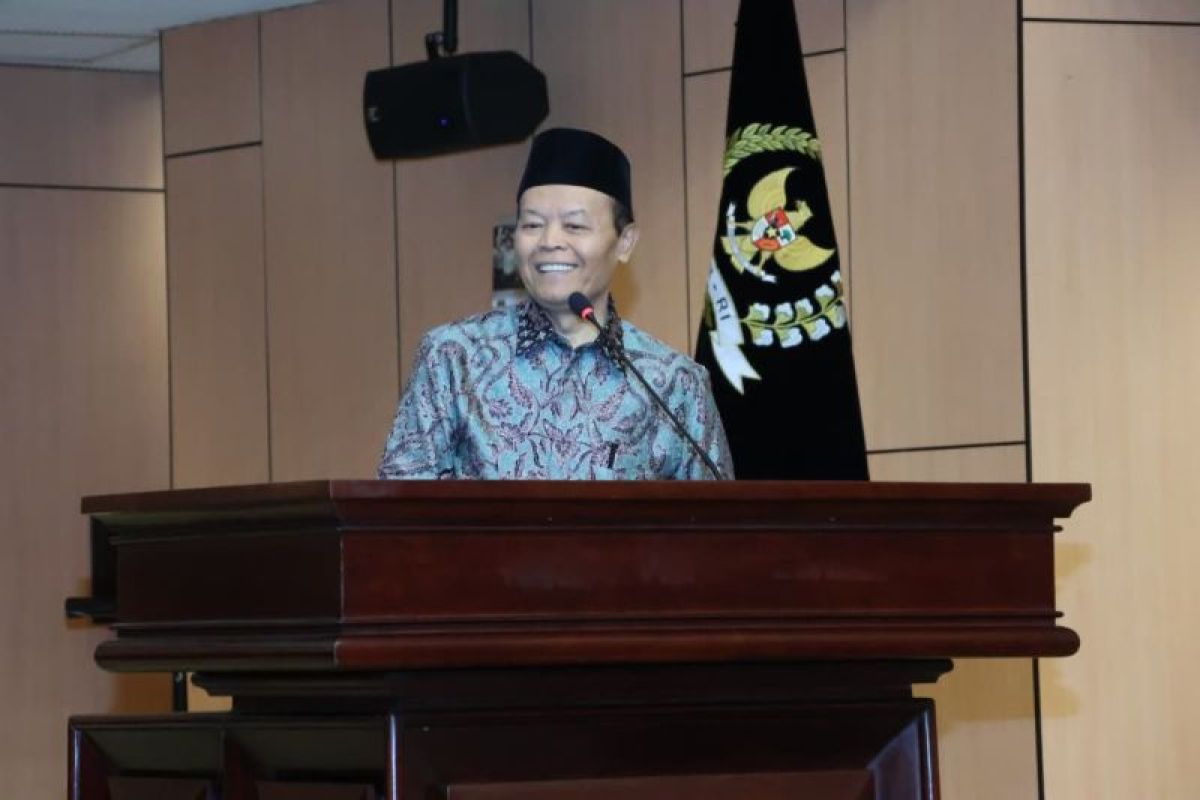
Jakarta (ANTARA) - The Deputy Speaker of the People’s Consultative Assembly of the Republic of Indonesia (MPR RI), Hidayat Nur Wahid (HNW), has asserted that world peace will not be realised without independence and justice for all nations.
He stated this while opening the Global Dialogue Forum in commemoration of the International Day for Dialogue among Civilisations at the Nusantara V Building, Parliament Complex, Senayan, Jakarta, on Wednesday.
The forum, themed “Strengthening Faith and Building Peace: Aligning Global Civilisations from Indonesia for the World,” serves as a platform to strengthen cross-national and interfaith collaboration in achieving sustainable world peace.
Quoting his written statement, HNW expressed appreciation for the forum, noting that it aligns with the mandate of the Indonesian Constitution, specifically the Preamble to the 1945 Constitution of the Republic of Indonesia, which affirms Indonesia’s commitment to independence, lasting peace, and social justice.
“It is impossible to have true world order and peace if repression and colonialism persist. There can only be true peace where there is justice and no more colonialism,” he said.
“The desire to bring about world peace is a direct manifestation of the Indonesian Constitution. This mandate is enshrined in the Preamble to the 1945 Constitution and is our collective responsibility to realise,” he added.
Furthermore, HNW highlighted the situation in Palestine, which he believes remains one of the greatest challenges to achieving world peace. He noted that the ongoing conflict and occupation of Palestinian territories is an issue requiring serious attention from the international community.
“If this forum arises from concern over the continued occupation and attacks against Palestine, Gaza, the West Bank, and Jerusalem, extending to other regions, then this is a highly relevant step toward building solidarity and concrete action for peace,” he remarked.
HNW assessed that the role of the United Nations (UN) remains highly strategic in advocating for conflict resolution and the recognition of Palestinian independence. He noted that through UN forums, an increasing number of countries are granting recognition to Palestine, representing a positive development in international diplomacy.
He also stated that Indonesia remains consistent in advocating for Palestinian independence through various international forums, including world parliamentary forums and through the diplomacy conducted by the Indonesian government.
Meanwhile, the Deputy Minister for Foreign Affairs of the Republic of Indonesia, Muhammad Anis Matting, who also attended the forum, emphasised that the world is currently facing a period of civilisational transition marked by various geopolitical conflicts, a global leadership crisis, and the weakening of international institutions.
“Essentially, we inherit from one civilisation to another. No single civilisation can claim to be the greatest contributor to human history,” said Anis.
He also highlighted the cyclical rise and fall of civilisations, which he described as an unavoidable law of history. In the process of civilisational shifts, conflicts often emerge as part of the dynamics towards a new balance.
“We should not be surprised when witnessing conflict. It is an unavoidable process in the history of human civilisation,” he said.
He further assessed that various current conflicts, ranging from Eastern Europe to the Middle East, are rooted in systemic crises, including a global leadership crisis, a crisis of international institutions, and the struggle for supremacy between major world powers.
As a solution, Anis proposed the need for a grand civilisational proposal that can unite five key elements: religion, democracy, prosperity, science, and art. He believes the combination of these five elements can serve as the foundation for a more peaceful and just global future.