
World Milk Day Highlights Importance of Nutrition for Families
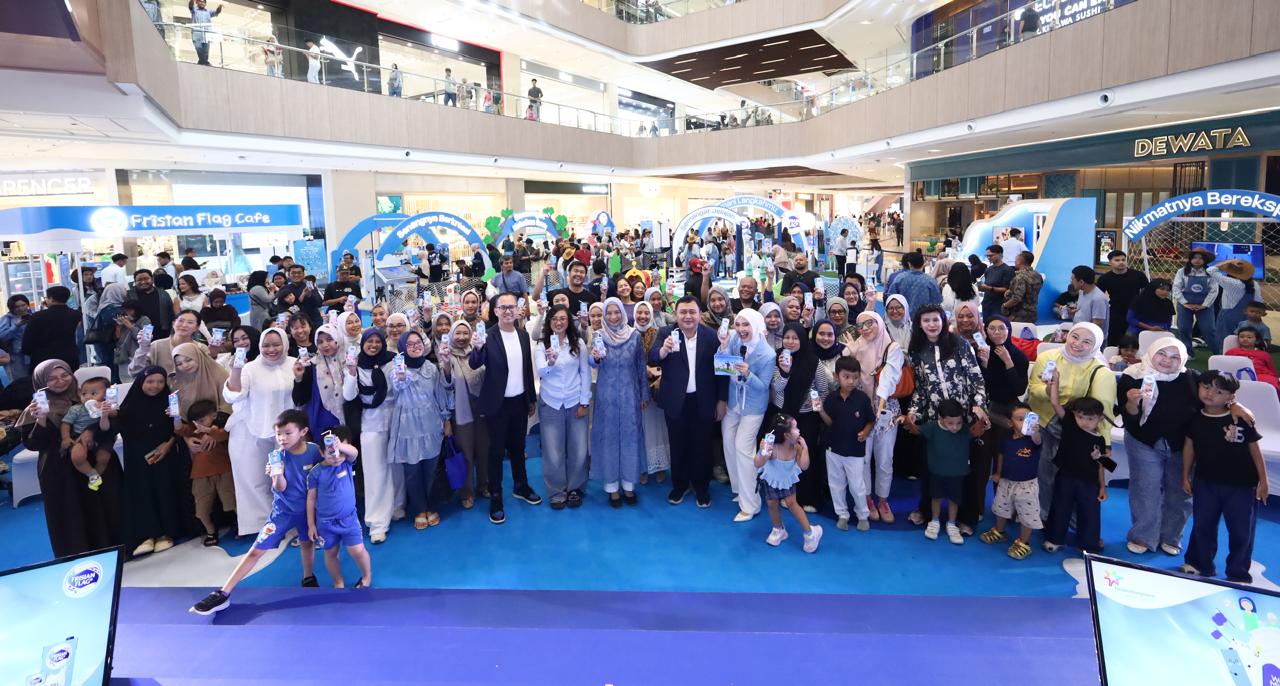
Drinking a glass of milk daily is a simple way to support children’s growth, maintain bone health, and meet family nutritional needs across all life stages. World Milk Day, observed annually on 1 June, serves as a reminder of milk’s vital role in a healthy lifestyle.
In Indonesia, the occasion coincides with Hari Susu Nusantara (Indonesian Milk Day), with various stakeholders leveraging it to educate the public on the importance of milk consumption and balanced nutrition, while also strengthening the national milk ecosystem from farm to consumer.
For the 2026 World Milk Day celebration, PT Frisian Flag Indonesia (FFI) has adopted the theme ‘Milk’s Goodness Accompanies Your Steps, Now and Tomorrow’ through various educational activities. The event features talk sessions with academics, industry representatives, and dairy farmers, interactive activities at the ‘Semangat Jelajah’ booth, and concludes with a milk toast symbolising a commitment to building healthy habits starting with a glass of milk.
Intan Ayu Kartika, Marketing Director of Frisian Flag Indonesia, stated that building a healthier Indonesian generation requires starting with simple, sustainable steps, including balanced nutrition, drinking milk, and regular physical activity.
‘World Milk Day is always a key opportunity for us to encourage Indonesian families to build a healthier, more vibrant generation through simple daily habits, including drinking milk,’ she said.
According to Intan, milk offers different benefits according to life stage. In childhood, Omega 3, Omega 6, and DHA support brain growth and development, while later in life, vitamin D and calcium help maintain bone strength, support daily activities, and bolster immunity.
Therefore, FFI believes ongoing education about milk’s nutrients and benefits is essential to help the public understand the importance of proper nutrition from early childhood through adulthood.
Quality of Milk
Prof. Dr. Epi Taufik, S.Pt., M.V.P.H., M.Si., a professor of Dairy Science and Technology at IPB University, stated that the quality of milk consumed by the public is the result of a lengthy process involving multiple stakeholders, from farmers to processing industries.
‘Behind every milk product consumed by the public is a lengthy process starting from farm management to modern processing that ensures milk remains safe, hygienic, and nutritious. Technologies such as UHT (Ultra High Temperature) help preserve macro and micronutrients in milk while making dairy products safer and more accessible across regions and tailored to nutritional needs at every life stage,’ he said.
According to Epi, strengthening national fresh milk production requires an integrated ecosystem through collaboration between farmers, industry, academia, and government. Strong collaboration ensures milk quality is maintained from farm production to consumer hands.
Ecosystem from Upstream to Downstream
Intan further explained that the company’s commitment extends beyond providing nutritious milk products to the public, also through building a sustainable national milk ecosystem.
This aligns with the company’s Nourishing Indonesia mission, aiming to deliver better nutrition to the public through upstream-to-downstream collaboration.
Currently, FFI collaborates with dairy cooperatives representing over 30,000 local dairy farmers. The partnership is supported by fresh milk collection technology, production quality improvements, and product innovations tailored to consumers’ needs at different life stages.
This commitment is reinforced by FFI’s modern production facility in Cikarang, operational from 2024. The sustainable, state-of-the-art factory, spanning 25.4 hectares—equivalent to over 35 football fields—has an annual production capacity of up to 700 million kilograms of dairy products.
With fresh milk supply from tens of thousands of local farmers across Java, the facility plays a crucial role in delivering quality, nutritious, and affordable dairy products to hundreds of millions of Indonesian consumers from Sabang to Merauke.
Farmers at the Forefront
From the upstream perspective, local dairy farmer Rumini believes good milk quality stems from consistent application of Good Dairy Farming Practices and a willingness to learn and improve productivity.
Rumini is a participant in FFI’s Young Progressive Farmers Academy (YPFA), a programme designed to cultivate modern, competitive dairy farmers.
‘I am proud to be a female farmer contributing to delivering nutrition for Indonesia’s generations and families. We farmers continuously learn to enhance the quality and quantity of fresh milk production through modern, sustainable farming practices. With Frisian Flag Indonesia’s support, we strive to become better dairy farmers capable of managing sustainable farms,’ she said.