
World Mangrove Day: Momentum to Strengthen Coastal Resilience in Seribu Islands and Boost Blue Carbon Absorption
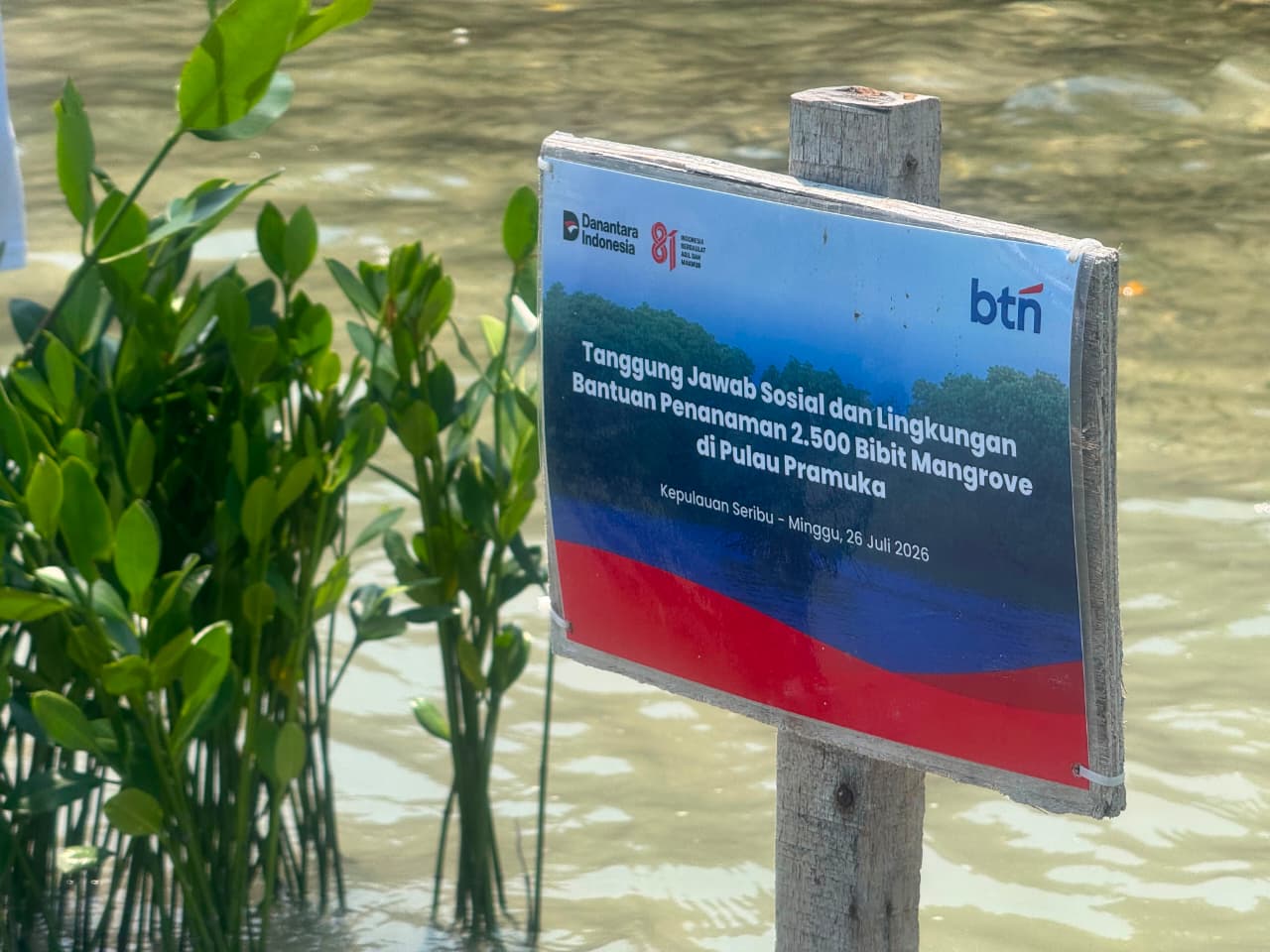
World Mangrove Day serves as a moment to strengthen coastal rehabilitation as part of efforts to address the impacts of climate change.
Beyond protecting beach ecosystems, mangrove planting can also support the economic sustainability of communities that depend on coastal resources.
PT Bank Tabungan Negara (Persero) Tbk (BTN) demonstrated this commitment by planting 2,500 mangrove seedlings on Pramuka Island in the Thousand Islands on Sunday (26/7/2026). The programme, part of the company’s Social and Environmental Responsibility (TJSL) scheme, was carried out together with local environmental community groups to strengthen sustainable coastal ecosystem conservation.
Ramon Armando, Corporate Secretary and person in charge of BTN’s TJSL programme, said the mangrove planting was an implementation of the environmental, social and governance (ESG) principles applied by the company. According to him, business sustainability must go hand in hand with contributions to environmental conservation and community empowerment.
“The presence of a mangrove green belt on Pramuka Island is a long-term ecological investment. Coinciding with World Mangrove Day, BTN and environmental community groups are working together to build a natural barrier to help prevent erosion. At the same time, mangroves are also an important habitat for various marine biota that support the sustainability of coastal communities’ livelihoods, especially fishermen in the Thousand Islands,” said Ramon.
He explained that the 2,500 seedlings planted consisted of the species Rhizophora stylosa and Rhizophora mucronata. The planting used a cluster method designed to increase the seedlings’ growth success rate in coastal areas.
According to Ramon, mangroves offer benefits far beyond serving as a barrier against erosion. The coastal vegetation also serves as a habitat for various marine creatures and as an absorber of blue carbon, which is important in climate change mitigation efforts.
“Mangrove conservation is one of the nature-based solutions capable of delivering environmental benefits as well as social and economic benefits for coastal communities. That is why we want this programme to have a lasting impact,” he said.
Pramuka Island was chosen as the planting site because it is the centre of community activity in the Thousand Islands, yet at the same time it is an area vulnerable to erosion and rising sea levels caused by climate change.
To ensure the programme’s sustainability, BTN partnered with local mangrove community groups for seedling guidance and maintenance after planting. Community involvement is a key factor in ensuring that ecosystem rehabilitation runs optimally.
“The success of environmental restoration is determined not only by planting, but also by ongoing maintenance. That is why collaboration with local communities is key to ensuring that the mangroves planted today can continue to grow, provide ecological benefits, and open up economic opportunities through ecotourism development,” said Ramon.
BTN, he added, hopes the mangrove rehabilitation on Pramuka Island will deliver long-term benefits for both the environment and coastal communities. The programme also forms part of the company’s contribution to supporting the achievement of the Sustainable Development Goals (SDGs), particularly Goal 13 on climate action and Goal 14 on the conservation of marine ecosystems.