
World Mangrove Day: BNI Strengthens Commitment to Environmental Conservation and Coastal Economy
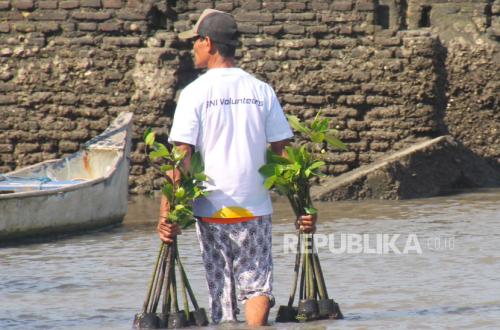
Coinciding with World Mangrove Day on 26 July, PT Bank Negara Indonesia (Persero) Tbk (BNI) has reinforced its commitment to supporting coastal ecosystem preservation through mangrove rehabilitation, which also opens up economic opportunities for the community. This initiative is part of the implementation of BNI’s Environmental, Social, and Governance (ESG) principles. Through its Corporate Social and Environmental Responsibility (TJSL) programme, BNI Berbagi, the company has planted 258,000 mangrove seedlings over the past eight years in several strategic coastal areas, namely Mempawah (West Kalimantan), Kebumen (Central Java), Kepulauan Seribu (DKI Jakarta), and Banyuwangi and Pamekasan (East Java). BNI Corporate Secretary Okki Rushartomo stated that mangrove rehabilitation is part of the bank’s strategy to build coastal resilience through a Nature-based Solutions (NbS) approach. This step is also aligned with the transformation of State-Owned Enterprises under Danantara Indonesia, which focuses on creating sustainable added value for the community and the national economy with a spirit of wholehearted service. Mangrove conservation not only restores coastal ecosystems but also creates new sources of livelihood for the community. ‘Therefore, we involve farmer groups and residents from the nursery and planting stages to the development of ecotourism and processed mangrove products, so that the benefits of conservation are felt directly,’ Okki said in a written statement on Sunday (26/7/2026). Beyond acting as a natural carbon sink, mangroves also protect coastal areas from abrasion, high waves, and rising sea levels. This ecosystem also serves as an important habitat for various marine biota, supporting fishing activities and maintaining the sustainability of coastal resources. This approach encourages the growth of mangrove-based economic activities, ranging from ecotourism to the development of processed products, ensuring that the benefits of rehabilitation extend beyond environmental aspects to strengthen the welfare of coastal communities. The impact of the programme has been measurable. An evaluation of the Mangrove Forest Regeneration Programme in Banyuwangi showed a Community Satisfaction Index of 84.09 percent, reflecting high public appreciation for the quality of implementation and the programme’s benefits. ‘The spirit of Swadharma Bhakti Nagara drives BNI to continue presenting programmes that provide real benefits to the community. Therefore, every TJSL initiative we undertake is directed at creating a sustainable impact on the environment while strengthening the local economy,’ Okki asserted. Going forward, BNI will continue to expand collaboration with the government, academics, communities, farmer groups, and various other stakeholders to strengthen mangrove rehabilitation and develop a coastal ecosystem-based economy. In line with the transformation of State-Owned Enterprises under Danantara Indonesia, this effort is expected to create sustainable added value for the community and support national economic growth.