
World Leaders to Set Out Climate Priorities at COP31
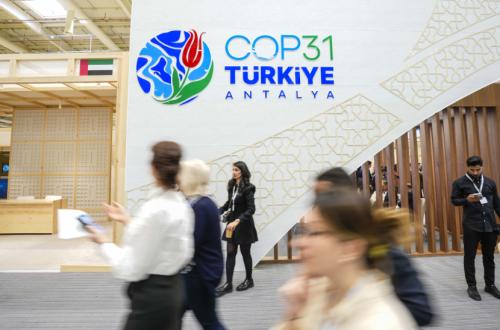
ANTALYA – World leaders are scheduled to set out their climate priorities and commitments at the 31st UN Climate Change Conference (COP31) in Antalya, Turkey, on Wednesday (11 November 2026). A key item in the negotiations is increasing electricity use while reviving discussions on the transition away from fossil fuels.
Delegations from nearly 200 countries have gathered in Antalya, on the Mediterranean coast, as global greenhouse gas emissions show no sign of falling. Political attention around the world is also divided by other issues, from war and inflation to economic crises.
A UN report released last month warned that the world is on course to exceed the 1.5°C global warming limit. Countries agreed to that threshold under the Paris Agreement in an effort to prevent the worst impacts of climate change.
Former French Prime Minister Laurent Fabius said speeches by world leaders could provide political momentum for the negotiations. Fabius led the 2015 Paris climate conference and now heads an advisory council comprising several former COP presidents.
“This is an opportunity for leaders to make announcements and, more importantly this time, explain how they will implement them, because the keyword in Antalya is implementation,” Fabius told Reuters.
According to the COP31 schedule, world leaders, including presidents and heads of government, will deliver brief speeches from Wednesday afternoon through Thursday. Those due to speak on Wednesday include Brazilian President Luiz Inacio Lula da Silva, European Commission President Ursula von der Leyen, Chinese Vice-President Han Zheng and Marshall Islands President Hilda Heine.
The United States is again absent from the climate talks for the second consecutive year. The world’s largest historical emitter has sent no delegation after President Donald Trump withdrew the US from international climate cooperation shortly after returning to office in 2025.
COP31 host Turkey is urging participating countries to make electrification targets a central part of the conference’s final agreement. The proposal aims to increase electricity’s share of total global energy consumption to 35 per cent by 2035, from just over 20 per cent today.
Greater electricity use is expected to reduce emissions from transport, industry and buildings. However, some parties have criticised the proposal, saying it does not go far enough to address the root causes of climate change.
One weakness is that the proposal does not require additional electricity supply to come from clean energy. Nor is there a more comprehensive global plan to reduce dependence on coal, oil and gas.
UN Secretary-General Antonio Guterres urged countries to stop avoiding discussions about ending the use of fossil fuels. He called on governments to draw up a clear timetable for the transition.
“It is time to stop treating the transition away from fossil fuels as a taboo subject or something impossible to achieve,” Guterres said at the conference on Tuesday (10 November 2026).
The previous COP negotiations in Brazil failed to reach agreement on the need for a global roadmap to reduce dependence on fossil fuels. In recent weeks, however, Brazil’s COP organisers published a roadmap to keep the issue on the climate talks’ agenda.
The document proposes that countries begin planning and assessing their respective energy systems by 2028 at the latest. Countries are then expected to work together to reduce fossil-fuel supply from 2031 as part of efforts to accelerate the energy transition and curb greenhouse gas emissions.
Source: jawawa.id (https://jawawa.id/newsitem/world-leaders-to-set-out-climate-priorities-at-cop31-1794383626)
Originally published by Republika (https://esgnow.republika.co.id/berita/tobu0l416/pemimpin-dunia-sampaikan-prioritas-iklim-dalam-cop31), translated from Indonesian