
World Leaders Head to Türkiye as the Planet’s Future Hangs in the Balance
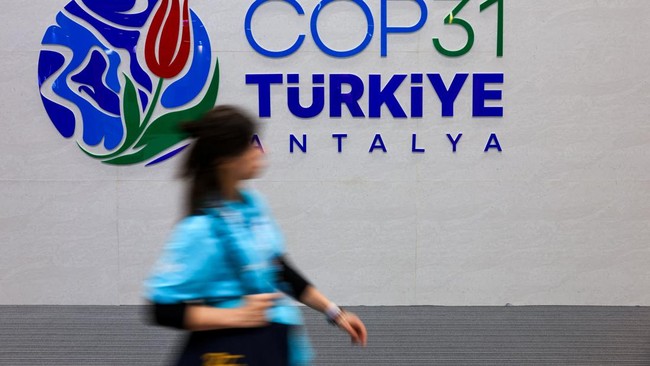
The 31st United Nations Climate Change Conference, or Conference of the Parties (COP31), officially opened today, Monday, 9 November 2026, in Antalya, Türkiye.
Running until 20 November, the meeting is a major opportunity for nearly 200 countries to determine the direction of global efforts to tackle the climate crisis.
This year’s conference is taking place amid mounting challenges. Although a range of international agreements have been reached over the past three decades, global efforts to limit rising temperatures remain off track.
The United Nations Environment Programme’s (UNEP) latest Emissions Gap Report 2026 says global temperatures are expected to exceed the 1.5°C threshold above pre-industrial levels.
Even if every country fulfils its emissions-reduction commitments under its Nationally Determined Contribution (NDC), global temperatures could still rise by around 2.6°C over the course of this century.
This puts COP31 in a pivotal position: not only to formulate new agreements, but also to ensure that existing commitments are translated into policy, investment and concrete action.
For Indonesia, COP31 is also an opportunity to strengthen international cooperation and press for the finance and technology needed to support the transition to a low-carbon economy.
What is COP and why does it matter?
The Conference of the Parties is a meeting of the parties to the United Nations Framework Convention on Climate Change (UNFCCC), an international climate change treaty adopted in 1992.
The first conference was held in Berlin, Germany, in 1995. Since then, it has become the main forum for countries to discuss measures to address climate change.
At COP, governments negotiate cuts to greenhouse gas emissions, adaptation to climate impacts, climate finance and technology support for developing countries.
The conference also brings together businesses, civil society organisations, scientists, youth groups and Indigenous communities, all of whom contribute to the development of climate solutions.
Over more than three decades, the conferences have produced a number of important agreements. One of the biggest milestones was the Paris Agreement, adopted at COP21 in 2015. It set the goal of keeping the rise in global temperatures well below 2°C and pursuing efforts to limit it to 1.5°C.
The agreement provides the foundation for global climate policy, including countries’ obligation to submit and update their own emissions-reduction commitments.
The following is a history of COP conferences since the first was held in 1995, including their venues and main outcomes.
Seven key issues in the spotlight at COP31
As the conference enters its 31st year, the UN climate talks are placing increasing emphasis on implementing commitments made over the past three decades.
With the threat of rising global temperatures and the need for climate finance growing, countries are under pressure to accelerate emissions cuts while strengthening resilience to climate impacts.
According to UNEP, in a report published on 5 November 2026, seven key issues are expected to dominate COP31 discussions.
The priorities range from keeping global warming as close as possible to 1.5°C and transitioning to clean energy, to waste management and stronger international cooperation.
The seven issues reflect the challenge of translating climate pledges into policy, investment and practical action amid differences in countries’ economic interests and development circumstances.
Here are the seven issues expected to be in the spotlight at COP31, according to UNEP’s analysis.
How far has the world got in tackling the climate crisis?
After more than three decades of international climate negotiations, the world has made progress in clean energy development, emissions reduction and ecosystem restoration. However, recent UN reports show that implementation is still falling short of global targets.
According to UNEP’s Emissions Gap Report 2026, global greenhouse gas emissions reached 58.4 billion tonnes of carbon dioxide equivalent (GtCO2e) in 2025, little changed from 2024.
Over the past decade, 63 countries reduced emissions by a combined 1.8 GtCO2e. That achievement was outweighed by an increase of 7.2 GtCO2e across 124 other countries.
Renewable energy development has, by contrast, advanced. Global renewable electricity capacity has grown three times faster than projected under policies in 2015, while solar power development has reached seven times the earlier estimate.
Even so, the gap between progress and targets remains substantial. To limit any overshoot of the 1.5°C warming threshold as much as possible, the world needs to cut emissions by 45% by 2035 compared with 2025. Full implementation of NDC commitments, however, is projected to deliver a reduction of only 11–15%.
On ecosystem recovery, the Restoration Progress Report 2026, published by the Food and Agriculture Organization (FAO), UNEP and the Secretariat of the Convention on Biological Diversity, says that around 252 million hectares of ecosystems worldwide are covered by restoration activities.
That represents only about a quarter of the global commitment to restore roughly one billion hectares. The report says restoration efforts need to accelerate threefold to meet the 2030 target of restoring 30% of degraded ecosystems.
Finance is another challenge. The Adaptation Gap Report 2026 estimates that developing countries will need US$305 billion a year for adaptation by 2035. International public finance from developed countries stood at only about US$28.2–31.7 billion in 2024.
Taking inflation into account, adaptation finance needs are expected to rise to US$420 billion a year by 2035. Even if international finance triples to US$85–120 billion annually, it would cover only about 20–29% of developing countries’ needs.
Together, the three reports show that despite progress, faster emissions cuts, ecosystem restoration and increased funding are still needed to meet global climate targets.
What is Indonesia taking to COP31?
Indonesia is bringing a range of priorities to COP31 in Türkiye, from the energy transition and climate finance to the development of carbon markets.
According to the Government Communications Agency on 5 November 2026, Indonesia has reaffirmed its commitment to accelerating the transition to a low-carbon economy while maintaining energy security and national economic growth.
The Indonesian delegation is led by Hashim S. Djojohadikusumo, the President’s Special Envoy for Climate and Energy, under the theme “Indonesia: Delivering Climate Solutions at Scale”.
UNEP’s Emissions Gap Report 2026 puts Indonesia’s greenhouse gas emissions at 4.7 tonnes of carbon dioxide equivalent (CO2e) per person in 2025, below the global average of 6.4 tonnes. However, Indonesia’s per-capita emissions have risen by an average of 3.7% a year over the past decade.
Indonesia is also among six G20 members considered likely, under current policies, to meet their unconditional 2030 NDC targets.
Indonesia’s climate commitments are set out in its Second Nationally Determined Contribution (Second NDC), submitted in October 2025. It sets a 2035 emissions target of 1.26–1.49 billion tonnes of CO2e and a net-zero target for 2060 or earlier.
The same UNEP report says Indonesia’s latest NDC target implies emissions in 2035 will be around 273 million tonnes of CO2e a year lower than the level projected under its 2030 NDC target. This is a comparison between targets, not an achieved reduction in emissions.
To support these goals, the government plans to add 42.6 gigawatts (GW) of new and renewable energy capacity by 2034 and develop 100 gigawatt-peak (GWp) of solar power.
Indonesia also began international carbon trading through IDXCarbon in January 2025.
At COP31, the government is prioritising access to climate finance, technology transfer and international carbon-market cooperation. Through the Indonesian Pavilion, themed “House of Climate Solutions”, the government has scheduled 67 discussion sessions and opportunities to sign memoranda of understanding (MoUs) with international partners.
COP31 gives Indonesia an opportunity to expand cooperation and investment to accelerate delivery of its national climate commitments.
Source: jawawa.id (https://jawawa.id/newsitem/world-leaders-head-to-turkiye-as-the-planets-future-hangs-in-the-balance-1794207036)
Originally published by CNBC Indonesia (https://www.cnbcindonesia.com/research/20261109095229-128-783430/pemimpin-dunia-ke-turki-masa-depan-bumi-kini-dipertaruhkan), translated from Indonesian