
World Faces Plastic Crisis, Indonesia's Fate is Like This
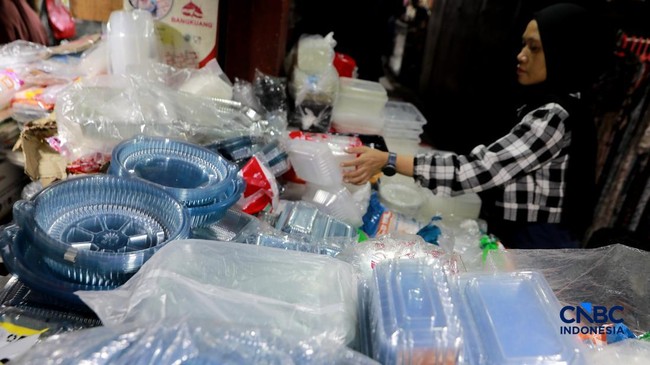
Indonesia’s dependence on petrochemical raw materials continues to pose challenges amid global dynamics. As several countries begin to secure supplies, domestic industry players are also monitoring stock resilience to avoid production disruptions.
Secretary General of the Indonesian Olefin, Aromatics, and Plastics Industry Association (Inaplas), Fajar Budiono, revealed that the national plastics industry’s primary raw material needs remain substantial, particularly for naphtha, which is entirely reliant on imports.
“For naphtha, the requirement is 3 million tons per year and 100% imported. For plastics raw materials like PE, PP, PET, PS, PVC and others, around 8 million tons, with 50% still imported,” he told CNBC Indonesia on Thursday (2/4/2026).
Amid these conditions, global concerns are becoming apparent. Several countries are even experiencing unusual spikes in demand, reflecting heightened anxiety over raw material supplies.
One country experiencing an increase in plastic demand is South Korea. However, Fajar assesses that there are differences in the petrochemical industry situation compared to Korea, so Indonesia is deemed relatively safe.
“Korea has had some petrochemicals on slowdown for a long time before the (Middle East) war, so now it’s even harder,” he stated.
The government and businesspeople are reportedly beginning communications with several alternative countries to reduce dependence on the Middle East region. However, this step carries its own consequences.
“Communications have already started with Central Asia, Africa, and America. Clearly, the lead time is longer, the fastest around 50 days,” Fajar explained.
On the other hand, questions arise as to why Indonesia has not yet been able to meet these raw material needs independently. According to Fajar, the direction of energy and industrial policies remains the main factor.
“We are still focused on fuel oil; the existing naphtha is also prioritised for fuel first,” he said.
He views future opportunities in petrochemical raw materials as still open, particularly through the development of downstream processing based on domestic resources.
“We should start downstream processing of coal or bio-naphtha from CPO; that’s the most feasible,” he stated.
Nevertheless, amid various global challenges, all countries are currently in the same position, racing to secure raw materials. This situation leads industry players to hope that supply stability remains maintained, so domestic production activities are not disrupted amid ongoing global pressures.
“All countries are trying to secure feedstock,” Fajar said.