
World Environment Day: Environment Minister Urges Collective Action to Save the Planet
Environment Minister Jumhur Hidayat has warned that the world is currently facing a triple planetary crisis: climate change, biodiversity loss, and environmental pollution. These interconnected crises threaten ecological, economic, and social stability.
Marking World Environment Day 2026 on Saturday (6/6), Jumhur emphasised that environmental issues are critical determinants for the future of upcoming generations. He reaffirmed Indonesia’s commitment to the Paris Agreement, aiming to keep global temperature rises as close to the 1.5-degree Celsius limit as possible. This commitment is reflected in the 2030 Enhanced Nationally Determined Contribution (NDC), which targets an emission reduction of 31.89% through domestic efforts and 43.2% with international support.
As an archipelagic nation, Indonesia is highly vulnerable to climate change. Over 60% of the population resides in coastal areas facing threats from rising sea levels, extreme weather, and food security disruptions. Furthermore, more as than 90% of disasters in Indonesia are hydrometeorological, including floods, landslides, and droughts.
Waste management has emerged as a significant factor exacerbating climate change. Indonesia produces approximately 51 million tonnes of waste annually, yet about 74% of this is not managed optimally, with much of it ending up in landfills that still utilise open dumping systems. This practice leads to pollution, methane emissions, and health risks. The Minister noted that methane emissions from waste heaps are over 30 times more potent than carbon dioxide.
He highlighted that landfills across almost all regencies and cities are reaching overcapacity due to outdated ‘collect, transport, and dump’ approaches. To combat this ‘waste emergency’, the government is encouraging a shift towards integrated management starting from the source. This includes the ‘Gerakan Indonesia Asri’ (Beautiful Indonesia Movement), which promotes waste sorting at the household level.
Beyond waste, the Minister highlighted air pollution from vehicles and industry, water pollution in rivers and oceans, and land degradation due to deforestation. He called for an ‘ecological repentance’—a fundamental change in how society perceives and interacts with the environment.
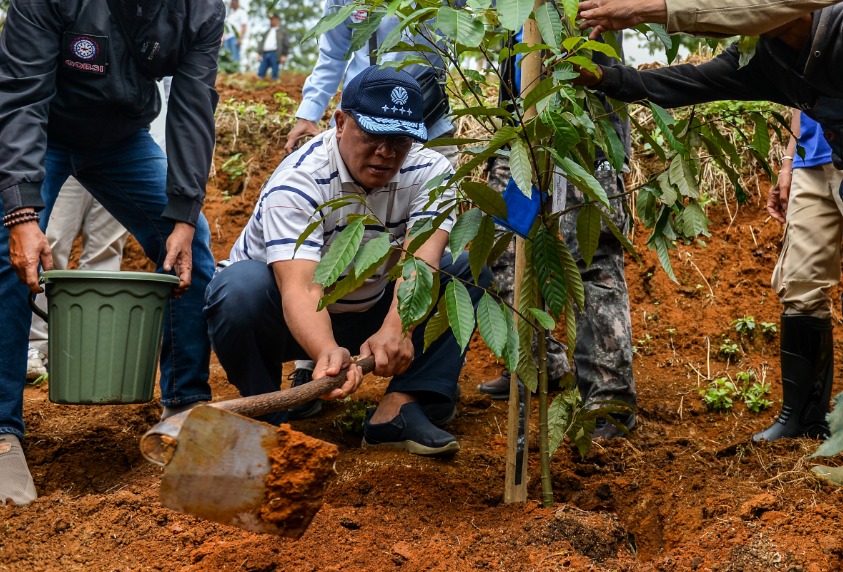
Concrete government steps include reducing single-use plastics, strengthening waste sorting, developing a circular economy through waste banks, implementing the 3R (reduce, reuse, recycle) principle, and planting two billion trees to bolster climate resilience. Jumhur concluded that environmental preservation is a moral and social obligation that requires a national movement involving all sectors of society.