
World Environment Day 2026: WALHI Papua Highlights Indigenous Forest Crisis
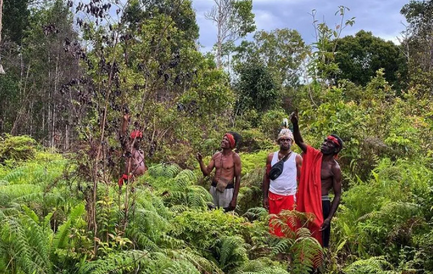
The commemoration of World Environment Day on 5 June 2026 has become a crucial moment for ecosystem sustainability at the eastern tip of Indonesia. The Indonesian Forum for the Environment (WALHI) Papua has issued critical notes regarding the condition of Papua’s landscape, which is increasingly squeezed by the expansion of extractive industries and development policies deemed to ignore the rights of indigenous peoples.
WALHI Papua Executive Director Maikel Primus Peuki stressed that for the indigenous peoples of Papua, this year’s commemoration is not merely an annual ceremony. It is a stark reminder that their living spaces, from forests and rivers to coastal areas, are under serious threat from massive exploitation.
Based on data compiled by WALHI Papua, the rate of forest destruction in Tanah Papua has reached a deeply alarming level. Papua is now said to account for around 70 percent of the total national deforestation. This figure indicates a shift in the burden of environmental damage towards the eastern region of Indonesia.
Specifically, WALHI recorded that natural forest deforestation in Papua during the 2024-2025 period reached a staggering figure, namely around 770,000 hectares. This damage is triggered by several main factors: expansion of monoculture commodity plantations, mining operations that clear land, inadequate spatial planning that sacrifices customary forests for infrastructure development, and illegal logging practices.
Maikel Primus Peuki highlighted that for the people of Papua, forests are not merely an economic commodity or a figure in investment statistics. “Ironically, in the name of investment and economic growth, forests that have been guarded by indigenous peoples for thousands of years are increasingly being treated as a commodity,” Maikel stated on Friday (5/6/2026).
This environmental destruction brings a domino effect that harms local communities, including a decline in water resources and food security, the degradation of cultural identity tied to the forest ecosystem, and social conflicts between corporations and indigenous communities.
WALHI Papua assesses that the project licensing process in Papua often ignores the principle of Free, Prior, and Informed Consent (FPIC). Many indigenous communities feel they are not fully involved in decision-making regarding their lands.
As a rescue measure, WALHI Papua urges the government to impose a moratorium on ecologically damaging extractive permits and large-scale plantations, conduct a review of spatial planning to fully recognise and protect customary forest areas, and ensure the FPIC principle is strictly applied in every development project within indigenous territories.
“Papua is home to millions of people and one of the world’s most important tropical forest landscapes. When Papua’s forests are damaged, what is lost is not only the future of the Papuan people, but also the future of the global environment,” concluded Maikel.