
World Envious! These Rare Plants and Animals Only Exist in Indonesia
Indonesia is one of the countries with the greatest wealth of flora and fauna in the world, both on land and in the water.
According to the UNDP’s Biodiversity Finance Initiative (BIOFIN), Indonesia is among the world’s 17 megadiverse countries and is home to around 17% of the world’s wildlife.
As the country marks its 81st Independence Day, biodiversity wealth is one of Indonesia’s natural assets that deserves attention. Conservation efforts are also evolving, not only through conservation policy but also through sustainable financing instruments.
One example is through green sukuk. The Ministry of Environment and Forestry (KLHK), with support from BIOFIN UNDP, received an allocation of US$2.7 million last year from green sukuk funds for the construction of the Maluku Conservation Center, which is intended for the rescue, rehabilitation, and release of wildlife into their natural habitats. The use of green sukuk for biodiversity-related projects expands the use of green financing instruments that were previously directed more at other environmental and climate agendas.
Indonesia’s biodiversity wealth has not even been fully revealed. The National Research and Innovation Agency (BRIN) notes that from 1967 to 2025, its researchers together with national and international partners have discovered 1,583 new species, 712 of which are flora.
Discoveries continue. In the period from 2025 to 2026, at least 29 new types of Indonesian flora have been scientifically described, ranging from the Rafflesia, Begonia, Homalomena, Rhododendron, and Nepenthes groups to orchids (Orchidaceae).
Some of the flora that are part of Indonesia’s biodiversity wealth include:
Rafflesia arnoldii - An iconic flora from Sumatra known for having a very large single flower.
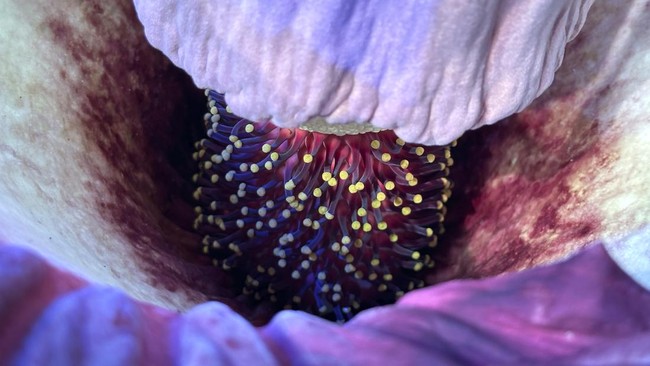
Giant corpse flower (Amorphophallus titanum) - An endemic Sumatran plant famous for the size of its inflorescence and its distinctive aroma.
Chiloschista tjiasmantoi - A new orchid species included among the 16 flora identified by BRIN researchers throughout 2025.
Syzygium halmaherense - One of the new species from the Syzygium genus that was successfully identified in Halmahera in 2025.
Begonia antoi - A new begonia species from the Gayo Highlands, Aceh, which is very rare and threatened with extinction.
Indonesia’s biological wealth does not stop at flora. Throughout 2025 alone, BRIN researchers identified 32 new fauna species, ranging from insects, fish, amphibians, reptiles, and molluscs to mammals.
Indonesia is also a habitat for various distinctive wildlife, from endangered species to types that have only recently been scientifically described. Some of these include:
Javan rhinoceros (Rhinoceros sondaicus) - One of the rarest mammals in the world whose wild population remains in Ujung Kulon National Park, Banten.
Sumatran tiger (Panthera tigris sumatrae) - The only surviving tiger population in Indonesia after the Javan and Balinese tigers were declared extinct.
Tapanuli orangutan (Pongo tapanuliensis) - An orangutan species found only in the Batang Toru area of North Sumatra, with a very limited distribution range.
Barbodes klapanunggalensis - A blind cave fish species newly discovered in Klapanunggal, West Java.
Johnius javaensis - A new fish species described in 2025 from the southern coast of Java. Specimens in the study were obtained from fish markets in Java, Bali, and Lombok.
This biodiversity wealth not only has ecological value but also supports the economic activities of communities. In the waters, for example, the diversity of biological resources is part of the natural capital for the fisheries sector, marine tourism, and the livelihoods of coastal communities.
Therefore, the utilisation of biological wealth must go hand in hand with its sustainability.
This principle is also part of the development of the blue economy, which places ecosystem health as the foundation for the long-term utilisation of marine resources. At 81 years of independence, protecting Indonesia’s biodiversity is increasingly important amid the discovery of new species and the threat of extinction.