
World Contraception Day: Head of BKKBN Urges Men to Take More Active Role in Family Planning
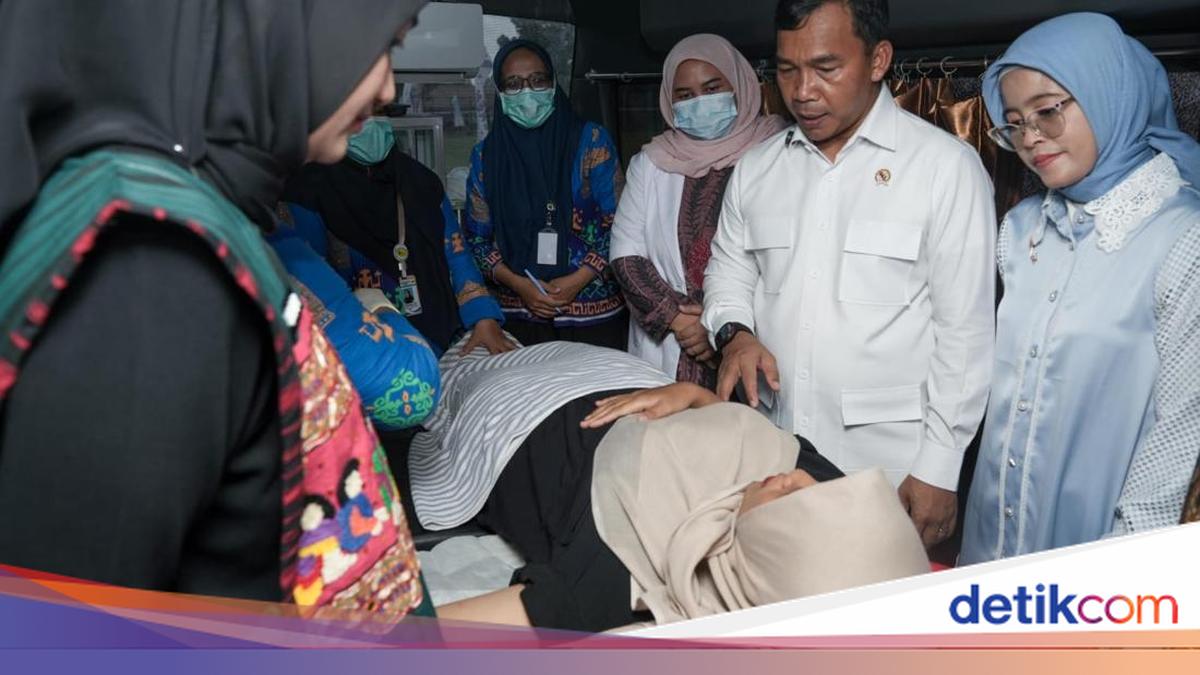
World Contraception Day serves as a momentum to strengthen male involvement in family planning and reproductive health. Family planning (KB) is not solely a woman’s concern, but a shared responsibility between partners in making decisions regarding reproductive health and family planning.
“With the majority of family planning participants being women, the programme can appear female-oriented, partly because female contraceptive options are currently more diverse. However, the government is now striving to change this approach by positioning husbands as equal partners in family planning and reproductive health,” stated the Minister of Population and Family Development/Head of BKKBN, Wihaji, in a written statement on Monday (28/9/2026).
According to him, male involvement in family planning does not mean transferring the entire responsibility of contraception from women to men. A more balanced division of responsibility can begin with understanding contraceptive options together with a partner, providing support during consultations, gaining knowledge about the benefits and consequences of each method, and selecting male contraception according to the conditions and agreements of the couple.
Data from the Ministry of Population and Family Development/BKKBN shows that male family planning participation in 2025 reached 3.27 per cent, consisting of condom use at 3.14 per cent and the Male Operative Method (MOP) or vasectomy at 0.13 per cent. These figures indicate that the vast majority of family planning participants are still women, making the strengthening of information, counselling, access to services, and environmental support essential to encourage wider male involvement.
Wihaji emphasised that increasing male participation in family planning cannot be narrowed down solely to increasing vasectomy rates. Male involvement encompasses understanding various contraceptive options, condom use, reproductive health consultations, supporting partners, and participating in family decision-making.
“The way we rectify this cannot be by immediately blaming or stating that their understanding is incorrect. The approach we build must always be positive, empathetic, and certainly based on facts,” he said.
Therefore, the Ministry of Population and Family Development/BKKBN is strengthening the male family planning ecosystem by increasing the capacity of service personnel, education, male family planning groups, motivators, family planning educators, as well as the involvement of religious and community leaders. In 2025, there were 311 vasectomy providers and 652 Male Family Planning Motivators recorded, an increase from 143 people in 2024.
The government also aims to have at least one trained No-Scalpel Vasectomy (VTP) provider team available in every regency/city so that members of the public who have received education can access services when needed.
“This is where the government steps in. We are committed to ensuring every couple receives accurate information, comprehensive counselling, and access to quality services,” Wihaji explained.
He noted that the success of male involvement in family planning is ultimately not measured by how many men use contraceptive methods, but by the extent to which men possess knowledge, access to information, and are involved responsibly in family planning decisions.
Source: jawawa.id (https://jawawa.id/newsitem/world-contraception-day-head-of-bkkbn-urges-men-to-take-more-active-role-in-family-planning-1790575437)
Originally published by detikcom (https://news.detik.com/berita/d-8682357/hari-kontrasepsi-sedunia-kepala-bkkbn-dorong-pria-lebih-aktif-dalam-kb), translated from Indonesian