
World Builds Thousands of Kilometres of Oil Pipelines as Sea Routes Become More Dangerous
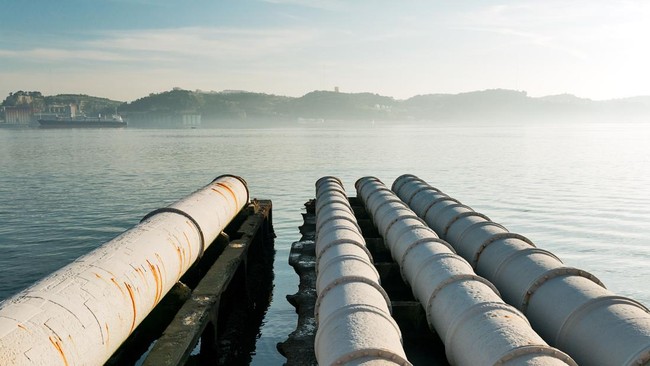
The conflict in the Middle East has once again underscored the importance of oil pipelines as an alternative route when major shipping lanes are disrupted.
Amid rising geopolitical risk, countries in the region are now racing to expand such infrastructure, even though construction costs and investment challenges are enormous.
One legacy of decades of conflict in the Middle East is the network of oil pipelines built to divert oil export routes to safer passages.
In 1968, after the Six-Day War forced the closure of the Suez Canal, Egypt and the Gulf states initiated the construction of a 320-kilometre pipeline linking the Red Sea with the Mediterranean.
However, construction of the Suez-Mediterranean (Sumed) pipeline only began in 1974, following the oil embargo triggered by the Yom Kippur War.
In 1977, the year Sumed began operating, Mobil, the American oil giant, announced plans to build a 1,200-kilometre pipeline stretching across Saudi Arabia, from the giant Ghawar oil field near the Persian Gulf to the Red Sea. Construction of the East-West pipeline, completed in 1981, was accelerated after the outbreak of the Iran-Iraq War the previous year.
Now, with the Strait of Hormuz practically paralysed, the various pipelines stretching across the Middle East have become critically important.
On 4 August, Aramco, the Saudi oil giant, said that “strategic infrastructure”, including the East-West pipeline, had helped cushion the impact of the war with Iran.
The company’s operating profit in the second quarter jumped 29% compared with the same period last year, as higher oil prices more than offset a decline in sales volumes.
These conditions are prompting leaders in the Middle East to build more pipelines.
The United Arab Emirates (UAE) plans to build a new pipeline that will run parallel to the Habshan-Fujairah pipeline, thereby doubling its capacity.
Last month, the United States, Iraq, and Qatar announced plans to increase the capacity of a pipeline linking Iraq with Syria.
Meanwhile, Chevron, the American oil giant, is considering building a series of pipelines from Iraq to Syria and Turkey. Aramco is also exploring investment opportunities in these projects.
All of these projects will accelerate the expansion of the global oil pipeline network.
According to Global Energy Monitor, an energy research organisation, around 12,300 kilometres of oil pipelines are currently under construction, while a further 20,100 kilometres are still in the planning stage.
If realised, these projects will expand the global oil pipeline network, which currently stretches for around 350,000 kilometres.
The required investment is expected to be enormous. The good news is that growing investor interest in infrastructure assets is opening up access to funding sources.
Even so, building pipelines is no easy matter. Such projects are often stalled by lengthy permitting processes and are vulnerable to geopolitical turmoil. Yet the war with Iran has made the need for such investment all the more urgent.
Pipeline construction costs are also not cheap.
A large-diameter pipeline capable of carrying around 1 million barrels of oil per day (bpd) costs on average about US$5 million, or around Rp89.6 billion (US$1 = Rp17,915), per kilometre, or about US$5 billion (Rp89.6 trillion) for a 1,000-kilometre pipeline.
However, if the route crosses mountains or difficult terrain, construction costs can rise several-fold.
Even so, alternative options are often limited.
Transporting oil 1,000 kilometres by truck or rail — if such options are available — generally costs about five times more than via pipeline. (Oil transport by truck in Syria has only developed because the country’s pipeline network has been damaged.)
Sea transport is indeed far cheaper than pipelines, but it is not always available or safe. Moreover, disruptions to oil supply can cause enormous losses.
“Oil that cannot be delivered has no value,” said Rob West of Thunder Said Energy, an energy research organisation, to The Economist.
According to him, a supply disruption of 1 million barrels per day for one year could potentially cause losses of up to around US$30 billion (Rp537.5 trillion).
Building a larger-capacity pipeline is generally more cost-efficient. However, such investment can become a burden if the volume of oil flowing through it declines.
For that reason, pipelines must consistently carry oil in line with their design capacity.
The contracts used are generally take-or-pay, under which customers must purchase a minimum capacity or pay a fixed fee that has been agreed.
Tariffs are usually indexed to oil prices for around a decade. With this mechanism, operators obtain a stable cash flow, much like a bond.
This stable cash flow makes pipelines an attractive asset for investors. In recent years, oil companies in the Gulf region have entered into a number of sale-and-leaseback transactions with investors.
Through these transactions, companies sell part of their ownership of pipelines in exchange for upfront payments, while retaining operational control.
This helps ease pressure on their balance sheets while freeing up capital for other investments. Aramco plans to carry out more such transactions after successfully raising nearly US$40 billion (Rp716.6 trillion) over the past five years.
Investment in pipelines can deliver stable annual returns of around 6-8%.
It is no wonder that pipelines have become a target for various private infrastructure investment funds. According to consultancy firm McKinsey, the industry’s total assets under management (AUM) increased fourfold to US$1.6 trillion (Rp28,664 trillion) in the decade to 2025.
On Monday (3/8/2026), KKR, the American private asset investment firm, closed fundraising for the largest infrastructure fund in its history, worth US$19 billion (Rp340.4 trillion).
Last month, together with Blackstone and Brookfield, KKR also signed a US$16 billion (Rp286.6 trillion) deal with Kuwait’s oil company to acquire part of the country’s pipeline network.
Pipelines are considered safer than other infrastructure assets. An infrastructure investment fund manager said the risks are lighter.
According to him, attacks on pipelines can generally be repaired relatively quickly, unlike storage facilities or oil terminals, which take longer to restore.
Insurance protection can also reduce the impact of conflict and other disruptions. In addition, governments seeking to attract investment are sometimes willing to bear part of that risk, he said.
Barriers to Pipeline Construction
Building new pipelines is still no easy matter. Goldman Sachs notes that, based on a sample of nine pipeline projects, the average construction time is around 2.5 years.
The longer the pipeline, the more permits must be obtained, so the construction process often takes longer. Cross-border projects face even greater challenges.
According to Global Energy Monitor, around 35,000 kilometres of pipeline projects have been cancelled or delayed in the past seven years.
One of them is Keystone XL, the giant pipeline linking Canada and the United States, which was cancelled by the Joe Biden administration on environmental grounds.
In the 1990s, Iran, Pakistan, and India also agreed to build a gas pipeline linking the three countries. However, India withdrew from the project in 2009. Although construction of the Iran-Pakistan section began in 2013, the project has still not been completed to this day.
Even after operating, cross-border pipelines are not free from the risk of geopolitical conflict. For example, the Iraqi pipeline crossing Saudi Arabia was shut down in 1990 when the first Gulf War broke out. Another pipeline crossing Syria was also closed in 1982 after the country sided with Iran in the Iran-Iraq War.
Despite facing various challenges, pipelines are expected to play an increasingly important role in the distribution of the world’s hydrocarbons.
On 20 July 2026, the Iran-backed Houthi rebel group in Yemen announced a blockade of the Bab al-Mandab Strait at the southern end of the Red Sea, a route normally used by tankers carrying Saudi oil from the East-West pipeline.
Following the blockade, Aramco began diverting oil shipments from eastern Saudi Arabia using tankers through the Red Sea to the Sumed pipeline.
However, that pipeline itself has also been operating at near maximum capacity. For that reason, the need for new pipeline construction is expected to continue to grow.
Source: jawawa.id (https://jawawa.id/newsitem/world-builds-thousands-of-kilometres-of-oil-pipelines-as-sea-routes-become-more-dangerous-1786013538)
Originally published by CNBC Indonesia (https://www.cnbcindonesia.com/research/20260806112732-128-757118/jalur-laut-makin-berbahaya-dunia-bangun-pipa-minyak-ribuan-kilometer), translated from Indonesian