
World Billionaires: Hated, Yet Missed
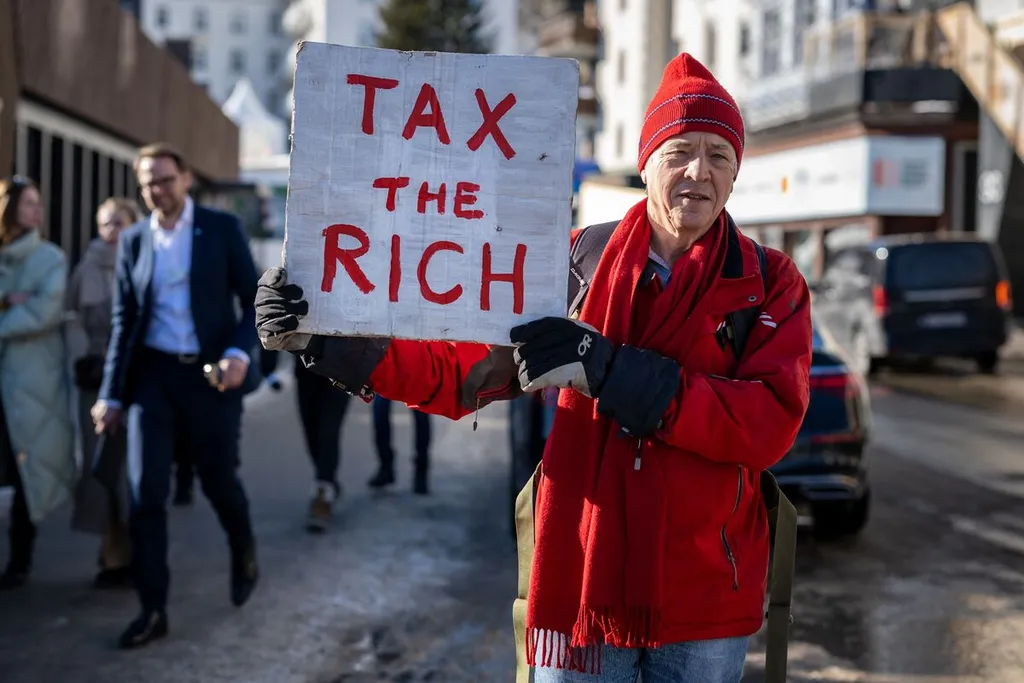
It is difficult to find a group more prone to public anger than billionaires. Amidst the global phenomena of soaring house prices, rising living costs, and widening inequality, the super-rich have become a tangible symbol of disparity. The call to ‘Tax the Rich’ resonates across the globe, appearing in protests and prominently displayed on the attire of US Congresswoman Alexandria Ocasio-dis Cortez.
However, the reality of implementing taxes on the wealthy is no longer straightforward. As anti-billionaire sentiment reaches its peak, the very nature of global billionaires is shifting. An increasing number of the world’s wealthiest individuals are acquiring their fortunes not through monopolies, political connections, or family inheritance, but by building companies that produce goods, create jobs, and succeed in market competition.
This paradox is a key finding in a recent analysis by The Economist, which examined approximately 7,000 billionaires over the last 25 years. For the first time, about half of global billionaire wealth originates from entrepreneurs building businesses in relatively competitive sectors. Conversely, the proportion of wealth derived from rent-seeking sectors is steadily shrinking.
This shift alters the perception of the super-rich. Where criticism was previously directed at oligarchs, heirs to business empires, or those enjoying political privilege, more billionaires are now emerging from innovation and entrepreneurship. Figures such as Oprah Winfrey, Tadashi Yanai of Uniqlo, and Peggy Cherng of Panda Express demonstrate how billions of dollars can be generated from millions of consumers voluntarily purchasing products or services.
A similar wave is visible in the technology and manufacturing sectors. Nvidia founder Jensen Huang has seen a wealth surge driven by the artificial intelligence explosion, while Bernard Arnault has expanded LVMH into a global luxury empire. Robin Zeng has built CATL into the world’s largest electric vehicle battery manufacturer. These are not heirs to empires, but founders of companies that grew alongside global market developments.
Even when the technology sector is excluded from calculations, the trend persists: wealth from independent entrepreneurs is rising, while wealth based on inheritance and rent-seeking is diminishing. This phenomenon is also influenced by the changing global economic landscape. A long-running stock market rally over the past decade has boosted company valuations, while China’s economic growth produced hundreds of new billionaires. Furthermore, smartphone-based internet has allowed companies to reach billions of consumers via mobile screens, accelerating the rise of massive companies in short periods.
In contrast, billionaire groups reliant on political proximity are facing hardships. Russian oligarch wealth has shrunk due to war and Western sanctions, China’s property crisis has sharply cut the value of developers, and Macau’s casino industry has lost momentum following stricter gambling regulations. The dominance of inherited wealth is also waning; while nearly half of billionaire wealth in the early 2000s came from family heirs, that proportion has dropped to around one-quarter.
This shift makes the debate over taxing the wealthy far more complicated. While taxing monopolies or political rent-seekers might be easier to legitimise, the rise of innovative and productive billionaires raises a difficult question: should a state treat all billionaires the same?
According to Edward Maydew, Director of the UNC Tax Center at the University of North Carolina, most tax debates ultimately boil down to a trade-off between two equally important goals: equity and efficiency. On one hand, higher taxes on the wealthy can reduce inequality and increase state revenue. On the other hand, higher rates can create incentives to reduce investment, alter business structures, avoid taxes, or move capital to other countries.
Maydew likens taxation to a runner: as the temperature rises, the runner does not immediately stop, but the heat reduces the distance they can cover. ‘There is no specific figure that immediately halts economic activity, but every increase in the rate gradually reduces the incentive to continue producing and investing,’ Maydew wrote on the official University of North Carolina website.
This perspective explains why the slogan ‘Tax the Rich’ sounds much simpler than the actual policies governments must design. The challenge is not merely whether a state can increase revenue, but how to do so without reducing the incentives for companies to continue growing, creating jobs, and fostering innovation.