
World Bank Sees 5.2% Growth for Indonesia: What's Behind the Revision?
World Bank Sees 5.2% Growth for Indonesia: What’s Behind the Revision?
Reporter
October 6, 2026 | 03:04 pm
TEMPO.CO, Jakarta - The World Bank has raised its projection for Indonesia’s economic growth to 5.2 percent in 2026, a 0.5 percentage point increase compared to the previous projection of 4.7 percent.
The revision is primarily driven by the impact of soaring energy prices on the Indonesian economy, which is expected to be smaller than previously anticipated.
“Growth in Indonesia is projected to remain stable at 5.2 percent in 2026 and 2027. This represents a 0.5 percentage point upgrade in the forecast for 2026, as the drag from higher energy prices has been less severe than anticipated,” the World Bank wrote in its October 2026 East Asia and Pacific Economic Update report, published in Jakarta on Tuesday.
The government’s policy mix is considered to have supported short-term economic growth, but at the same time contributed to larger fiscal and external imbalances.
This situation is expected to persist in the next few years, with the current account deficit projected to widen to 1.5 percent of GDP this year.
As fiscal stimulus wanes, Indonesia’s medium-term economic growth is expected to become increasingly dependent on private investment. Meanwhile, inflation is projected to remain around the upper bound of the central bank’s target range.
World Bank Chief Economist for Asia Franziska Lieselotte Ohnsorge said that the main driver of Indonesia’s economic growth so far still relies on strong domestic demand.
According to her latest report, Indonesia’s projected growth of 5.2 percent is also above the average for the East Asia and Pacific region, which is estimated at 4.5 percent.
This regional growth projection is up from the World Bank’s April 2026 estimate of 4.2 percent.
Indonesia’s positive projection aligns with its relatively strong economic performance in the first half of 2026. The World Bank recorded Indonesia’s economy growing by 5.4 percent in the first half of 2026, up from 5.1 percent in 2025.
This growth represents the strongest two-quarter average since 2022 and primarily reflects strengthening private consumption and a surge in government spending around the turn of the year.
The World Bank stated that the growth in consumption and government spending in early 2026 was influenced by, among other factors, the earlier start of Ramadan and Eid al-Fitr, the earlier disbursement of holiday bonuses for civil servants (ASN), and the accelerated implementation of the free nutritious meal program.
Domestic economic activity fell
Despite the strong footing, domestic economic activity in Indonesia subsequently weakened.
The manufacturing Purchasing Managers’ Index (PMI) contracted to 49.3 in August 2026, while consumer confidence fell to 116.8 in July 2026.
The World Bank also noted that the increasing deficit raises concerns regarding Indonesia’s fiscal trends and sovereign debt ratings.
Market sentiment towards Indonesia deteriorated in January 2026 and was further exacerbated by rising global oil prices and shipping disruptions. Portfolio outflows reached 0.2 percent of GDP in the first quarter of 2026.
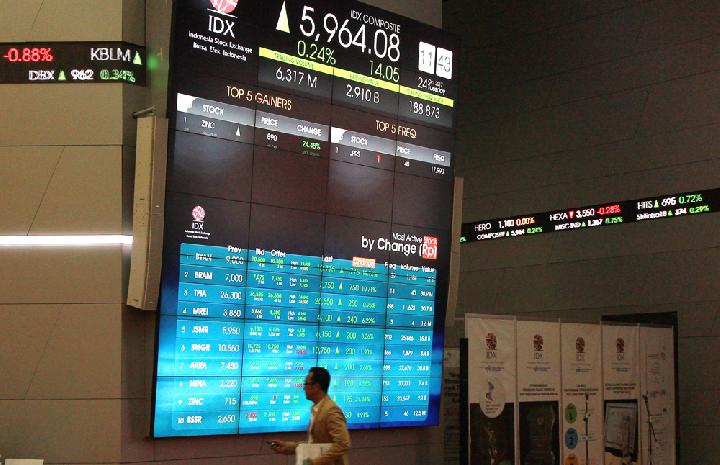
“Concerns that Indonesia would be downgraded to frontier status by the global stock index provider MSCI—triggering automatic sales from passive index funds—led to a sharp decline in the value of the rupiah and the Jakarta stock index (JCI),” the World Bank wrote in its report.
The government then responded by using foreign exchange reserves, implementing financial sector reforms, and raising the central bank’s policy interest rate by a cumulative 100 basis points in May and June 2026.
These measures helped contain the impact of the weakening exchange rate on inflation.
The World Bank recorded that inflation fell from 4.8 percent in February to 3.4 percent in July 2026, partly due to fuel subsidies that restrained price increases.
Read: BPS vs. World Bank: Understanding Indonesia’s Poverty Line Figures
Click here to get the latest news updates from Tempo on Google News