
World Bank: Middle East Conflict Spillovers Raise Capital Outflow Risks for Indonesia
World Bank: Middle East Conflict Spillovers Raise Capital Outflow Risks for Indonesia
Jakarta. The Middle East conflict is beginning to spill over into Indonesia’s economy, with higher oil prices, tighter financial conditions, and rising uncertainty posing risks to growth, the World Bank said on Wednesday.
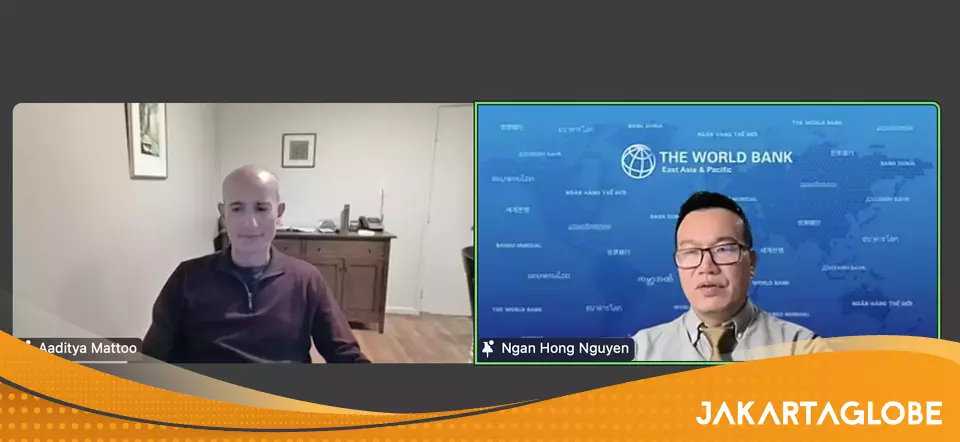
Presenting the latest East Asia and Pacific Economic Update April 2026 edition, Aaditya Mattoo, Director of the Development Research Group of the World Bank, said geopolitical tensions have triggered higher energy prices and tighter financial conditions, with uncertainty increasingly weighing on investment and employment patterns across the region.
Oil prices could remain as much as $20 higher than pre-crisis levels, pushing up production costs and feeding into food and transportation prices. The impact is likely to be greater for lower-income households, which spend a larger share of their income on energy and essentials.
For Indonesia, the effects are also being transmitted through financial channels. Mattoo noted that periods of geopolitical stress tend to trigger a “flight to safety,” raising borrowing costs in emerging markets. Bond spreads in countries including Indonesia have risen by around 30 basis points, signaling tighter financing conditions that could dampen investment.
He emphasized that uncertainty is becoming a key drag on growth.
“You don’t know what trade policy will be, you don’t know what the world will look like,” Mattoo said, adding that such uncertainty “hurts investment” and leads firms to rely more on temporary contracts.
This shift is contributing to weaker job conditions and a rise in informal or contract-based employment.
Indonesia’s growth is projected to ease from 5.1% in 2025 to 4.7% in 2026 before rebounding to 5.2% in 2027, pointing to near-term pressure from external shocks while growth remains relatively stable.
While public investment continues to support expansion, private investment remains below pre-pandemic levels, raising concerns over the sustainability of growth. Export performance has also shown signs of moderation in recent months.
The report highlighted deeper structural constraints, noting that non-tariff barriers continue to limit Indonesia’s integration into global value chains, while skill shortages and infrastructure gaps pose challenges to moving up the value chain.
Despite global energy pressures, Indonesia’s direct exposure to the oil shock remains relatively limited, with net oil and gas imports accounting for around 1% of GDP, lower than many regional peers.
The World Bank estimates that if elevated oil prices persist, labor incomes across the region could fall by 3% to 4%, adding pressure on consumption.
Mattoo said governments should prioritize targeted support, noting that “rather than providing broad-based support… it would make more sense to provide targeted support” to vulnerable groups and firms.
At the same time, he stressed the importance of structural reforms to sustain growth, adding that countries can offset external shocks through domestic policy improvements.
Even if tensions ease, he cautioned that the conflict has already imposed a “development tax” on emerging economies, with uncertainty likely to persist.
Tags: Keywords:
Source: jawawa.id (https://jawawa.id/newsitem/world-bank-middle-east-conflict-spillovers-raise-capital-outflow-risks-for-indonesia-1775663475)
Originally published by jakartaglobe.id (https://jakartaglobe.id/business/world-bank-middle-east-conflict-spillovers-raise-capital-outflow-risks-for-indonesia)