
World Bank Lowers Indonesia's Economic Growth Projection, Rupiah Under Pressure
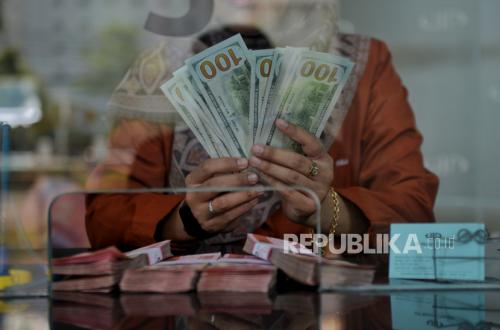
REPUBLIKA.CO.ID, JAKARTA – The rupiah exchange rate continues to hover above Rp17,000 per US dollar amid global uncertainties stemming from the ongoing war in the Middle East. The rupiah’s weakening is also influenced by the World Bank’s outlook, which has lowered the projection for Indonesia’s economic growth in 2026 to 4.7 percent.
Quoting Bloomberg, the rupiah weakened by 78 points or 0.46 percent to Rp17,090 per US dollar at the close of trading on Thursday (9/4/2026). In the previous session, the rupiah was at Rp17,012 per US dollar.
Currency and commodity analyst Ibrahim Assuaibi views that sentiments, both internal and external, are pressuring the rupiah’s exchange rate. Internal sentiments include the projection of slowing Indonesian economic growth this year.
“The World Bank projects Indonesia’s economic growth in 2026 at 4.7 percent, down from the previous estimate of 4.8 percent,” Ibrahim said in his statement on Thursday (9/4/2026).
Although revised downward, this figure remains higher than the projection for the East Asia and Pacific (EAP) region, which stands at only 4.2 percent.
“The regional economic outlook is influenced by three main external factors: the conflict in the Middle East triggering energy price hikes, US trade restrictions and global policy uncertainties, and rapid developments in artificial intelligence (AI) technology,” he explained.
Previously, the OECD cut its projection for Indonesia’s economic growth in 2026 to 4.8 percent from 5 percent. This revision comes amid increasing global pressures, particularly due to surging energy prices and geopolitical tensions.
The pessimism from the World Bank and OECD contrasts with the government’s optimistic projection of strong growth in the 2026 economy at 5.4–5.7 percent, driven by domestic consumption, investment, and the B50 biodiesel programme, with hopes of reaching 6 percent through structural transformation. The focus is on food and energy sovereignty, prudent fiscal policies, and accelerating investments to maintain stability amid global uncertainties.
External Sentiments
The external sentiments affecting the rupiah’s weakening are none other than the dynamics of the war in the Middle East between Iran and the US-Israel, particularly the impact of the closure of the Strait of Hormuz.
“Disruptions in the Strait of Hormuz continue, and the renewed escalation of geopolitical tensions in the Middle East clouds supply prospects, as this key route carrying about one-fifth of global oil supplies remains largely blocked despite a temporary ceasefire between the US and Iran. Limited and tightly controlled ship movements have resumed, but delivery disruptions persist, with Iran maintaining significant control over transit and access, according to reports,” Ibrahim explained.
He noted that market sentiments are further disrupted by increasing Israeli attacks in Lebanon, which risk damaging the fragile ceasefire. Reports indicate that tanker routes through the strait were halted following those attacks, although US officials have signalled early signs of partial reopening.
Meanwhile, Iran has stated that peace talks with the US would be “pointless” after the latest attacks, arguing that they violate the terms of the newly announced ceasefire.
“Previously, US President Donald Trump announced a two-week ceasefire with Iran, which sparked hopes of reopening the Strait of Hormuz and reducing supply barriers. However, analysts warn that structural disruptions to supply chains and infrastructure across the region could take months to repair,” he clarified.
Meanwhile, according to the FOMC minutes for March released on Wednesday, Fed officials still expect to lower interest rates this year, even amid high uncertainty levels due to the Iran war and tariff policies. Policymakers stated the need to remain “nimble” when considering the war’s impact on inflation, which remains above the Fed’s target, as well as employment recruitment that has largely stagnated over the past year.
Based on these various sentiments, Ibrahim predicts that the rupiah’s exchange rate against the US dollar will continue to weaken in the next trading session on Friday (10/4/2026).
“For tomorrow’s trading, the rupiah will be volatile but close weaker in the range of Rp17,090–Rp17,140 per US dollar,” he concluded.
Source: jawawa.id (https://jawawa.id/newsitem/world-bank-lowers-indonesias-economic-growth-projection-rupiah-under-pressure-1775735460)
Originally published by Republika (https://ekonomi.republika.co.id/berita/td832o490/bank-dunia-turunkan-proyeksi-pertumbuhan-ekonomi-indonesia-rupiah-tertekan), translated from Indonesian