
World Bank: Domestic Demand Supports Indonesian Economy Amid 'AI Boom'
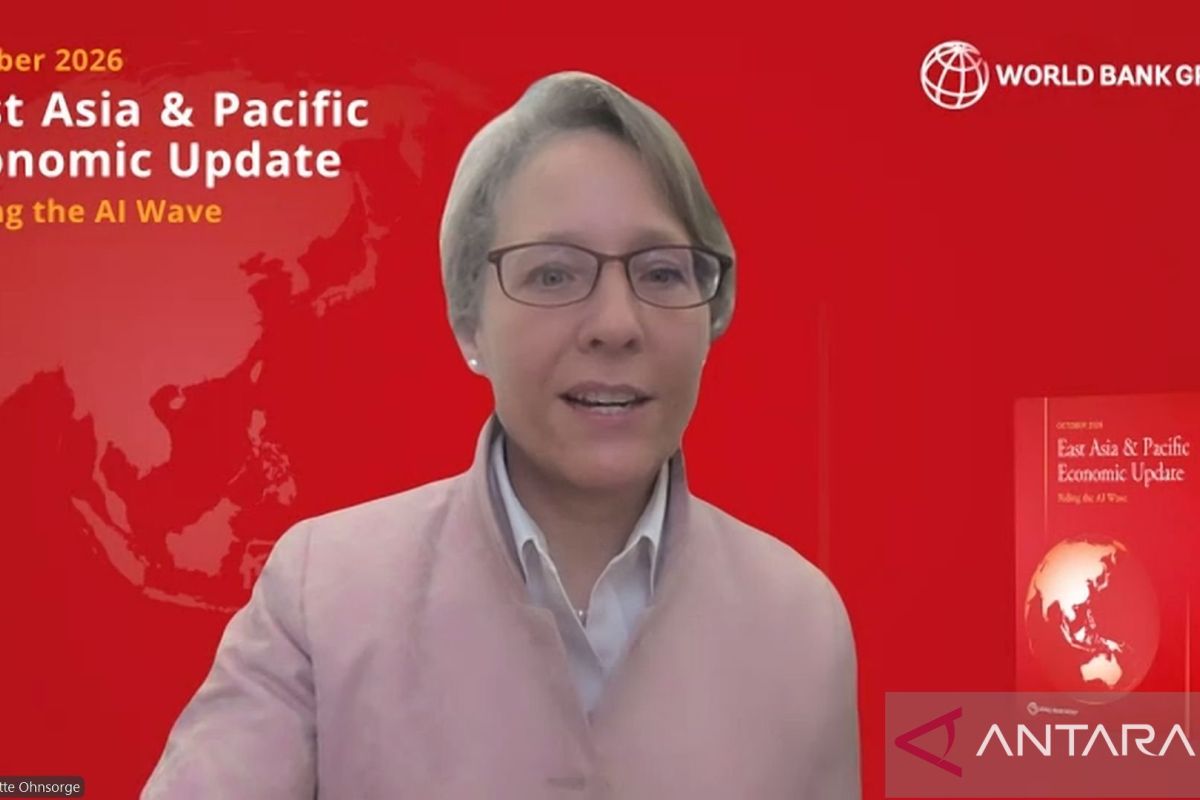
Jakarta (ANTARA) - The World Bank assesses that strong domestic demand is supporting Indonesia’s economic growth amidst the surge in exports of artificial intelligence (AI) components across several East Asia and Pacific nations.
Franziska Ohnsorge, the World Bank Chief Economist for Asia, noted that Indonesia is relatively less exposed to this surge in global activity compared to other countries in the region.
“Specifically for Indonesia, it is interesting. Indonesia is relatively less exposed than other countries to this surge in global activities related to AI,” said Franziska during a virtual media briefing for the October 2026 edition of the East Asia and Pacific Economic Update in Jakarta on Tuesday.
According to her, strong domestic demand is the primary factor underpinning Indonesia’s economic growth.
“What is truly strong in the Indonesian economy is domestic demand. That is what supports Indonesia’s economic growth. And this is what slightly differentiates it from other countries in the region (Asia),” she stated.
As is well known, the growth of several countries in the region has been driven by investments and exports of high-tech products related to AI. The World Bank noted that demand for AI products accounts for more than half of export growth in most countries in the region. Its contribution even reaches over 70 per cent in Malaysia, the Philippines, Thailand, and Vietnam.
Meanwhile, Indonesia has relatively not yet reaped benefits as large as those countries from the integration of global value chains related to AI. However, this condition is balanced by strong domestic demand, which serves as one of the pillars of national economic growth.
At the same time, AI adoption remains an opportunity for Indonesia to increase economic productivity. Ohnsorge believes that countries still in the early stages of AI development can still utilise existing technologies and adapt them to domestic needs.
Strengthening human resource skills, digital and energy infrastructure, access to finance, and the business climate are considered essential foundations so that AI adoption can provide broader benefits to the economy.
The World Bank projects Indonesia’s economy to grow by 5.2 per cent in 2026 and 2027. On the other hand, the East Asia and Pacific regional economy is projected to grow at an average of 4.5 per cent in 2026 and 2027.
The World Bank maintains that the strengthening of domestic demand needs to be continuously accompanied by an increase in private investment, especially as fiscal stimulus begins to diminish.