
World Bank: 48% of Small Businesses Avoid QRIS to Evade Tax Scrutiny
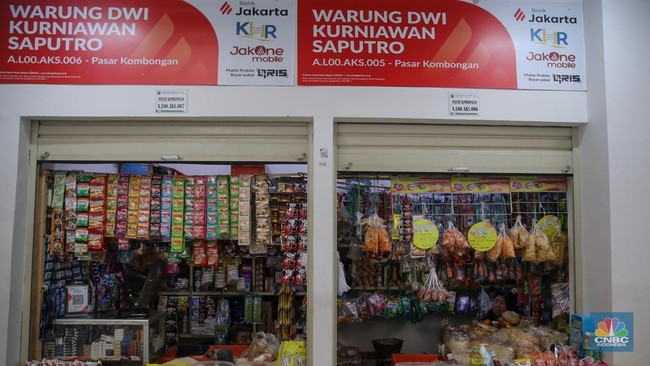
The World Bank has found that many small business operators in Indonesia tend to avoid taxes due to concerns over corruption and a lack of trust in the system. According to the report titled “Indonesia: Unlocking Business Tax Potential for Growth,” this tax avoidance is carried out by limiting or avoiding access to formal financial services, such as banking transactions and transfers.
“Many small businesses deliberately avoid bank transfers to evade taxes, often due to a lack of trust in the system and concerns about corruption,” the World Bank noted in its report. The institution observed that firms avoiding taxes tend to have lower engagement with formal financial systems, although it cautioned that available evidence does not directly establish a causal link between tax avoidance and the use of formal finance.
Non-exporting firms, which are more likely to avoid taxes, are significantly less likely to use formal loans or credit to finance their operations. Conversely, exporters who require trade financing and engage in cross-border transactions are more inclined to use formal banking services. While this does not prove that access to finance directly reduces tax avoidance, it suggests that companies engaged with formal financial institutions may have stronger incentives to comply with tax obligations.
Survey data indicates a positive relationship between formal finance and tax compliance, albeit with limitations. The World Bank found that electronic payments and bank transfers further reduce opportunities for tax evasion. Firms that do not use electronic payment systems are more likely to report that avoiding taxes is easy, indicating that digital transactions leave an audit trail that deters evasion.
This preference for cash transactions highlights the link between informality, weak financial integration, and lower tax compliance. The report notes that while estimating firm-level tax evasion remains difficult, several survey-based proxies suggest a strong positive relationship between formal finance and tax compliance, reinforcing the role of financial sector development in strengthening the tax base.
In its survey of micro-enterprises, the World Bank recorded that 48% of respondents admitted to limiting their use of QR code payments (QRIS) to avoid tax obligations. Furthermore, 40% of respondents believed that taxes paid through such transactions would be wasted on corruption and inefficiency. The survey also found that only 4% of micro-businesses accept QR or digital payments, 14% accept bank transfers, and just 62% of small business respondents have a bank account.
Source: jawawa.id (https://jawawa.id/newsitem/world-bank-48-of-small-businesses-avoid-qris-to-evade-tax-scrutiny-1785725478)
Originally published by CNBC Indonesia (https://www.cnbcindonesia.com/news/20260803084045-4-755915/bank-dunia-48-usaha-kecil-ogah-gunakan-qris-supaya-tak-diawasi-pajak), translated from Indonesian