
Workplace Competition Intensifying, Students Must Be Adaptive
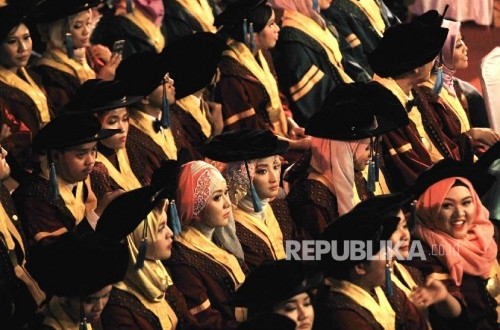
The intensifying competition in the professional world demands that students excel not only academically but also possess mental resilience and adaptability. University graduates are deemed necessary to be prepared for failure and the rapid changes in industrial requirements.
Director of Bank Central Asia, Hendra Tanumihardja, stated that the younger generation needs the ability to survive amidst the dynamics of an increasingly competitive workforce. “The journey towards success is never free from failure. The younger generation needs to be brave and resilient to face such failures,” Hendra remarked during a public lecture delivered to thousands of students at Sultan Ageng Tirtayasa University (Untirta) in Serang, Banten, on Monday (18/05/2026).
He explained that the philosophy of ‘ukemi’ in martial arts teaches an individual how to rise after a fall. This attitude is considered highly relevant for students entering a professional world characterised by high competition and rapid change.
Data from the Central Bureau of Statistics (BPS) indicates that job competition remains fierce. As of February 2026, the number of unemployed individuals in Indonesia reached 7.24 million, with an open unemployment rate of 4.68 per cent. The unemployment rate for university graduates also remains above five per cent.
These conditions require university graduates to be better prepared to face workplace pressures, ranging from recruitment competition and changing industrial needs to the demand for adaptive skills. Hendra noted that students should begin building mental endurance during their university years, treating failure as a learning process rather than a reason to stop trying.
In addition to the public lecture, BCA also introduced solar-powered charging facilities within the Untirta campus, which students can use to charge devices while providing a space for study and discussion. Hera F. Haryn, EVP of Corporate Communication & Social Responsibility at BCA, stated that these facilities support the concept of an eco-friendly campus. Similar facilities have previously been established at Diponegoro University and Bogor Agricultural University.