
Workers' Welfare, May Day, and the Presence of National Leadership
Every 1 May, we are reminded of something we often overlook: work is not merely an economic activity, but the foundation of human dignity. International Workers’ Day has never truly been about ceremony. It is a moment when voices that are daily suppressed—in factories, on the streets, in production spaces—seek their place in the public sphere.
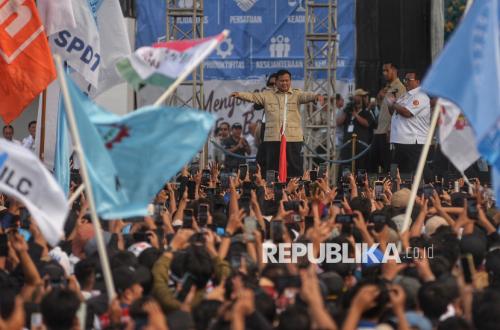
In Indonesia, that moment often repeats with a nearly identical pattern: demands that are not entirely new, and hopes that remain unfulfilled. However, this year there is one change in tone worth noting. The conversation between Prabowo Subianto and Said Iqbal ahead of May Day has given birth to a decision that is both symbolic and political: the commemoration will be centred at the National Monument, with plans for the president’s presence amid the mass of workers.
This step does not resolve issues, but it shifts the distance. Monas, which has long represented power, for a moment becomes a space of encounter. And the presence of the head of state there—on a day laden with demands—carries a message that cannot be ignored: the state chooses to be seen, and thus ready to be tested.
But the history of public policy always reminds us: the most important presence is not the visible one, but the one that works.
Over the past decade, labour issues have moved within a complex tug-of-war. The state has sought to maintain economic competitiveness and attract investment, while workers face a closer reality: inadequate wages, precarious employment status, and inconsistent protection. This tension is not an anomaly—it is a consequence of a development model that often places efficiency first, and justice second.
It is here that leadership is tested in the most substantive sense: the courage to set boundaries.
Prabowo Subianto has expressed a commitment that development must not sacrifice workers. This commitment is important, but it only gains meaning if translated into a clear policy architecture—not mere partial corrections, but a shift in perspective.
The debate on the Labour Bill becomes the most concrete arena to test that direction. Will regulations continue to move within the logic of short-term compromise, or begin to assert non-negotiable principles: decent wages, employment certainty, and effective social protection.
A balance between investment and labour protection is indeed necessary. But balance must not mean relativism—as if all interests can be traded without limits. There is a line that must be held, because that is where the state shows its character.
If workers’ welfare is to be built seriously, the approach cannot be sectoral. First, wage structures must be linked to real productivity improvements. This demands major investment in vocational education, industry-based training, and more open labour mobility. Without that, wages will always be a debate, not a solution.
Second, the social security system must be expanded from mere protection schemes into instruments of life stability. Workers need not only assistance in crises, but certainty that risks—job loss, illness, old age—do not immediately plunge them into the abyss of poverty.
Third, industrial relations need to be moved from a logic of conflict to a logic of institutions. Social dialogue cannot rely on annual momentum like May Day. It must become a routine mechanism, with trust as the foundation.
And what is often overlooked: law enforcement. Good regulations lose meaning when oversight is weak. At this point, the state is present not in rhetoric, but in consistent and uncompromising administrative actions.
May Day is ultimately a silent test. It does not measure how loudly the state speaks, but how far it listens—and more than that, acts. The decision to centre the commemoration at Monas and the president’s presence among workers gives an initial signal that this distance can be shortened. However, history will judge not from that moment, but from what follows: whether it becomes a gateway to policy reform, or stops as a political gesture quickly forgotten.
State leadership that is present is not the one that appears most often in public spaces, but the one able to change policy direction with measured courage. It does not merely soothe, but repairs. It does not only respond to pressure, but builds a fair system before that pressure arrives.
Amid global economic changes, automation, and labour market uncertainty, Indonesia does not have much time to delay. The choice is simple, but the consequences are long: making workers a burden to be suppressed, or a development partner to be strengthened.
If the second choice is taken, then May Day will no longer be just an annual commemoration. It becomes a turning point—when the state is truly present, not only in the field, but in the policy direction it determines. And there hope finds its form: not in promises, but in bold and enduring decisions.