
Workers' Portrait: Economic Conditions Unchanged but Decile Rises
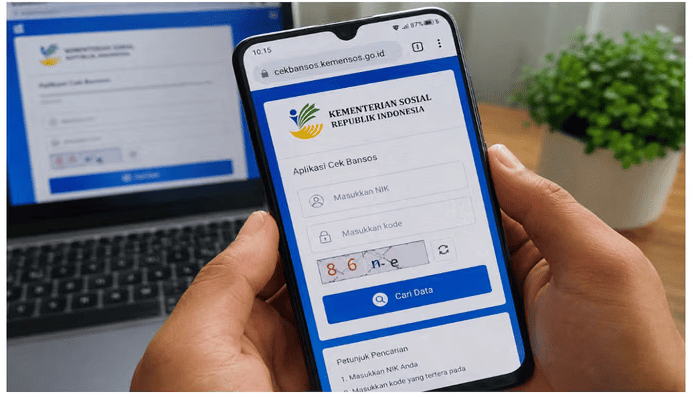
The issue of determining beneficiary deciles should no longer be viewed merely as an administrative or data-updating matter. This is because it concerns the people’s right to social protection amid increasingly difficult economic conditions. This was conveyed by the President of the All-Indonesia Workers’ Union Association (Aspirasi), Mirah Sumirat.
“We have received various complaints from the public and workers that their economic conditions have not changed significantly—income remains the same, jobs remain the same, the number of dependents remains the same, and the burden of living is even heavier—yet their decile position has changed or risen,” Mirah said in a statement received on Monday (24/8).
Mirah is concerned that the change in decile could result in their names being removed from the list of social assistance recipients. She questioned how people whose lives have not become more prosperous could be categorised as more capable. “Do not let the poor be defeated by numbers and defeated by the system,” she stressed.
Aspirasi, Mirah said, understands that the government needs accurate data to ensure social protection programmes are well targeted. However, the organisation questions whether accuracy is only measured based on systems and classifications, while the factual conditions of the people on the ground are not adequately reflected. Mirah emphasised that people do not live in spreadsheets but in reality.
“A labourer whose salary remains the same, for example, must face increases in rental costs, transportation, food, children’s education, health, and various other household needs. If their income does not increase but the burden of living rises, then in reality their economic capacity is increasingly under pressure,” she said.
Therefore, according to Mirah, economic capacity should not only be seen from what a person owns, but must also be seen from how much burden they must bear to sustain their family’s life. Aspirasi is also asking the government to comprehensively evaluate the decile determination system currently used as one of the bases for determining beneficiaries.
Furthermore, Aspirasi is pushing for the decile-based classification of the public to be discontinued and replaced with a data presentation system that is more transparent, objective, measurable, and reflects the actual economic conditions of the people.
“The government must be brave enough to show the public the real figures: how much people earn, how many dependents they have, how much their household expenditure burden is, how much the cost of living is in the area where they live, and what their employment and welfare conditions are like,” Mirah said.
“Do not let the public be labelled decile 1, decile 2, decile 3, and so on, while these labels are unable to describe the real difficulties they experience,” she stressed.
Previously, economist Yusuf Rendy Manilet from the Center of Reform on Economics (CORE) highlighted the problem of using deciles as a dividing line. Yusuf said the proxy means test (PMT) is indeed useful for estimating welfare levels, but its accuracy is not the same across the entire distribution.
“Around the boundary of deciles 8 and 9, the difference in economic conditions between households can be very thin. A small error in estimation can cause someone to move groups. Moreover, the expenditure model only explains part of the variation in economic conditions, while the rest is a residual not captured by the model,” he told Media Indonesia last week.
Another more fundamental problem is that variables such as assets, housing conditions, electricity, and education mostly describe the stock of past welfare. Yet, Yusuf gave an example, a person’s ability to cope with rising fuel costs is determined by today’s cash flow.
Another example is that a person who owns a decent house due to inheritance does not necessarily have sufficient income. Likewise, an online motorcycle taxi driver who appears relatively well-off in terms of assets is very sensitive to daily operational costs.
“The risk is even greater because one classification is used for many programmes, from social assistance to education, health services, and now fuel. If a classification error occurs, the impact is no longer standalone,” he added.
The same error can affect several rights at once. Therefore, according to Yusuf, DTSEN should be treated as an initial screening stage, not as a final decision. Households near the boundary line need additional verification and a clear objection mechanism.