
Workers Demand 140% Pay Rise as Dozens of Garment Factories Shut
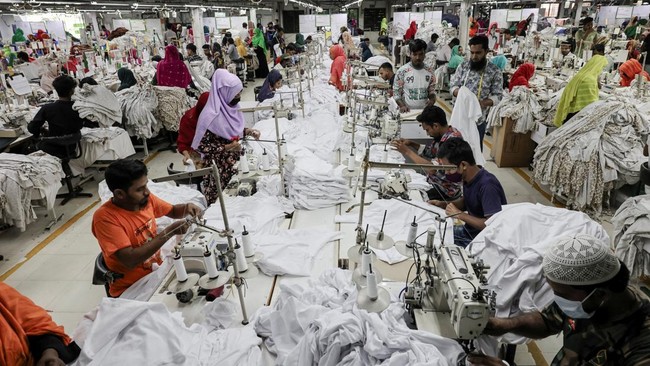
The Bangladesh government will establish a wage board on Sunday (1 November 2026) to review garment workers’ pay. The move follows a wave of protests that prompted dozens of factories to suspend operations and led to clashes with police.
According to Reuters, workers are demanding that the monthly minimum wage be raised to 30,000 taka, or about US$245. That is more than twice the current minimum of 12,500 taka. Workers say rising prices for basic goods, housing, transport and healthcare have significantly eroded their purchasing power.
The wage dispute has raised concerns about the future of Bangladesh’s flagship industry. The garment sector employs around four million people, accounts for more than 80% of the country’s export earnings and supplies clothing to leading fashion brands in Western countries.
Bangladesh’s Labour and Employment Minister, Ariful Haque Chowdhury, said the government would formally establish the wage board after discussions with trade union representatives and industry players. The talks are expected to ease mounting tensions.
Protests on Saturday led around 30 garment factories in Ashulia, a major manufacturing hub on the outskirts of Dhaka, to suspend operations, according to Mohammad Mominul Islam Bhuiyan, head of Ashulia’s Industrial Police.
In the capital, hundreds of workers also blocked a major junction. Demonstrations in several other industrial areas disrupted traffic and factory activity.
Tensions escalated when workers and police clashed in Ashulia. Several people, including police officers, were reported injured. Officers used tear gas and stun grenades to disperse the crowd.
Chowdhury urged workers to return to their jobs, saying the government’s decision to review the wage structure had addressed their main demand.
He also warned that prolonged factory closures and production disruption could hamper export shipments. This could delay payments from international buyers and increase pressure on both companies and workers.
Bangladesh’s garment industry is the world’s second-largest, after China. It contributes about 10% of gross domestic product and is one of the main pillars of the country’s economy.
Manufacturers say the industry is nevertheless facing mounting pressure. Challenges include higher production costs, recurring gas and electricity supply disruptions, and uncertainty in energy markets amid tensions in the Middle East.
Source: jawawa.id (https://jawawa.id/newsitem/workers-demand-140-pay-rise-as-dozens-of-garment-factories-shut-1793523044)
Originally published by CNBC Indonesia (https://www.cnbcindonesia.com/news/20261101134544-4-781249/buruh-ngamuk-tuntut-gaji-naik-140-puluhan-pabrik-garmen-tutup), translated from Indonesian