
Worker Protection Seen as Key to Strengthening Palm Oil Industry Productivity and Competitiveness
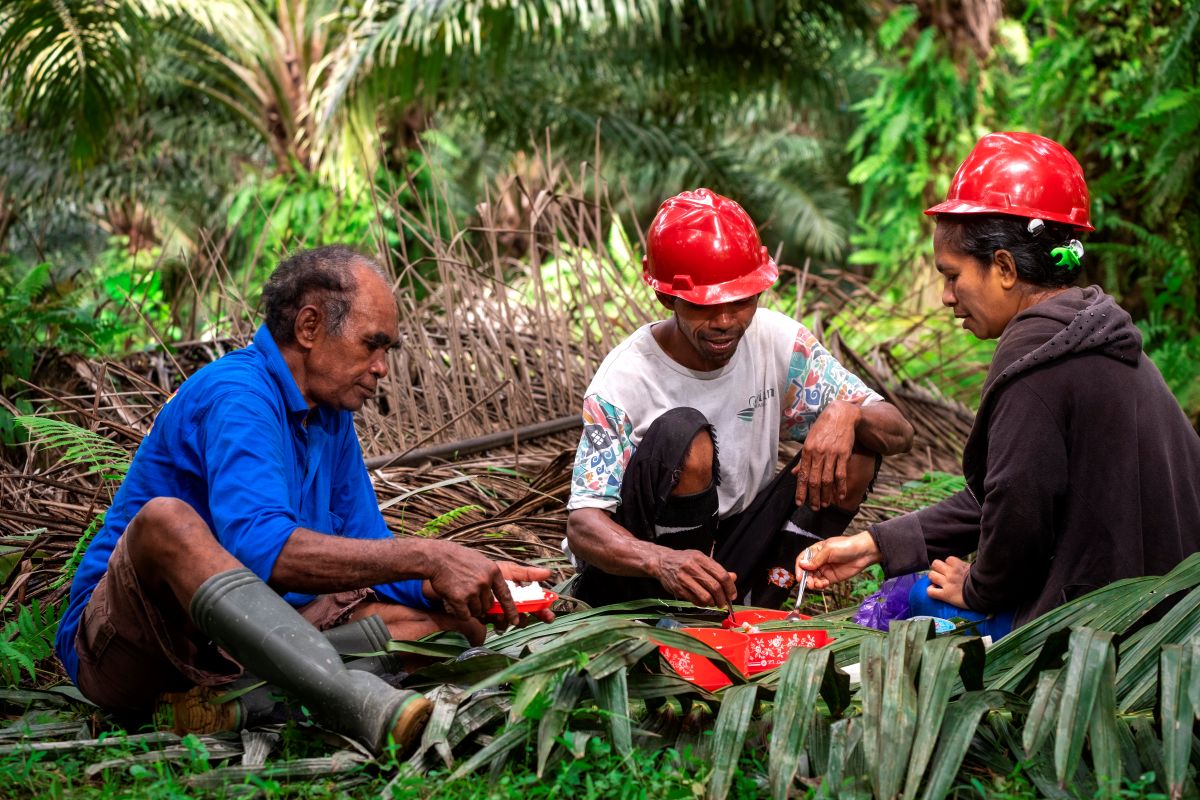
Efforts to strengthen worker protection and safety are considered to have a positive impact on productivity while enhancing the competitiveness of the national palm oil industry. The implementation of occupational health and safety (K3) is no longer merely an obligation, but has become an important part of palm oil business sustainability.
Head of Human Resources Development at the Indonesian Palm Oil Association (GAPKI), Sumarjono Saragih, stated that implementing K3 in palm oil plantations and mills is a strategic investment for the industry’s continuity. According to him, worker protection provides a number of benefits, ranging from maintaining workforce health and increasing productivity to supporting the implementation of sustainability principles.
“Specifically in the palm oil sector, the K3 aspect has actually become part of the sustainability standard,” Sumarjono said in Jakarta on Wednesday (12/8).
Sumarjono assessed that K3 implementation needs to be carried out thoroughly across the entire industry chain, both in plantations and processing facilities, including those in remote areas. Protection must also cover corporate workers, smallholders, and labourers on smallholder plantations.
He noted that the government, through the Plantation Fund Management Agency (BPDP), is also encouraging improvements in worker safety as well as human resource development in the palm oil sector. One such effort is the Plantation Human Resources Development Training Programme, which is directed at improving workforce competence while building a stronger K3 culture within the palm oil industry environment.
“In my opinion, K3 must continue to be a concern and become part of the business process,” he said.
Sumarjono added that the principles of worker protection and safety are already reflected in various regulations and sustainability certification schemes, including the Indonesian Sustainable Palm Oil (ISPO) and the Roundtable on Sustainable Palm Oil (RSPO). Therefore, K3 is not only seen as an obligation but also as an important indicator in building a sustainable palm oil industry capable of competing in the global market.
“If we dare to claim sustainable palm oil, then we must also ask, what about the protection of workers? Because that is a right that must be fulfilled, including the right to social security and occupational safety,” he stressed.
Meanwhile, Executive Director of the Palm Oil Agribusiness Strategic Policy Institute (PASPI), Tungkot Sipayung, said that K3 is one of the important components in fulfilling ISPO and RSPO certification standards. However, according to him, K3 implementation should not stop at meeting administrative requirements. Consistent implementation of K3 is also linked to improving the quality of human resources and better working conditions.
Tungkot believes that a safe working environment can improve worker welfare and loyalty. This condition ultimately has the potential to boost company productivity. “If K3 is implemented correctly, worker loyalty to stay with the company will occur and productivity will increase. All of this will contribute to business and social sustainability,” he explained.
He urged companies to ensure that K3 implementation runs consistently down to the operational level. Thus, the benefits are not only felt by workers but can also strengthen the performance and reputation of the Indonesian palm oil industry. According to Tungkot, various supporting instruments are already available, both through ISPO and RSPO standards and the labour regulations set by the government.
“ISPO and RSPO standards already exist. The government’s role in conditioning K3 implementation also exists, namely legislation related to labour. So, it is just a matter of implementation in company operations,” he concluded.
Source: jawawa.id (https://jawawa.id/newsitem/worker-protection-seen-as-key-to-strengthening-palm-oil-industry-productivity-and-competitiveness-1786539035)
Originally published by Media Indonesia (https://mediaindonesia.com/ekonomi/921065/perlindungan-pekerja-dinilai-perkuat-produktivitas-dan-daya-saing-industri-sawit), translated from Indonesian