
Words that Open the World's Path
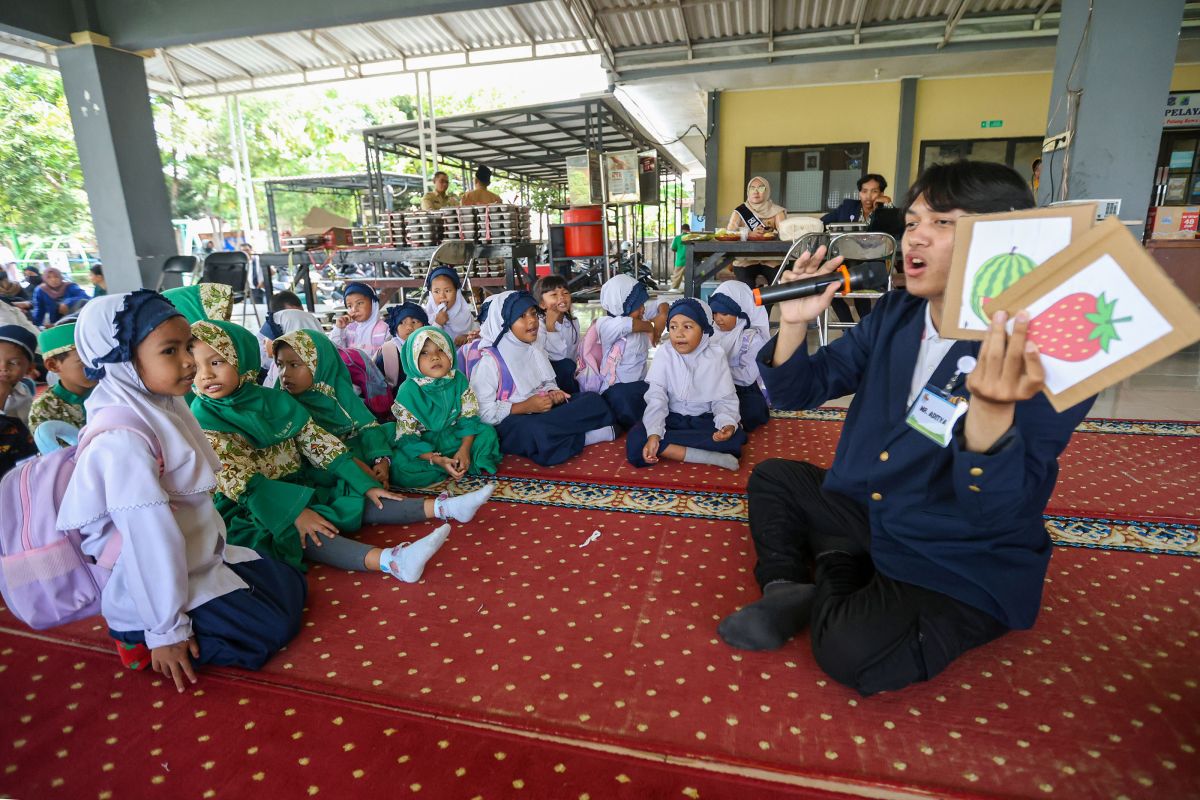
Surabaya — In a simple classroom in the Pakal District of Surabaya, the laughter of children occasionally breaks through the rhythmic, albeit broken, recitation of English words. They mimic basic greetings, name colours, or simply find the courage to raise their hands to answer simple questions.
Outside the classroom, village life continues as usual, but inside, something is slowly growing that is shaping a new direction for primary education: the belief that global language skills should not be reserved for expensive private courses. The ‘Rumah Inggris Ceria dan Hebat’ (RICH) program, initiated by the sub-district government alongside the ‘Bunda PAUD’ (Early Childhood Education Mother) in Surabaya, serves as an interesting social experiment in education. It functions not merely as a free English class, but as a response to the unequal access to supplementary learning that has long persisted.
The enthusiasm of hundreds of parents competing for limited slots, resulting in a waiting list, demonstrates a vital truth: the need is real, and it has not been fully addressed by the existing system. This phenomenon in Pakal reopens long-standing discussions regarding inequality in access to non-formal education. In many urban areas, English courses are still synonymous with significant additional costs for families. Meanwhile, foreign language proficiency has become a crucial asset in the modern educational ecosystem, even from primary school age.
RICH attempts to break down these barriers by providing free classes targeting children aged four to nine. This age group is in a phase of rapid language development, where vocabulary absorption and pronunciation occur more naturally. In this context, programs like RICH do more than just teach a language; they open doors to opportunities that were previously accessible to only a few.
However, behind the success in attracting participants, deeper questions regarding equity arise. If a single sub-district can generate such high levels of enthusiasm, how will other regions with similar or even more diverse socio-economic conditions fare? In this regard, RICH serves as a small mirror reflecting a much larger need that has not yet been fully structured within regional non-formal education policies. The involvement of universities, such as the State University of Surabaya (Unesa) through mentors, also demonstrates a potential model for collaboration. Nevertheless, the reliance on volunteers or specific academic personnel poses challenges for sustainability if the program is to be expanded systematically to the city or even provincial level.