
Woodford and Hall Debunk the Myth of Central Bank Independence
The Sveriges Riksbank Prize in Economic Sciences, commonly known as the Nobel Prize in Economic Sciences, was awarded in 2026 to Michael Woodford, professor of economics at Columbia University, and Robert E Hall, professor of economics at Stanford University. The Royal Swedish Academy of Sciences announced the award on Monday, 12 October 2026.
Woodford and Hall’s research updates the paradigm of stabilisation policy using microeconomic foundations based on the New Keynesian paradigm. They explain and measure how stabilisation policies affect business cycles. Their research is now used by finance ministries and central banks around the world.
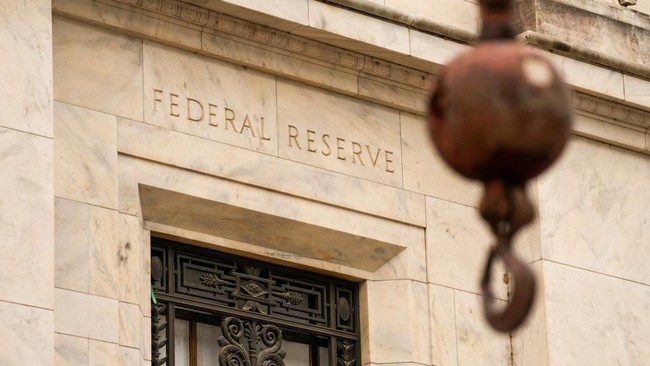
Their thinking on the interdependence of fiscal and monetary policy challenges the myth of central bank independence. They reject the mainstream economists’ claim that price stability—inflation control—is solely the domain of monetary policy, while keeping the debt-to-GDP ratio in check is the responsibility of fiscal authorities.
Key issues
The ideas of Woodford and Hall have helped stabilise the global economy through monetary and fiscal policy since the 2008–09 global financial crisis, the recession caused by Covid-19 in 2019–20, and the current prospect of a global debt crisis that could begin in the United States, France, the United Kingdom or Belgium (Rogoff, 2026).
Their ideas are relevant to the United States, where the fiscal deficit-to-GDP ratio has reached 6–7 per cent, a level usually seen only during recessions. The debt-to-GDP ratio is also 123 per cent. Accumulated debt has reached an all-time high of about US$40.07 trillion, with US$9.6 trillion in debt due to mature in 2026 (CBO, 2026).
This has raised the issue of fiscal dominance, as the US government refinances debt by issuing new securities. It is caught in a Ponzi game—a cycle of borrowing to repay borrowing—using new debt at high cost, with US Treasury yields exceeding the psychological thresholds of 5.0 per cent for 10-year bonds and 5.30 per cent for 30-year bonds.
US inflation is also running at about 3.4 per cent year on year as of August 2026, well above the Federal Reserve’s (Fed) 2 per cent target for 2026.
Inflation expectations are also tending to rise as global oil prices increase. On Tuesday, 13 October 2026, Brent crude was about US$105.163 a barrel and West Texas Intermediate (WTI) about US$92.292 a barrel.
These conditions have forced the Fed to raise the federal funds rate by 25 basis points, from 3.75 per cent to 4.0 per cent. US President Donald J Trump has opposed the move, as it could slow US economic growth and increase the government’s debt burden.
The 2026 Nobel laureates’ research is also relevant to Indonesia, particularly amid proposals by a member of the House of Representatives’ Commission XI to raise the current maximum fiscal deficit-to-GDP ratio of 3.0 per cent and the debt-to-GDP ceiling of 60 per cent.
The proposal has been prompted by the large budget needed to stimulate the national economy and achieve growth of 6–8 per cent through to 2045. This is a gamble for Indonesia: whether it remains a middle-income country, stuck in the so-called middle-income trap, or becomes a high-income country by 2045.
The need for substantial funding, with the fiscal deficit-to-GDP ratio approaching 3.0 per cent and debt rising, raises the issue of fiscal dominance over monetary policy. The government and legislature could exert political pressure on the monetary authority to keep interest rates steady, with the aim of reducing government debt-servicing costs and boosting credit growth to accelerate economic expansion.
Woodford and Hall’s solutions
In light of these issues, the following points drawn from the thinking of the two 2026 Nobel laureates merit the attention of monetary and fiscal authorities.
First, as central figures in New Keynesian macroeconomics, Woodford and Hall argue that monetary and fiscal policy cannot be separated in the process of economic stabilisation, particularly price stability. Controlling inflation is therefore the shared responsibility of monetary and fiscal policy.
The 2026 Nobel laureates reject the view that fiscal policy is irrelevant to inflation control because inflation is purely a monetary phenomenon. They also reject the view that monetary policy cannot affect the debt-to-GDP ratio.
That view assumes that government revenue from money creation is very small compared with total government income and therefore has no effect on debt. It overlooks how monetary-policy transmission affects the real value of government debt and the real value of debt payments through inflation.
Second, Woodford and Hall criticise the mainstream economic use of the term fiscal dominance to describe fiscal authorities forcing a central bank to print money to buy government debt—deficit monetisation—which causes inflation.
In developed countries such as the United States, fiscal dominance is now demonstrated by political pressure on central banks. The US president, for example, has openly urged the Federal Reserve to keep interest rates low to reduce the cost of refinancing old debt by issuing new securities.
This pattern does not directly increase the money supply and cause inflation in the way deficit monetisation through money creation (seigniorage) does. Low interest rates can instead fuel inflation by raising aggregate demand, a process known as demand-pull inflation.
Fiscal dominance over monetary policy is relevant to Indonesia and developed countries that currently have negative primary balances. This means debt and interest payments are being financed by issuing new debt, trapping governments in a Ponzi game—a cycle of borrowing to repay borrowing.
Third, the two 2026 Nobel laureates take a different position from the theory of Ricardian equivalence advanced by Robert J Barro, an economist at Harvard University. Under the assumption of rational expectations, that theory holds that economic actors see a fiscal stimulus financed by new borrowing as deferred taxation in a later period.
As a result, economic actors would save in the first period to pay the tax burden in the second. Increased government spending through fiscal stimulus would therefore reduce household spending, having little effect on aggregate demand. This is also known as the neutrality of government debt.
In other words, even if economic actors meet the assumption of rational expectations, the system as a whole can still be “non-Ricardian”. Changes in government spending would not be offset one for one by a fall in private spending. Fiscal stimulus would ultimately affect aggregate demand and prices.
Fourth, Woodford and Hall also reject Ponzi-style debt refinancing. Governments cannot continually accumulate new debt to pay off old debt and interest.
Fifth, one of Woodford’s contributions is the concept of the transversality condition. This condition does not impose a debt ceiling, but requires that, over an infinite time horizon, the present value of total government debt tends towards zero.
The real value of government debt must equal the present value of expected future primary budget surpluses. If fiscal policy is insolvent, as indicated by the absence of future primary surpluses, price stabilisation is not solely the task of the monetary authority; the fiscal authority must also act.
Sixth, Robert E Hall’s main contribution is to emphasise policy communication as a way to manage the expectations of forward-looking market participants. Their decisions depend entirely on what they expect to happen in the future.
Seventh, Hall’s main advice to governments and central banks is to preserve the credibility of monetary and fiscal policy and maintain a forward-looking approach. This helps the authorities manage business expectations, run the economy effectively and reduce fluctuations in the business cycle.
Eighth, monetary and fiscal authorities should always act ahead of the curve—that is, take a forward-looking approach and provide guidance to market participants. One example is a central bank’s commitment on the future direction of interest rates to control inflation and the exchange rate.
Optimal integration of policy means building a macroeconomic framework that combines monetary stabilisation with tax relief. The repeated history of monetary rigidity has shown that blind adherence to the dogma of central bank independence often comes at a high cost to the real economy.
Ultimately, monetary and fiscal policy are two sides of the same coin. Absolutely separating them amid today’s global uncertainty is no longer a prudent policy choice.
Source: jawawa.id (https://jawawa.id/newsitem/woodford-and-hall-debunk-the-myth-of-central-bank-independence-1792648246)
Originally published by CNBC Indonesia (https://www.cnbcindonesia.com/opini/20261022112439-14-778522/woodford-hall-membongkar-mitos-independensi-bank-sentral), translated from Indonesian