
Wonogiri Records Highest Inflation in Central Java; BI and Local Government Seek Root Causes
Wonogiri’s inflation for the June 2026 period reached 0.44%, the highest in Central Java, prompting Bank Indonesia (BI) to engage in serious discussions with the Wonogiri Regency Government to identify the root causes.
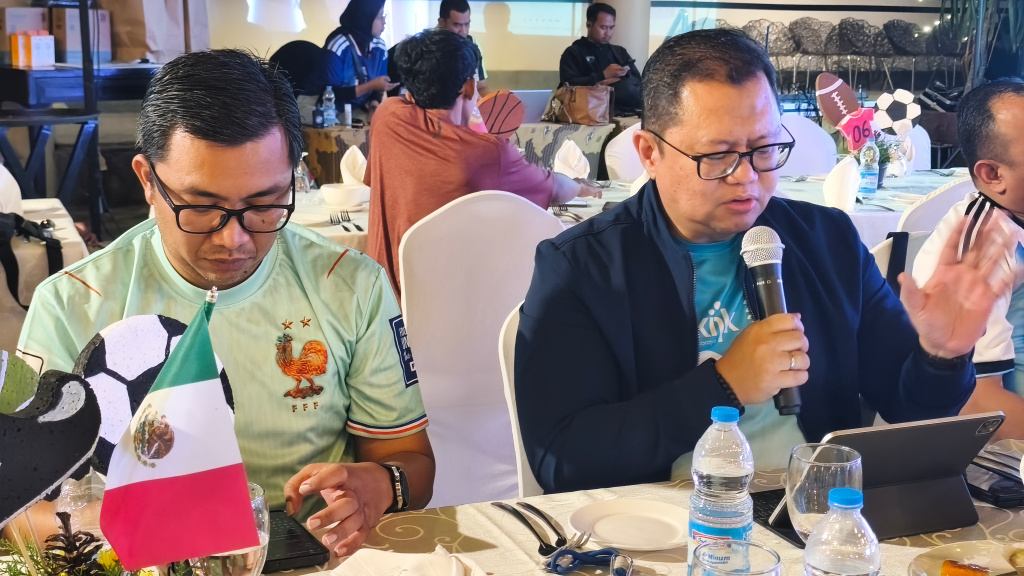
Speaking at the Srambi media forum on Saturday (1/8), the Head of the Bank Indonesia Solo Representative, Dwiyandyo Cahyo Sumirat, noted that when comparing Surakarta (Solo) and Wonogiri to other cities and regencies in Central Java, Wonogiri recorded the highest rate. While the month-on-month inflation rose to 0.44% from the previous 0.30%, the year-on-year inflation for June 2026 remained controlled at 3.03%. In contrast, Surakarta, which relies on external supply chains for agricultural products, maintained an inflation rate of 3.2%, ranking fourth after Rembang.
Sumirat emphasised that BI, alongside the Regional Inflation Control Team (TPID), must communicate closely with the Wonogiri Government to determine whether the spike is caused by distribution bottlenecks, limited commodity supplies, or other factors. BI’s monitoring indicates that the primary drivers of high inflation in Wonogiri are shallots, garlic, rice, sigaret cigarettes, and petrol. Regarding petrol, BI noted that they have no control over its price as it is dependent on global markets.
In a related development, the Meteorology, Climatology, and Geophysics Agency (BMKG) has issued a ‘Warning’ status for Wonogiri due to the El Niño phenomenon. While areas such as Surakarta and Karanganyar are under ‘Alert’ status, and Boyolali, Klaten, Sragen, and Sukoharjo are under ‘Standby’ status, Wonogiri faces the highest level of drought risk.
Sumirat stated that the low rainfall predicted for July 2026 is expected to continue into August, posing a significant threat to the agricultural sector. The high potential for drought increases the risk of crop failure, which could further impact inflation movements. While local agricultural departments and farmer groups currently believe the situation can be managed through administrative measures, the Department of Agriculture is actively assisting with the procurement of pump wells to mitigate the impact.