
Wondama Mothers in West Papua Can Now Grow Vegetables at Home Using Household Waste
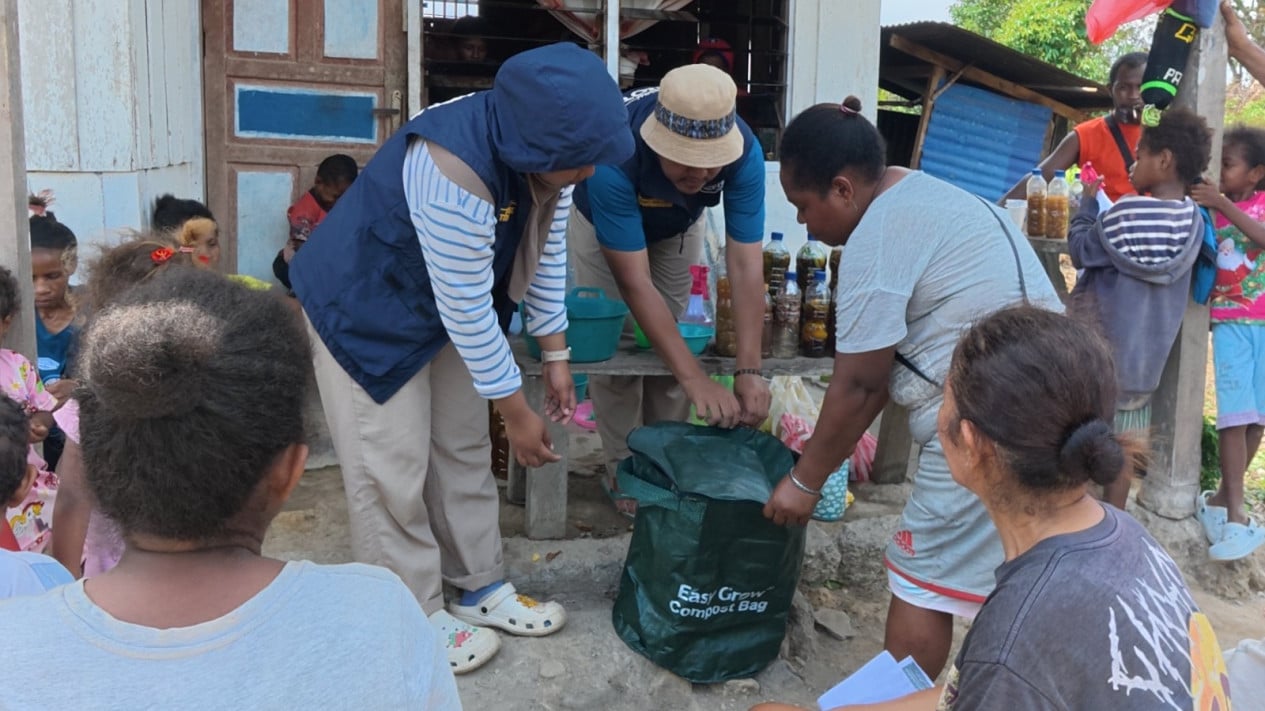
Mothers in Teluk Wondama, West Papua, are now able to grow vegetables in their home gardens using fertiliser made from organic waste. They learned from the University of Indonesia’s Patriot Expedition Team (TEP) to process kitchen waste into eco-enzyme and leaves into compost.
“Household waste is no longer thrown away. Since the team arrived, we have been processing it to nourish plants in our gardens and reduce rubbish. Previously, we only burned grass and put the ash around the trees. We hope to share what we have learned with others so that everyone can grow plants,” said Mama Olhal Netennya, one of the programme’s participants, on Friday (6 November 2026).
The programme began in response to strong local interest in growing vegetables in Tamoge, despite poor soil fertility and the high cost of agricultural supplies.
“Residents are very keen to grow vegetables if they have support, but the soil is not fertile enough. So we decided to process household waste to improve the soil,” said Rathalia, a member of TEP UI.
Twenty women from Settlement Units (SP) 1 and 2 in Tamoge, within the Werianggi Transmigration Area, took part. The location is about four hours from Wasior, the nearest town, and the Environmental Agency has not provided outreach or support on waste management there.
The women use kitchen waste, such as fruit peels and vegetable trimmings, to make eco-enzyme. They dissolve 100 grammes of palm sugar in one litre of water, then mix it with 300 grammes of finely chopped organic waste.
The mixture is kept in a tightly sealed container in a shaded place for three months. The lid is opened occasionally to release gas. The resulting liquid is used to fertilise plants, clean floors and reduce odours around rubbish bins. Organic waste unsuitable for eco-enzyme is combined with dry leaves to make compost.
The women have begun growing chillies, tomatoes, aubergines and mustard greens in their gardens, without relying on costly chemical fertilisers and pesticides.
The initiative is in line with President Prabowo Subianto’s call for fertiliser self-sufficiency to support national food self-sufficiency.
Source: jawawa.id (https://jawawa.id/newsitem/wondama-mothers-in-west-papua-can-now-grow-vegetables-at-home-using-household-waste-1794109848)
Originally published by VIVA.co.id (https://www.viva.co.id/berita/nasional/1941912-senangnya-mama-mama-wondama-papua-barat-kini-bisa-menanam-sayuran-di-halaman-rumah-bermodal-sampah), translated from Indonesian