
Women’s World Banking: Why Women’s Businesses Struggle to Survive, and How to Help
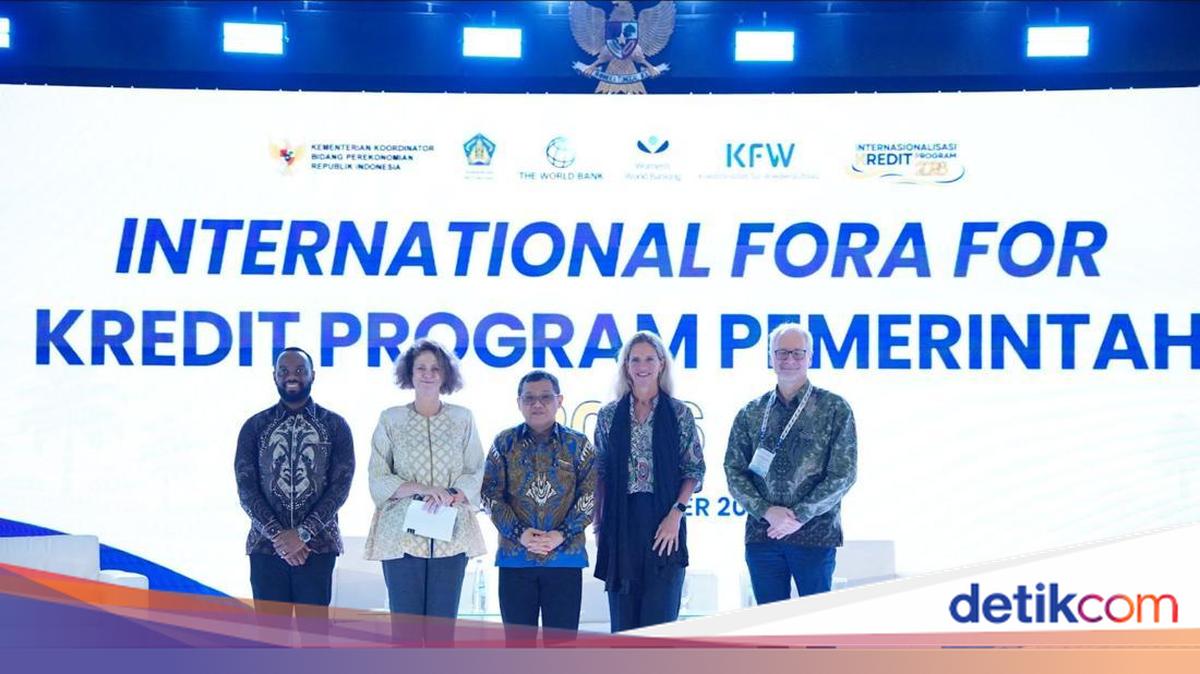
Access to credit does not necessarily guarantee that women’s businesses can survive and grow. Women’s World Banking says government financing programmes need to understand the characteristics of women-owned businesses, particularly their income patterns and cash flows, so that loans meet their needs.
Angelique Timmer, Women’s World Banking’s Regional Head for Southeast Asia, said the financial system had yet to fully understand how women run businesses. As a result, women with viable businesses are often overlooked by formal financial services. She was speaking at the International Fora for Kredit Program Pemerintah, an international seminar in Nusa Dua.
This is because credit assessments do not always take account of cash flows, informal business activity or alternative data sources.
“Women are not lacking in ambition or potential. However, the financial system still often does not fully understand how their businesses operate,” Angelique said in a statement on Tuesday (4 November 2026).
She said financing should be designed around how women earn income, invest and grow their businesses. Repayment schemes should also reflect the cash-flow conditions of their businesses.
In addition to access to credit, women need support to build business track records, reach wider markets and prepare to move to commercial financing. Clear complaints mechanisms are also needed so that problems accessing credit can be reported.
The challenges women face in sustaining their businesses are also reflected in Women’s World Banking research into women entrepreneurs in e-commerce. The findings show that only 44 per cent of women entrepreneurs were able to keep their businesses going for three to five years. Just 23 per cent lasted more than five years, compared with 31 per cent of male entrepreneurs.
At the policy level, the government considers monitoring borrowers’ business development an important part of managing credit programmes. This is needed to assess whether businesses are ready to move up and access financing at the next stage.
Ferry Irawan, Deputy for Coordination of SOE Business Management and Development at the Coordinating Ministry for Economic Affairs, said the Kredit Usaha Rakyat (KUR) programme was designed as a bridge to commercial financing.
“We monitor borrowers’ progression in each segment, from supermicro and micro to small businesses, with the expectation that they will be able to access commercial financing as their businesses develop,” Ferry said.
The World Bank likewise says the success of government credit programmes cannot be measured solely by the volume of loans disbursed. Such programmes must also help micro, small and medium-sized enterprises (MSMEs) raise productivity, expand their businesses and create jobs.
Carolyn Turk, Division Director for Indonesia and Timor-Leste, East Asia and Pacific, at the World Bank, said credit programmes in Indonesia had opened up financing to millions of borrowers who had not previously accessed credit.
However, subsidised financing should serve as a pathway for MSMEs to move to commercial finance. A route towards sustainable financing therefore needs to be built into programmes from the outset.
For Women’s World Banking, this effort must be accompanied by financial services tailored to women’s needs at every stage of business development.
Post-disbursement assistance, improved ability to use financial products, and access to buyers and markets can help women sustain their businesses and prepare to obtain further financing.
Source: jawawa.id (https://jawawa.id/newsitem/womens-world-banking-why-womens-businesses-struggle-to-survive-and-how-to-help-1793728267)
Originally published by detikBali (https://www.detik.com/bali/bisnis/d-8737206/womens-world-banking-usaha-perempuan-sulit-bertahan-ini-penyebab-dan-solusinya), translated from Indonesian