
Women’s World Banking urges inclusive financing for women-led MSMEs
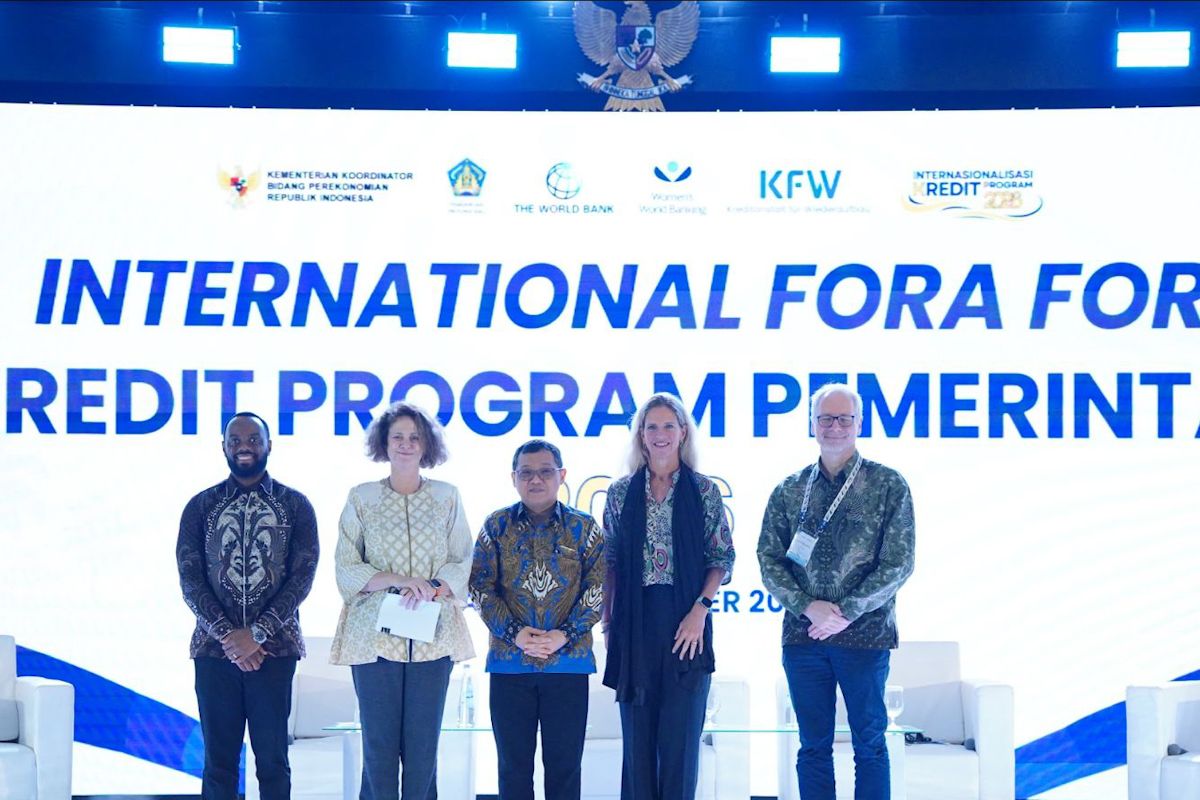
Understanding business activity and cash flows can help financial institutions design suitable financing to support business growth and women’s financial resilience.
Jakarta (ANTARA) – Women’s World Banking is advocating inclusive financing shaped around women’s business needs, using data, gender-responsive services and capacity-building to help micro, small and medium-sized enterprises (MSMEs) grow sustainably.
“Understanding business activity and cash flows can help financial institutions design suitable financing to support business growth and women’s financial resilience,” Angelique Timmer, Women’s World Banking’s Regional Head for Southeast Asia, said in a confirmed statement in Jakarta on Tuesday.
She made the remarks at the International Forum for Government Credit Programmes, an international seminar organised by the Coordinating Ministry for Economic Affairs in Nusa Dua, Bali. The forum discussed experiences and approaches to developing government credit programmes for productive sectors.
Women’s World Banking highlighted the importance of understanding the needs and characteristics of women’s businesses as a basis for developing government credit programmes that are more inclusive, effective and sustainable. Timmer said financial services should be designed around women’s lived realities to widen access to financing.
Women have considerable ambition and potential, she said, but the financial system does not yet fully understand their business models, cash flows and commercial activities. Credit assessments that overlook cash flow, informal businesses and alternative data sources leave many women entrepreneurs without access to formal financial services.
Timmer said financing should be adapted to business repayment schedules, support the building of business track records, widen market access and encourage a transition to sustainable commercial finance. To promote sustained use of financial services, repayment arrangements should reflect business cash flows, while clear complaints mechanisms are needed so women can raise problems they encounter when accessing credit programmes.
Research by Women’s World Banking on women selling through e-commerce found that only 44 per cent had been able to sustain their businesses for three to five years, while just 23 per cent remained in business for more than five years, compared with 31 per cent of male entrepreneurs.
Ferry Irawan, Deputy for Coordination of State-Owned Enterprise Management and Development at the Coordinating Ministry for Economic Affairs, said monitoring the progress of borrowers’ businesses was an important part of administering government credit programmes. It also helped assess whether borrowers were ready to move up to the next stage of financing.
“The People’s Business Credit (KUR) is designed as a bridge for entrepreneurs. We monitor borrowers’ progression in each segment, from ultra-micro and micro to small, with the hope that they can access commercial financing as their businesses develop,” he said.
Carolyn Turk, the World Bank’s Division Director for Indonesia and Timor-Leste in East Asia and the Pacific, said government financing programmes should not focus solely on widening access to credit. They should help MSMEs grow, improve productivity and strengthen their business capacity so they can access commercial financing sustainably.
“Credit programmes in Indonesia have opened up access to financing for millions of borrowers accessing credit for the first time,” she said.
The programmes’ future success, Turk added, should be judged by the extent to which MSMEs can grow, improve productivity and create jobs, not merely by the volume of credit disbursed.
“Subsidised financing needs to pave the way for MSMEs to move to commercial financing, so a pathway to sustainable commercial financing needs to be designed from the outset of a programme,” she said.
For Women’s World Banking, that growth pathway must be supported by financial services tailored to women’s needs at every stage of their businesses’ development. Improving financial literacy, providing post-disbursement support, and connecting women with buyers and markets can help them sustain their businesses and prepare to access financing suited to their next stage of growth.
Source: jawawa.id (https://jawawa.id/newsitem/womens-world-banking-urges-inclusive-financing-for-women-led-msmes-1793706970)
Originally published by Antara (Indonesian) (https://www.antaranews.com/berita/5829175/womens-world-banking-dorong-pembiayaan-inklusif-bagi-perempuan-umkm), translated from Indonesian