
Women's Leadership in the Public Sphere: An Investment in Asia-Pacific Family Welfare
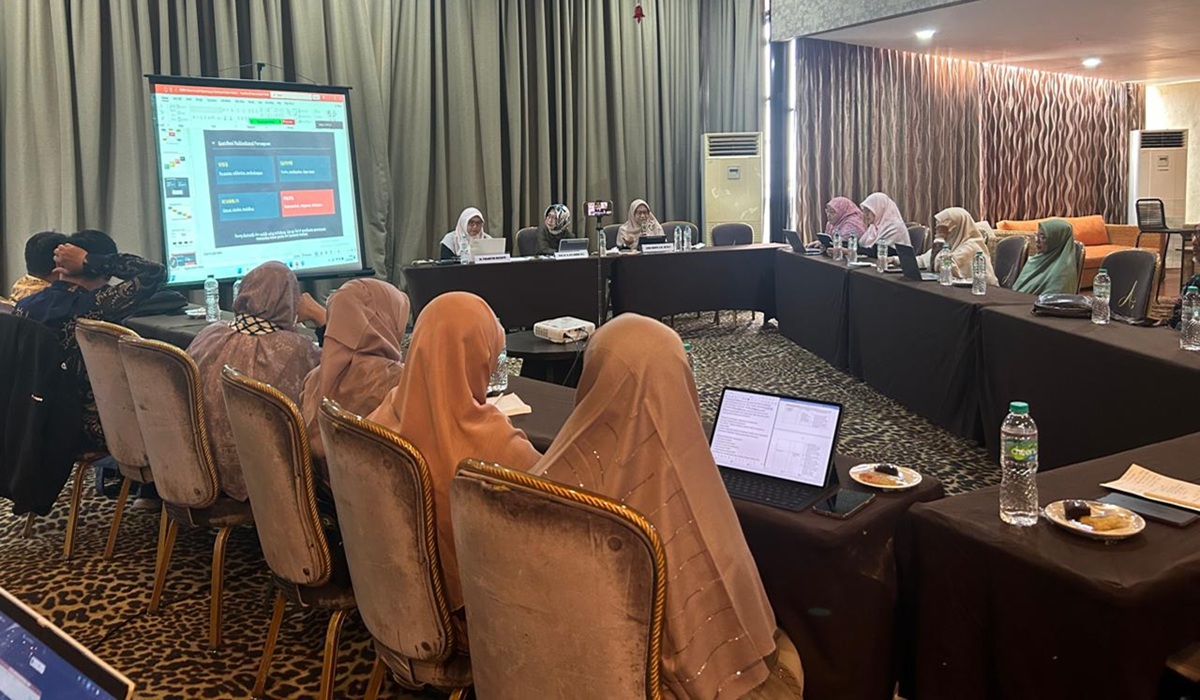
The strategic role of women as leaders in nation-building was a primary focus during the Commission 4 discussion at the Asia-Pacific Family Conference held in Jakarta on Saturday (12/9). Experts agreed that strengthening women’s leadership is not merely an issue of equality, but a direct investment in the welfare of families and the progress of societies across the Asia-Pacific region.
Led by Dr Paramitha Messayu, the discussion featured two competent speakers: political expert from the National Research and Innovation Agency (BRIN), Prof. Dr. R. Siti Zuhro, and practitioner and academic Ledia Hanifa, M.Psi.T. Both analysed the urgency of women’s leadership through seven key aspects spanning social, economic, and political fields.
Although women’s contributions have proven to have a positive impact on family welfare, the discussion revealed persistent cultural, social, and structural barriers. This was supported by recent statistical data in the Asia-Pacific region, which shows low female participation in strategic sectors.
Prof. Siti Zuhro emphasised that the success of women’s leadership must shift from mere numerical representation (quantitative) towards substantive influence and systemic transformation. According to her, the orientation of power must change from ‘power over’ to ‘power with’, based on vision, ethics, and public values.
“It is important to organise political parties as leadership schools based on meritocracy and to provide a supporting ecosystem for policy leaders. Leadership characters that are empathetic, inclusive, collaborative, and responsive are the primary potential for creating public value,” explained Siti Zuhro.
Similarly, Ledia Hanifa highlighted the importance of female role models built through values, character, competence, and tangible work. She asserted that women’s leadership requires a solid support system, as no leader can grow alone.
Ledia offered solutions in the form of strengthening four capacity pillars to overcome cultural barriers and the double burden. She noted that political parties have a duty to prepare, protect, and provide space for leadership so that women’s voices result in family-friendly public policies.
Beyond domestic issues, the discussion concluded that women’s leadership is vital in facing global challenges such as climate change and technological disruption. This requires cross-border collaboration and policies that support the creation of an inclusive leadership ecosystem.
Source: jawawa.id (https://jawawa.id/newsitem/womens-leadership-in-the-public-sphere-an-investment-in-asia-pacific-family-welfare-1789275163)
Originally published by Media Indonesia (https://mediaindonesia.com/humaniora/932820/kepemimpinan-perempuan-di-ruang-publik-investasi-kesejahteraan-keluarga-asia-pasifik), translated from Indonesian