
Women's Forest Farmer Groups in NTT Ready to Manage Social Forestry with Local Food Crops
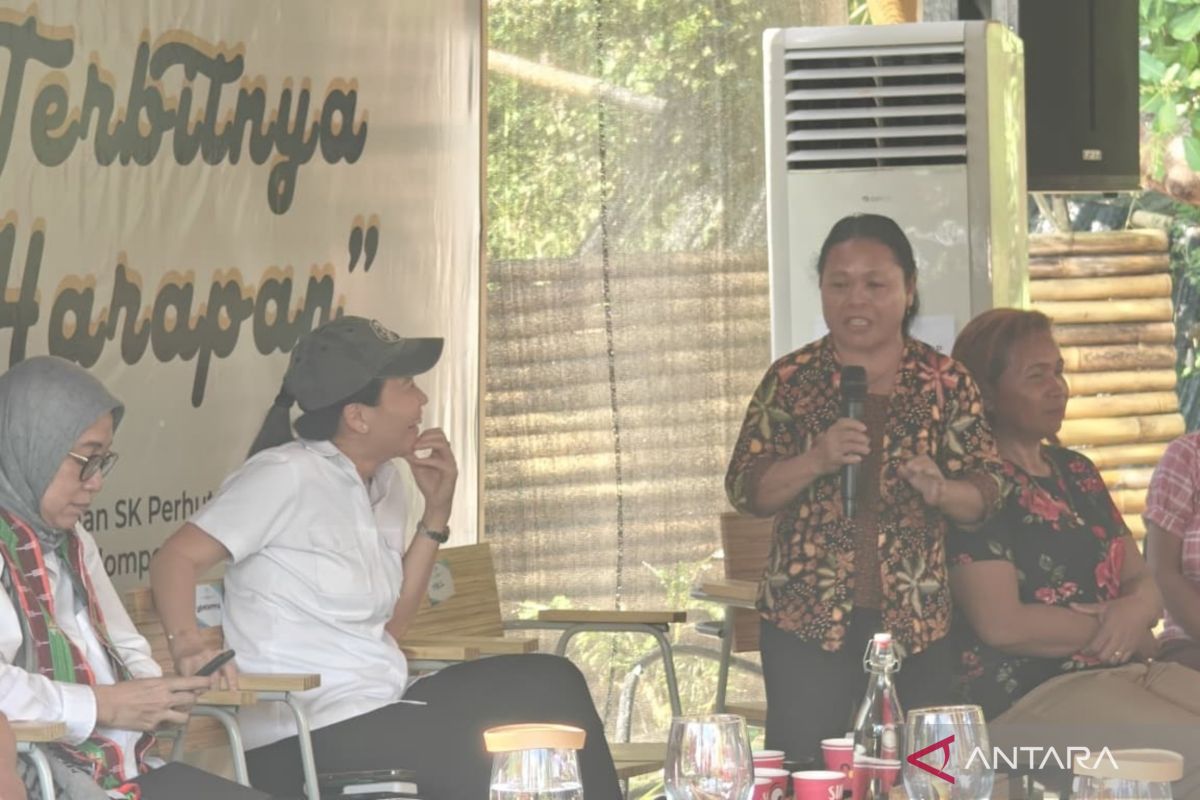
Labuan Bajo, NTT (ANTARA) - Women’s Forest Farmer Groups (KTH) in Nusa Tenggara Timur (NTT) province have stated their readiness to manage social forestry areas by planting various commodities, from bamboo and trade crops to local food ingredients, to improve family welfare.
Chair of the KTH in Tanjung Boleng Village, West Manggarai, Yasinta Ludia, at the Yayasan Bambu Lingkungan Lestari (YBL) Campus in Labuan Bajo on Thursday, expressed gratitude and joy over the issuance of the Social Forestry Decree (SK), which provides legal access for women to manage protected forest areas in their region.
“We are pleased and grateful to be permitted to manage this protected land. We have planned all the crops to be planted, such as teak wood, bamboo, fruits, and local food crops like sorghum,” she said during a restorative forum with the Ministry of Forestry and the Ministry of Women’s Empowerment and Child Protection (PPPA).
Yasinta emphasised that her group has prepared a follow-up plan after the issuance of the SK. Although they already have independence in planning, she hopes the government will continue to provide support in the form of seedlings according to what the group has planned.
In agreement, Natalia, Chair of the KTH Betung Asa in Manggarai Regency, expressed her pride as a woman for receiving trust from the government to manage forest products directly from upstream to downstream.
She, along with female farmers in her village, is determined to maintain and utilise the forest entrusted to them by the government to the maximum extent for their welfare and progress, as well as that of the Manggarai indigenous community.
“We will process and utilise forest products, from planting to reprocessing them to improve family economics in the future,” said Natalia.
She assured that the government, particularly the Ministry of PPPA, the Ministry of Forestry, and the Ministry of Villages, is ready to guide the journey of these farmer groups to become examples of success for other women.
In addition, she confirmed that these women’s farmer groups will not operate alone but will be intensively accompanied by the local Forest Management Unit (KPH), including the preparation of the Social Forestry Work Plan (RKPS), to ensure forest management remains aligned with conservation functions and applicable regulations.
“This means it does not stop at the issuance of the SK and then remain idle, but there must be tangible results that can be emulated by other regions,” she stated.
The Ministry of Forestry previously issued six new Social Forestry Decrees (SK) in NTT province, specifically providing management opportunities to women’s farmer groups, with a percentage reaching 93% of the total managers.
The six SKs, covering an area of 648.65 hectares, were given to 335 managers, including the farmer groups led by Yasinta and Natalia.
The distribution of this first national social forestry management in the name of female farmers covers one SK in West Manggarai Regency, two in East Manggarai, one in Manggarai, and two SKs in Sikka Regency.