
Women of NTT: Pillars of Restorative Economy and Food Security
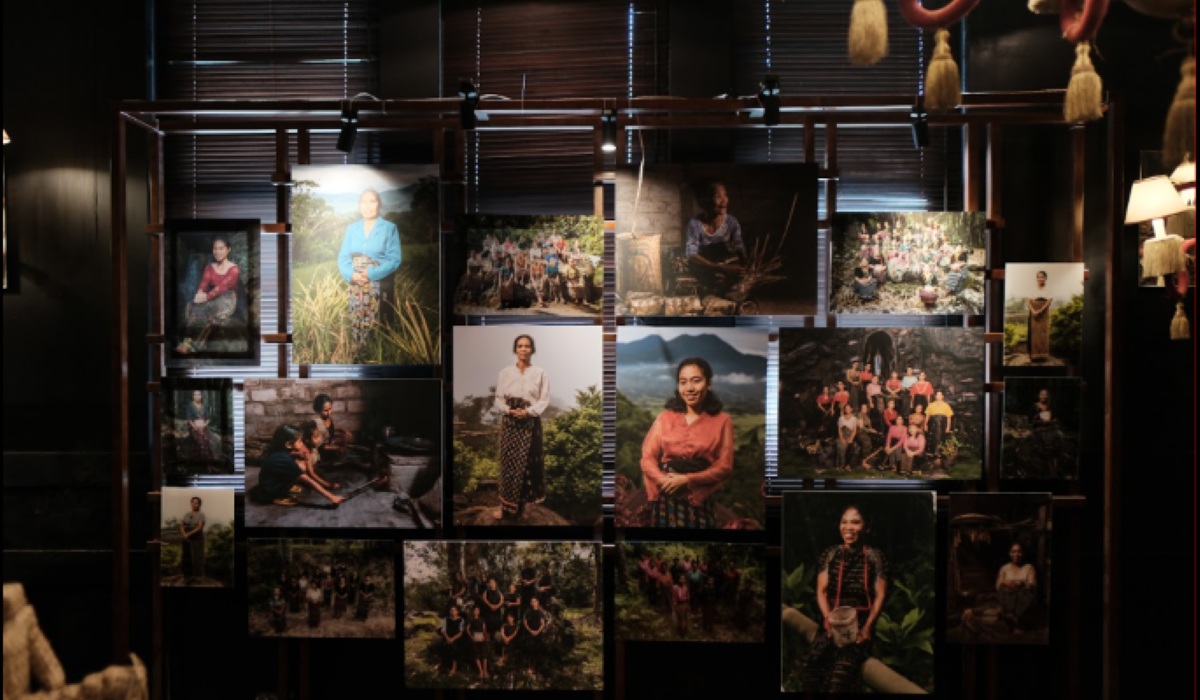
Women have significant potential to drive the economy in Nusa Tenggara Timur (NTT). Through cross-sector support and collaboration, the role of women is transforming into a key pillar of restorative economic development in the region. This empowerment effort was highlighted in the exhibition titled ‘Weaving Wonders: From Threads of Weaving and Seedling Lands to Economic Strength, Food Security, and Women’s Empowerment in Nusa Tenggara Timur’.
The exhibition, held at Tugu Kunstkring, Jakarta, from 13 to 27 June 2026, not only introduced NTT’s cultural richness through weaving, cuisine, and traditional house architecture but also served as a collaborative space through sharing sessions, workshops, and a Dialog Kunstkring initiated by the Bambu Lingkungan Lestari Foundation and Penabulu-Oxfam.
The dialogue brought together policymakers, academics, practitioners, and indigenous communities to develop a roadmap for food sovereignty and conscious tourism. Yori Antar, founder of the Uma Nusantara Foundation and the exhibition’s initiator, emphasised the importance of this collaborative space. ‘The Weaving Wonders exhibition is expected to bring together the government, NGOs, investors, and donor agencies to explore policies that encourage women’s roles in building a more resilient, inclusive, and sustainable economy,’ Yori stated.
The challenge of developing a restorative economy in Indonesia is substantial. According to a 2024 report by the Center of Economic and Law Studies (Celios), Indonesia requires an investment of approximately Rp892 trillion by 2045 to effectively implement a restorative economic strategy. NTT was chosen as a focus due to its challenging socio-economic conditions. Data from the Central Statistics Agency (BPS) as of February 2026 shows the poverty rate in NTT remains at 17.5%, with a stunting prevalence of 31.4%, far above the national average. Additionally, issues of violence against women and human trafficking remain serious concerns.
Deputy Minister for Women’s Empowerment and Child Protection, Veronica Tan, stated that problems such as stunting, violence, and child labour in NTT are rooted in economic issues. ‘These problems cannot be solved separately,’ she stressed. Despite these challenges, women in NTT demonstrate remarkable productivity. A 2024 GoodStats survey recorded that women’s contribution to household income in NTT reached 42.4%, surpassing the national average of 36.1%.
A historic milestone occurred in May 2026, when the state officially handed over Social Forestry Decrees to six women farmer groups in NTT. The total land managed amounts to 648 hectares, a rare step in national forest management distribution that has seldom reached women’s groups. Support from the private sector is also flowing, including from the Astra Group through its Desa Sejahtera Astra and Astra Foundation programmes. Astra’s Chief of Corporate Affairs, Boy Kelana Soebroto, stated that local wisdom and community empowerment are vital assets for Indonesia’s inclusive development. Through the synergy of weaving traditions and seedling land innovations, the women of NTT are not only preserving cultural heritage but also leading the restoration of ecosystems as a sustainable living space.