
Women: From Supporters to Producers of NU Knowledge
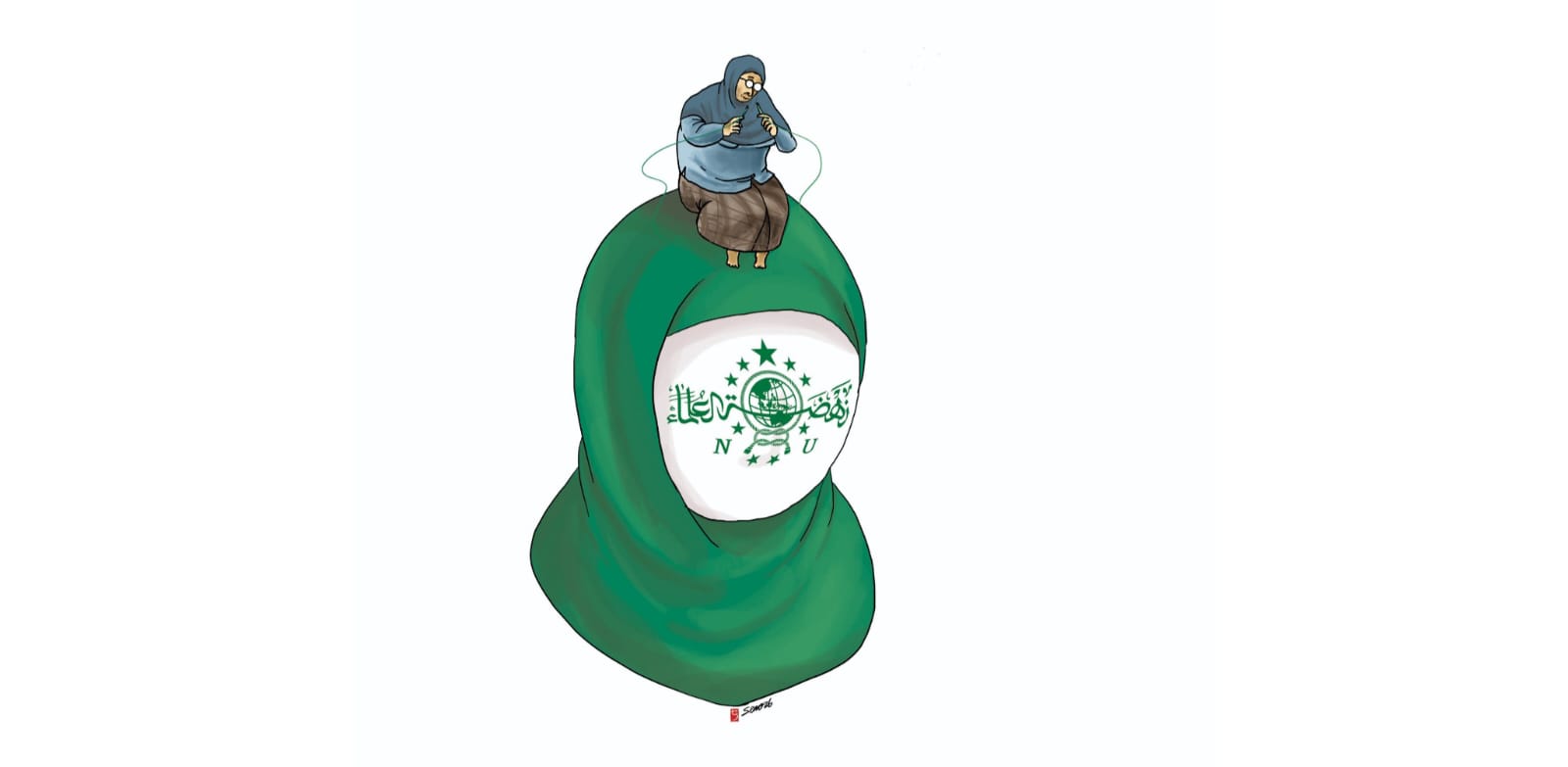
Every time the Nahdlatul Ulama (NU) Congress is held, mixed feelings always arise. There is joy and hope, but also anxiety and questions about where NU is being taken. Therefore, I always observe each congress closely to see more clearly where NU is moving. Since the congress in Krapyak in 1989 and subsequent congresses, I have followed these dynamics with similar feelings. For me, the congress is not about who leads NU, although that is always the most exciting topic of discussion. Far more importantly, the congress is a space where NU talks about itself, remembering where the organisation came from, while determining what kind of knowledge it wants to produce and pass on in facing a constantly changing era.
One fundamentally important aspect to examine is the role of women within it. Martin van Bruinessen in his various writings often reminds us that the role of women in NU greatly determines the face and character of Islam that will be presented. Women are a vital element in NU who build, maintain, and debate knowledge, while preserving a tradition of thought rooted in legal methodology that lives within the scholarly tradition of pesantren. In short, women in NU do not only act as recipients of knowledge, but also as active epistemic agents who produce and shape knowledge.
NU is a landscape where a very long tradition of Islamic intellectualism in Indonesia has grown and developed. Pesantren, the yellow books, scholarly lineages, legal discussion forums through bahtsul masail, madrasahs, religious study circles, and religious conversations in society are all part of the knowledge ecosystem within NU. Knowledge in the NU tradition is not merely what is stored on the shelves of yellow books. It is alive. It is read, debated, taught, inherited, and practised. Tradition gives knowledge a long lifespan. Tradition does not move linearly and calmly. It is turbulent because it dialogues with a constantly changing era. One generation learns from the previous generation, then teaches it again to the next generation. There is continuity of scholarly lineage and an awareness that knowledge is not born alone. However, it is precisely in the midst of this strong tradition that we need to ask the next question: who has been keeping this knowledge alive? In NU life, the process of knowledge production and transmission takes place through a very broad intellectual and social network, namely through pesantren.
This is where we arrive at a deeper issue. If we look at the photos of this year’s PBNU chairperson candidates, there are eight candidates and not one is a woman. Yet women have never actually been outside the NU knowledge tradition. They are the pillars of NU who keep that tradition moving. However, their closeness to knowledge and their strength in carrying the tradition of thought in NU does not necessarily receive recognition as producers of knowledge. Women are often positioned as those who convey, teach, maintain, and disseminate knowledge produced within the NU tradition. Meanwhile, the space to formulate, interpret, debate, and determine the direction of knowledge is more often associated with authority residing in another layer, namely men.
The question is, how far and how possible is it for the knowledge structure within the NU tradition to view and consider that capability? This question feels increasingly important as women are more visibly present in religious discussion spaces. Twice in a row since 2017, a group of women from the NU community initiated KUPI (Congress of Indonesian Women Ulama). The involvement of women academics gathered in APMNU in bahtsul masail and socio-religious conversations is a trace of tradition that cannot be ignored.
During the Krapyak Congress in 1989, and then the Cipasung Congress in 1994, NU was truly confronted with international development issues that required strategies to address them. The population issue held at the International Conference on Population in Cairo in 1994 and continuing to Beijing in 1995, I was involved in it. The central issue directly challenged NU’s tradition of thought about the position of women, which was often interpreted in a traditionalist manner. NU women understand that they have the intellectual right and responsibility to participate in questioning, re-reading, formulating, and even correcting when a product of knowledge is no longer sufficient to answer the realities of life. This awareness may be read as resistance to tradition, but in fact it actually strengthens tradition so that it remains relevant throughout the ages. The way to do this can be by criticising it because women want knowledge in the NU tradition to be relevant and able to overcome human wounds and anxieties.
Perhaps this is one of the important changes that needs to be reflected upon. NU women no longer ask, ‘Is it permissible for us to be present?’ The question has changed to, ‘Are our intellectual contributions considered?’ This change in question is very important. It shows a shift from existential needs based on presence to an awareness of recognition of intellectual capacity and its contribution to the NU tradition and more broadly to the Islamic tradition in the world.
NU needs women’s perspectives to understand the ever-changing issues of family and society, from education, population, environment, and poverty to violence, technology, and changes in family life. The presence of women in the NU tradition of thought is not merely complementary. Without them, NU as it is today would not be possible.
Source: jawawa.id (https://jawawa.id/newsitem/women-from-supporters-to-producers-of-nu-knowledge-1787784625)
Originally published by Media Indonesia (https://mediaindonesia.com/opini/926367/perempuan-dari-penyokong-ke-produsen-pengetahuan-nu), translated from Indonesian