
WMO: Strengthening El Nino Raises Flood, Drought Risks
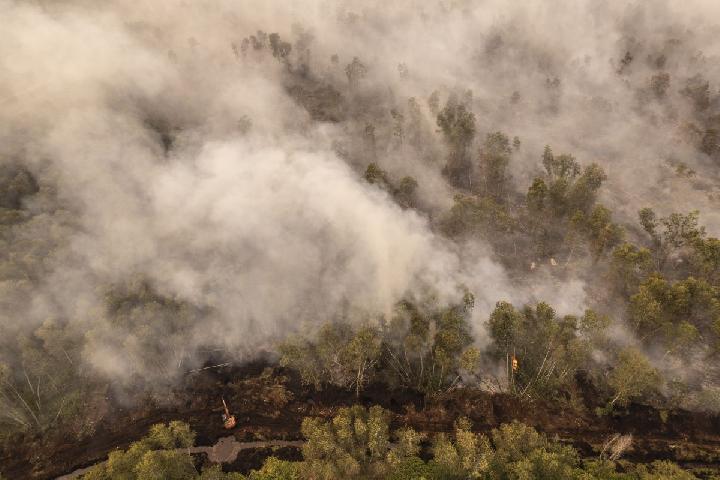
TEMPO.CO, Jakarta - The World Meteorological Organization (WMO) reported on Thursday that a strong El Niño event has taken hold and is set to intensify further in the coming months, elevating the risk of floods, droughts, and extreme heatwaves.
In its latest assessment, the WMO projects a near-100 percent likelihood that El Niño will endure through February 2027.
The phenomenon is driven by abnormally warm ocean temperatures across the tropical Pacific. El Niño is expected to gather exceptional strength and peak toward the end of 2026, with its environmental fallout spilling over into 2027.
WMO Secretary-General Celeste Saulo noted that severe droughts and floods have already inflicted widespread disruption and damage. These climate impacts are poised to escalate as the phenomenon gains momentum.
“This exceptional El Nino demands exceptional preparation and response,” she stated, adding that the WMO is coordinating with national meteorological and hydrological agencies to bolster preparedness and early warning infrastructure.
According to the WMO, sea surface temperatures in the central and eastern equatorial Pacific, which are the core zone associated with El Niño, are already significantly above average and continue to climb.
The Niño 3.4 index, which tracks sea surface temperature anomalies in this zone, averaged 1.5 degrees Celsius above normal between May and July 2026, touching 2 degrees Celsius above average in July.
Meanwhile, weekly readings surged further between late July and mid-August, ranging from 2.2 to 2.6 degrees Celsius above average, according to the agency.
The WMO anticipates a high probability of above-normal temperatures across most landmasses from September to November 2026. Rainfall patterns are similarly expected to mirror the footprint of a robust Pacific El Niño.
However, the sheer intensity of El Niño does not automatically translate into identical severity across every country or region.
The WMO emphasized that El Niño’s localized impacts depend on geography and seasonality, and are often reshaped by concurrent climate drivers, including dynamics in the Indian and Atlantic Oceans. The agency forecasts the development of a positive Indian Ocean Dipole phase, alongside sustained relative warmth across the equatorial Atlantic.
These broader ocean conditions could amplify, temper, or modify the typical footprint of El Niño across different regions.
El Niño and La Niña represent the opposing warm and cool phases of the El Niño-Southern Oscillation (ENSO), a recurring natural climate cycle. El Niño itself is marked by anomalous warming of surface waters across the central and eastern equatorial Pacific.
The WMO further underscored that El Niño remains a naturally occurring climate cycle rather than a phenomenon caused by climate change.
Read: ‘Supersized’ El Nino to Persist into 2027, UN Says
Click here to get the latest news updates from Tempo on Google News