
Witnessed by Manpower Minister, Pupuk Kaltim Signs Collective Labour Agreement with Important Message for Employees
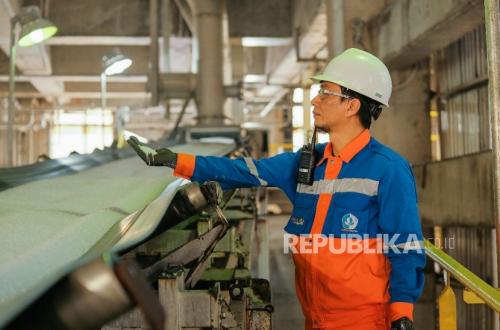
PT Pupuk Kalimantan Timur (Pupuk Kaltim) has officially signed the outcome of negotiations for the Collective Labour Agreement (PKB) with the Serikat Pekerja Korps Karyawan Pupuk Kaltim (SP KKPKT) for the period 2026–2028. The signing of the PKB was witnessed directly by the Minister of Manpower Yassierli, as well as representatives from Danantara and Pupuk Indonesia in Jakarta on Tuesday (14/4/2026).
“The signing of the PKB marks an important milestone in ensuring the sustainability of Pupuk Kaltim, while also safeguarding employee welfare amid the dynamics of the national fertiliser industry transformation,” said the President Director of Pupuk Kaltim, Gusrizal, in a written statement in Jakarta on Wednesday (15/4/2026).
Gusrizal described this as a strategic step in strengthening harmonious, dynamic, and fair industrial relations within the company. It also builds strong synergy between management and employees through constructive negotiation processes to create a healthy and productive work environment.
“This is a tangible manifestation of our commitment to maintaining a balance between the interests of the company and employee welfare, as well as an important instrument to ensure that industrial relations at Pupuk Kaltim remain harmonious, adaptive, and sustainable,” said Gusrizal.
According to Gusrizal, the preparation of the PKB was carried out through an intensive bipartite negotiation process between management and SP KKPKT. During this period, SP KKPKT was the only labour union that met the requirements and passed verification to participate in the negotiations, so all discussions were conducted directly between the two parties as legitimate representatives.
The General Chairman of SP KKPKT, Partono, stated that this year’s PKB negotiation process was full of dynamics but still prioritised the spirit of deliberation and mutual respect.
Partono explained that SP KKPKT strived maximally to fight for the aspirations and interests of employees at every stage of the negotiations, so the results achieved represent the best compromise acceptable to both parties. Partono acknowledged that the company’s conditions and the direction of holding policies also influenced the substance of the PKB.
“However, we ensure that employee rights remain protected. There is no reduction in welfare, and that is the principle we firmly uphold in the negotiations,” said Partono.
Partono hopes that the signing of the PKB can provide legal certainty for all parties in carrying out employment relations. It also serves as a guide in creating more harmonious and fair industrial relations, as well as supporting the sustainable continuity of Pupuk Kaltim.
“We appreciate the management’s openness in dialogue and willingness to seek joint solutions to various issues that arose during the negotiation process. This is the key to achieving a constructive agreement,” said Partono.
The Minister of Manpower Yassierli appreciated the PKB agreement between Pupuk Kaltim and SP KKPKT. Yassierli stated that the bipartite negotiation process that resulted in an agreement demonstrates that the industrial relations mechanism at Pupuk Kaltim has been running very well, in line with the principles of constructive and fair social dialogue.
“We see that both parties are committed to maintaining a balance between company interests and worker welfare. This is important because harmonious industrial relations can only be realised if there is a sense of justice and trust from both sides,” said Yassierli.
Yassierli emphasised that the next challenge lies in the consistent and collaborative implementation of the PKB. This aligns with the view that industrial relations should not stop at the harmonious level but must be continuously elevated towards productive and transformative synergy.
Yassierli encouraged industrial relations to advance to a synergistic level, where management and workers move together to achieve company goals while improving welfare sustainably. Yassierli assessed that Pupuk Kaltim could serve as an example of this in line with the vision and mission it upholds.
“This will demonstrate the maturity of industrial relations, so that dynamics can be managed well and outlined through written agreements to provide legal certainty and a sense of justice for all parties,” said Yassierli.