
Without PLN Electricity, a Settlement in West Bandung Remains Lit During Rolling Blackouts
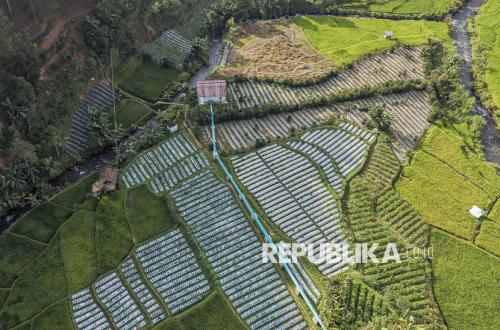
Amid the uproar of complaints over lengthy rolling blackouts, residents of Kampung Tangsijaya in Gununghalu Village, West Bandung Regency, West Java, remain illuminated. This is because they do not rely on the electricity supply produced by the state utility PLN. The settlement, located at the far border of West Bandung Regency, has achieved energy self-sufficiency through a 20-ampere Micro-Hydro Power Plant (PLTMH) managed by the Rimba Lestari Producers Cooperative. At least 80 to 90 homes are lit by this simple technology, which harnesses water from the Ciputri River.
‘Around the 1990s, we were still using oil lamps and kerosene,’ said Opan Sopandi, Chairman of the Rimba Lestari Cooperative, when contacted on Friday (19/6/2026). Efforts to utilise the river flow as an energy source began in the early 1990s when residents had no access to PLN electricity. Limited access spurred residents to innovate by building simple wooden waterwheels. The dynamos used were assembled independently from old motorcycle magnets. At that time, the electricity capacity produced by each dynamo was only around 100 to 300 watts. The Ciputri River, with its stable water flow, became the main asset for residents to generate electricity independently.
‘One waterwheel was usually for one house, so almost every house had a wheel installed in the river. Back then, this was a remote village, far from everywhere and difficult to reach. But there was the Ciputri River, whose current is always swift, so it was used to turn on lights,’ Opan explained. The hope of enjoying PLN electricity services was hindered by the hamlet’s location, characterised by hilly topography and forest. The aspiration for lighting was finally realised in 2007 when the PLTMH was built. A small dam was constructed on a mountain slope to collect water, which is then channelled through a 70-centimetre diameter pipe to the power house.
‘At the power house, electricity is produced. Meanwhile, the water is returned to the river. It just passes through, without damaging the environment,’ Opan said. This simple technology features a turbine for a water flow of 400 litres, producing 20 amperes of electricity. The generator then distributes 18 amperes to residents’ homes. There are about 80 families still using the electricity supply from the PLTMH, even though the area is now connected to the PLN grid. However, due to the low cost—Rp 25,000 per month for maintenance and operator incentives—many residents continue to rely on it. According to Opan, the fee is not for profit but is used for plant maintenance and to pay the turbine operators to ensure the electricity supply is maintained.